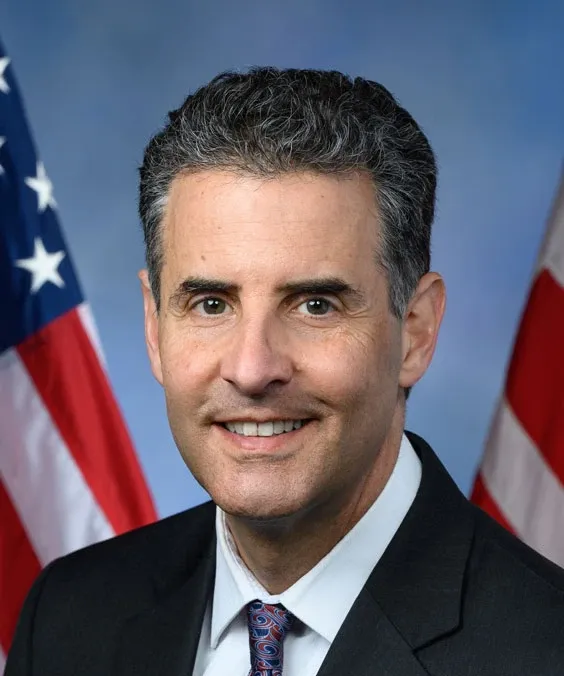
Jul 16, 2012
I think that countries know what they need to do in order to improve their standing.
The Public Record
Ben Cardin is a United States Senator from Maryland, serving since January 4, 2007. A member of the Democratic Party, he has focused on issues such as healthcare, education, and civil rights throughout his political career. Prior to his tenure in the Senate, Cardin served in the U.S. House of Representatives from January 3, 1987, to January 3, 2007, where he was known for his work on tax policy and social security reform.
I think that countries know what they need to do in order to improve their standing.
But when we see the individual that is affected by it, it does motivate us to action.
There are a lot of families that think they are safe, and they are not safe.
We have been talking about this for a long time. I would hope we could come up with a more consistent national strategy.
I share the concern of Chairman Boxer and Senator Lautenberg as to the urgency of this issue.
There is no question that lead affects the ability of children to develop to their full potential.
Mr. Chairman, first, thank you very much for allowing me to introduce a great Marylander, Steve Crawford.
I think he is well suited for the U.S. Postal Service Board of Governors at this critical time in the history of our Postal Service.
The Supreme Court has said on numerous occasions that none of the rights in the Bill of Rights are absolute.
Is there a sufficient second? There appears to be a sufficient second. The clerk will call the roll. The assistant legislative clerk called the roll.
I ask for the yeas and nays. The ACTING PRESIDENT pro tempore. Is there a sufficient second? There appears to be a sufficient second. The question is on agreeing to the motion. The clerk will call the roll. The assistant legislative clerk…
I applaud you for that, and I thank you for bringing together Senator McCain, Senator Thune, and others so that we can have the best chance to pass the PNTR for Russia.
The tragedy occurred in November of 2009. We asked for action a lot earlier through letters and following legislation.
I think a national consumption tax can be done in a fairer way than our current income taxes.
Domestic oil production has increased--increased--every year President Obama has been in office.
I think it is in the interest of an energy policy that we have national predictability on fracking and on getting natural gas.
It is my understanding that those cost-benefit requirements were as a result of congressional action that you need to do those types of analyses.
We have the technology to achieve these results. It was done in a manner that was not at all disruptive to the utilities.
To achieve the numbers that the EPA is proposing, just take a look at the work that was done in Maryland.
Politicians like Ben Cardin