Take no bribe from the hand of power, in whatever disguise of beauty it may come, but spurn it and its author alike.
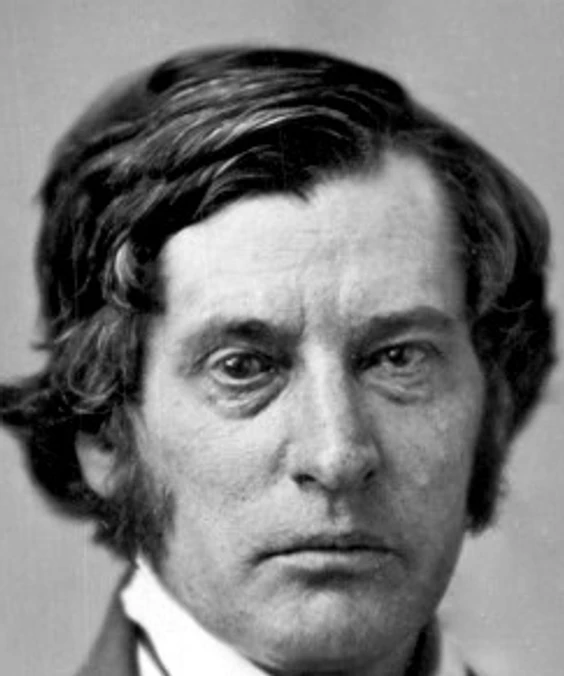
Horace Mann
The Public Record
Horace Mann was an American educational reformer, abolitionist and Whig politician known for his commitment to promoting public education; he is thus also known as The Father of American Education. In 1848, after public service as Secretary of the Massachusetts State Board of Education, Mann was elected to the United States House of Representatives (1848–1853). From September 1852 to his death in 1859, he served as President of Antioch College.
gutenberg.org
Think not of luxury, or wealth, or ignoble ease, but only of an heroic conflict, careless of the present strength of the foe.
When we supply the virtuous will, God supplies the power; so that the result corresponds, not to our weakness, but to his omnipotence.
But our success depends infinitely less upon our strength than upon our motive.
Every Young Man, however obscure or powerless he may seem, can do something for the cause of freedom.
In the spread of Christianity, in the advance of civilization, in the moral development of the people, a tribunal is now preparing, which will pronounce sentence of condemnation against the abetters of slavery, to be promulgated as from…
This is just as certain as it is that the great crimes of the race committed in past ages,--the persecutions of the early Christians, the tortures of the Inquisition, or the atrocities of the African Slave trade,--are now condemned by the…
Every act, whether of individuals or of governments, whether committed in past days or in our day, which compromises the sacred principles of Human Freedom, or postpones its interests to other interests, is set down, in the calendar of…
But the cloud which obscures the sun does not annihilate it; and these principles are sure to emerge and shine unclouded in their native splendor forever.
Nothing stands upon a more adamantine basis of truth than the principles which decide between Human Freedom and Human Slavery.
The virtuous man binds himself to a principle, and soars securely through all worlds.
In the future, lies the wealth of every man; the present is only an opportunity to make its title secure.
O, how insane and fatuous to barter the undecaying honors of the future for the transitory joys of the present!
What are its huzzas, its ostentation, and its pride, when placed in the balance against the eternity of rewards that crown allegiance to duty?
Among the wiles of the sorceress that beguile the young to their ruin there is no more seductive, yet fallacious temptation, than the value which seems to belong to the passing hour, and to the pleasures it may bring.
Whatever may be the peculiar madness of the hour, in whatever direction the gauds of wealth may beckon, or the prizes of ambition call, let the Young Man remember, that only can be honorable which is just, that only can be safe which is…
Hence he knows that Right and Truth will assuredly triumph, and that all who oppose them will be scattered as the whirlwind scatters the chaff.
And when he looks without himself, he sees there is a God enthroned above, mightier than every “god of this world,” and that there is a divine law higher than any laws of fallible men.
When the Young Man of this class looks within himself, he finds the constitution of his own moral nature to be such, that annihilation with truth is better than the most favored existence with error.
No names so lofty, no multitude so large, that they can abolish these truths, or abstract one jot or tittle from their binding force, in this life, or in any life.
Hence all other entities and possibilities,--opulence, power, fame, genius, things present, or things to come,--are, and forever must be, secondary and subordinate to these primary and everlasting laws.
Hence the two resulting and all-comprehending duties,--love to God and love to Man.
They have learnt that, in the divine classification, there are but two great objects in the universe,--God and Mankind.
They seek, not for the time-hallowed, but for the truth-hallowed.
But there is a third class of Young Men who are true to the sacred instincts of virtue, and devoutly reverent of duty.
Politicians like Horace Mann