Why welcome and court and feed the prodigalities and sensualities of the old world, to corrupt the pristine virtues of the new?
Horace Mann
The Public Record
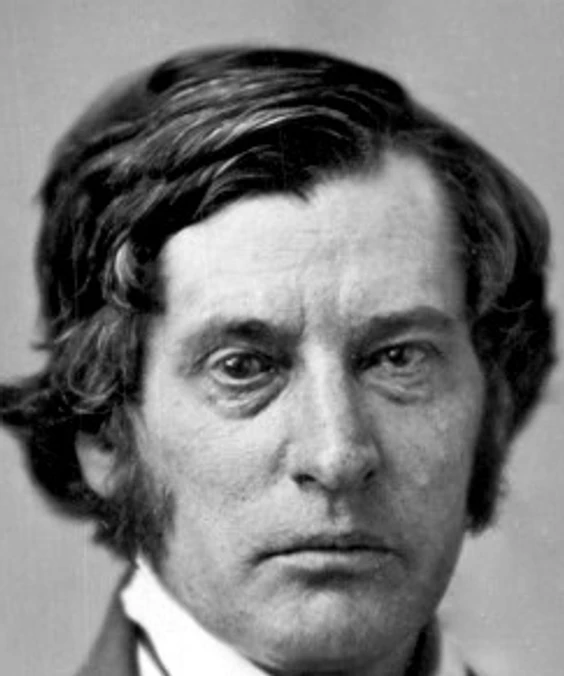
Horace Mann was an American educational reformer, abolitionist and Whig politician known for his commitment to promoting public education; he is thus also known as The Father of American Education. In 1848, after public service as Secretary of the Massachusetts State Board of Education, Mann was elected to the United States House of Representatives (1848–1853). From September 1852 to his death in 1859, he served as President of Antioch College.
gutenberg.org
We prize and honor the home-bred virtues of diligence and thrift; for they bestow upon us all our comforts, the means of educating our children, and leave us a magnificent surplus for godlike charities to be scattered over the world.
Think of this magnificent ship of state freighted with twenty-three millions of souls, and laden to the scuppers with the wealth of the world’s hopes, with a pilot at the helm--drunk!
We have had men in the presidential chair not without faults and blemishes of character; but hitherto we may proudly say, that we never have had one there who drowned his reason in his cups.
Is this an example you desire to set before the ingenuous and aspiring youth of the land; ay, before your own children?
If it is public for example, it is public for criticism; and, under such circumstances, the moral and religious guides of the community are as solemnly bound “truly to find, and due presentment make,” of these offences, as the grand jury…
When public men openly and notoriously practise vice, they make the vice public, and bring it within public jurisdiction.
Now, let this doctrine be applied; for I hold it to be no unwarrantable invasion of private character to apply these principles to public men.
And why, in this department, should we ever grant dispensations and absolutions; or, like the old popes, sell indulgences to sin?
Our highest state offices have been filled for years, saving very rare exceptions, with men of distinguished probity and a spotless life.
In selecting our religious guides, we feel almost justified in being captiously and morbidly critical; we hardly admit that we can be strict to a fault; and the man who fails to carry personal purity and exemplariness into the pastoral…
In choosing teachers to be the guides and exemplars of our children, we demand high moral worth; and we would as soon thrust our youth into the centre of pestilence, as amid the contagion of vicious and profligate men.
If we are to take the Pharisee’s rule, and determine a man’s piety by his creed, and by the number and length of his prayers, then piety will be the cheapest thing in the market, and as worthless as it is cheap.
We seem to have forgotten that the tree is to be known by its fruit, and a man by his life.
We have been too prone to judge of men by their professions and by their connections.
But I say, as of old, no man can serve God and mammon.
We have supposed that the same individual might be a bad man and a good citizen; might be a patriot and an inebriate, a faithful officer and a debauchee, at the same time; might serve his country during “office hours,” and the powers of…
We have assumed the falsity of a distinction between a man’s public and his private life.
In selecting men to be our political leaders, we have sometimes committed the gravest moral error.
I wish to advance one idea for the consideration of all sober, moral, and religious men; and when this idea is duly considered, I trust to its working a revolution in public sentiment.
That ordinance has been cherished in our memories, it has been taught to our children, and we have displayed it before the world both as the pledge and the promise of our devotion to liberty.
They were the pattern men of the world;--not aggressive, not submissive; not hostile, not servile; doing right, demanding right; they were the men who would never wield the oppressor’s rod, and would go mad at the touch of his heel.
And when the struggle was ended and the triumph won, they achieved labors of peace not less magnanimous and wonderful than their labors of war.
For this they performed the double task of enduring all privations and dangers, and at the same time of laying the foundations of all our free and glorious institutions; and as the sires were stricken down by toil and death, the sons took…
For this they wandered abroad upon the ocean, deeming its ingulfing surges to be more tolerable than a tyrant’s power.
Politicians like Horace Mann