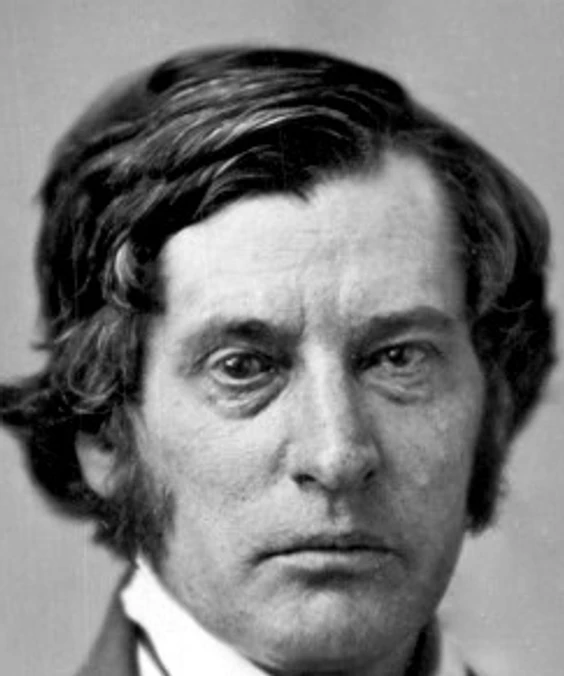
He was absolutely incorruptible, either by money or by office.
George F. Hoar
The Public Record
gutenberg.org
But he believed in those things because they were, in his judgment, essential to the accomplishment of the highest results in the country and in the Commonwealth.
He was soaked in Scripture, especially in the Old Testament, a soaking which has somewhat the same effect on the moral and mental fibre that seven years in a tanner's vat used to have upon sole leather.
He was a member of that absolute democracy, the old-fashioned New England country town, where character and worth were the only titles to respect in the community, where the son of a President or the son of a Senator or of a Governor stood…
Thus he espoused the anti-slavery movement in politics in its germinal stage, and became one of the most sagacious and efficient organizers of the Republican Party in his native State.
He marched just as far forward in the column as he was sure it could command the ground.
But he was by no means a fossil conservative lagging in the rear of progress.
He was early an anti-slavery man, and one of the founders of the Free Soil Party.
He was never better pleased than when, without prospect of gain for himself, he was employing his talents in the protection of poor and honest men against fraud and oppression.
The people were fond of discussing public questions, not only in town meeting, but in neighborhood gatherings and debating societies.
In every generation it had contained men of large influence in the Commonwealth, who had kept alive the interest of the people in public affairs.
He was the greatest organizer of righteousness in his generation.
His life, so far as he took part in political affairs, was devoted to objects wholly public, never personal.
Each of them had a great part in the overthrow of the political forces that were on the side of slavery, and in the triumphant overthrow of the combination which would, if successful, have corrupted Massachusetts and made of her the worst…
It would have been better to say that, although I did care very much what the rest of mankind thought, I knew that when these men were on my side, the wisdom and conscience of Massachusetts would be there also.
I have often said that there were four men who honored me with their friendship, whose counsel I liked to get under any difficult public responsibility, and that when these four men approved or agreed with anything I myself said or did, I…
I think the American people have, in general, settled down on this as the reasonable view, in spite of the clamor of the advocates of fiat money on the one side, and the extreme strict constructionists on the other.
It is a dangerous power, like the power of suspending the writ of Habeas corpus, or the power of declaring war, or the power of reckless and extravagant public expenditure, never to be exercised if it can possibly be helped.
They are of that class of political philosophers who are never trusted by their countrymen to deal with authority with any practical question either legislative, administrative, or judicial.
It is the fashion still, in some quarters, to speak, in spite of the decisions of the Supreme Court and the numerous State courts, to which I have referred, as if it were too clear for argument that Congress had no right to make the…
Chief Justice Chase, with the three Democratic Justices held the Legal Tender Law unconstitutional, and declared that a law making anything but gold or silver legal tender for debts was neither appropriate nor plainly adapted to carrying…
However any political antagonist might dislike him, every antagonist must respect him, and nobody could laugh at him.
They knew too, in spite of their strong differences with Grant, the innate honesty, justice and courage of the man.
They did not resent what he had done as a soldier, as they resented what Greeley had said as a politician.
A candidate seeking an election by reason of the mistakes his antagonist has made in accordance with his own advice, does not stand much chance of winning.
Politicians like George F. Hoar