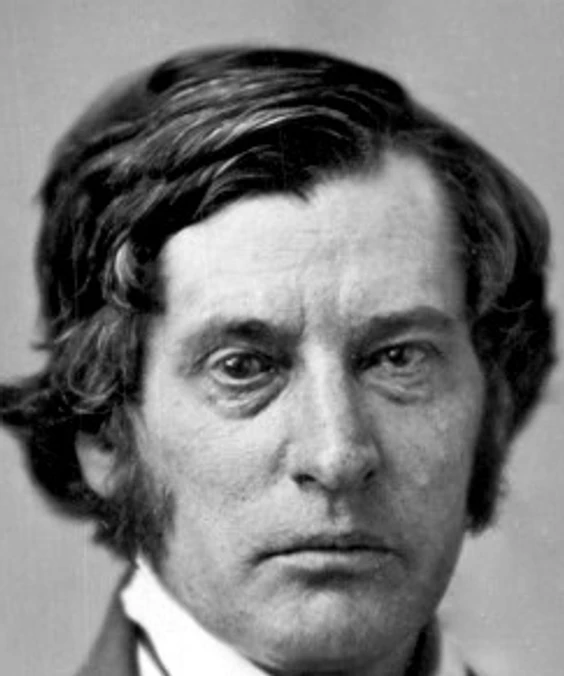
Judge Hoar strenuously insisted that the Judges of the newly created Circuit Courts of the United States should be made up of the best lawyers, without Senatorial dictation.
George F. Hoar
The Public Record
gutenberg.org
But it never got so dangerous a hold upon the forces of the Government, or upon a great political party, as in the Administration of General Grant.
A nation will survive a corrupt minister or monarch, but a corrupt people must surely and speedily perish.
The same thing is true of successful battles with political corruption in high places, the most formidable peril to any Government and, if it be not encountered and overcome, fatal to a Republic.
John Jay said that the greatest achievements of diplomacy were often little noted by history and that their authors got, in general, little credit.
Never rode to the wrong's redressing A worthier paladin.
He forgot his own soul for others, Himself to his neighbor lending; He found the Lord in his suffering brothers, And not in the clouds descending.
For the warmest of hearts is frozen, The freest of hands is still; And the gap in our picked and chosen The long years may not fill.
Weep over him, tears of women, Stoop, manliest brows, above him!
He has done the work of a true man,-- Crown him, honor him, love him.
But, as I have already said, when the time came, he always subordinated his own desire to what he deemed the welfare of the public.
He was the most disinterested man I ever knew in public life.
He loved the great cause of human freedom and equality with the passionate devotion which a lover feels for his mistress.
He loved with the whole intensity of his nature, his country, his Commonwealth, and the city which was his home.
He summoned the nobility in men, and it answered to his call.
And yet, in all these services and contests he never appealed to a base passion or to a low ambition in any man.
Many bad men found that somehow their ambitions were nipped in the bud by a process they could hardly understand, and many good men were called into the public service in obedience to a summons from a hand the influence of which they never…
He is a lion among jackals; the best political organizer in the State.
He was absolutely without any pretence to oratory; and yet for thirty minutes he played upon his audience as it were a pipe, and plucked out the heart of its mystery.
He was a man of absolute integrity, of absolute veracity, and of a tender and boundless compassion.
He was a very tolerant, friendly and considerate man, in dealing with men who differed from himself.
He believed that the highest human occupation was to take a share in the leadership and direction of a self- governing people.
But he never was contented until he had changed or helped to change that minority into a majority.
He used to speak with infinite scorn of settling questions of righteousness by a show of hands.
He was a man of clean hands and a pure heart.
Politicians like George F. Hoar