We are here in the sweet silence of a summer morning, eighteen hundred years after such a scene, and able mentally to catch some glimpse of it; some echo of the storm that has left behind it so ineffaceable a mark.
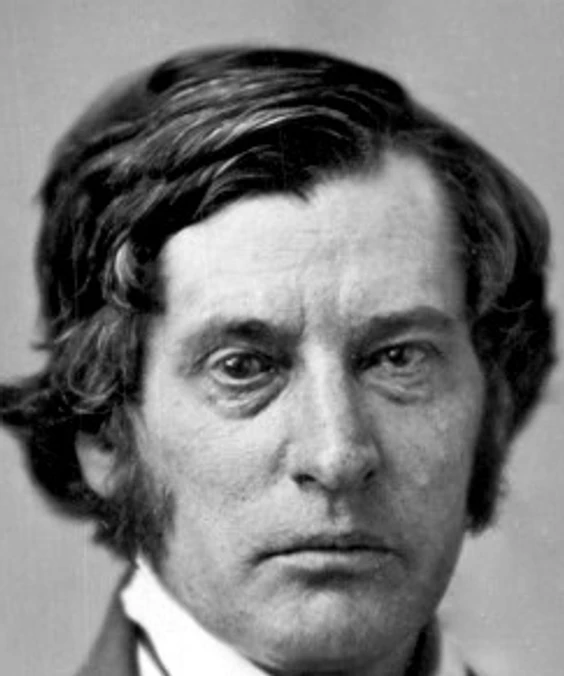
George F. Hoar
The Public Record
★ Featured Quote
November 15, 2021
This Treaty would make us a vulgar, common place empire, controlling subject races and vassal states, in which one class must forever rule and other classes forever obey.
— George F. Hoar
gutenberg.org
The language Statius uses is more simple than mine; but this is substantially the picture he gives: and I know of nothing that so impresses on the imagination the thunder of the power of the Roman Empire as this creation in the wilderness…
It is not too much to say that most of the main roads in England are Roman; but the very continuity of their use has caused this to be overlooked.
To go fully into the role of the number three in British traditions would require a profound study; but it may be useful briefly to note its influence on the Bardic poetry-- the Triads, where the subjects are all grouped in threes.
And the Greeks, in turn, owed their astronomy to the Egyptians, with whom the year was reckoned as of three hundred and sixty days; and this three hundred and sixty-day year gives us the clue to the forty-day period for holding the Forest…
This quaint old room, with its great oak beam overhead, and its kitchen grate wide enough to roast a deer--this strange blending of an hotel dining-room and a Court of Justice, has nevertheless a link with the far distant past more…
If there is anything more beautiful than a moonlight summer night in the heart of the Forest of Dean, it is its transformation into a summer morning, with the sparkle of dew on the grass, and the sunrise on the trees; with the music of…
We speak of a light that makes darkness visible; and similarly there are sounds that deepen the long intervals of silence with which they alternate.
But I like to think he will be sent on some errands like that of the presence which came to Ben Adhem with a great wakening light, rich and like a lily in bloom, to tell him that the name of him who loved his fellow men led all the names…
We bring you the heart's love of Boston where you were born, and Worcester where you took the early vows you have kept so well; of Massachusetts who knows she has no worthier son, and of the great and free country to whom you have taught…
We bring you a more costly and precious gift than any jewel or diadem, though it came from an Emperor's treasury.
But when his time shall come, what will be the desolation of the country without the man?
To me he has been a friend and father and brother and counsellor and companion and leader and instructor; prophet of good hope, teacher of good cheer.
He has taught us the truth, very simple, but somehow nobody ever got hold of it till he did, that virtue and brave living, and helping other men, can be made to grow by geometrical progression.
I do not know another living man who has exercised a more powerful influence on the practical life of his generation.
Poverty and war and crime and sorrow are the enemies with whom he has striven.
He has never been afraid to tackle the evils that other men think hopeless.
He has never been found outside the ranks railing at or criticising the men who were doing the best work, or were doing the best work they knew how to do.
When men were engaged in the struggle to elevate the race for the good of their fellow men, no word of discouragement has ever come from his lips.
He has never stood aloof from the great battles for righteousness or justice.
So the first duty of a Christian minister is still that of a pastor to his own flock.
He may be a warrior or a statesman, or reformer, or philanthropist, or prophet or poet, if he careth not first for his own household, he is worse than an infidel.
He has been the minister of comfort in sorrow and of joy in common life to countless persons to whom his friendship is among their most precious blessings, or by whose fireside he sits, personally unknown, yet a perpetual and welcome guest.
He possesses the two rarest of gifts, that to give history the fascination of fiction, and that to give fiction the verisimilitude of history.
Politicians like George F. Hoar