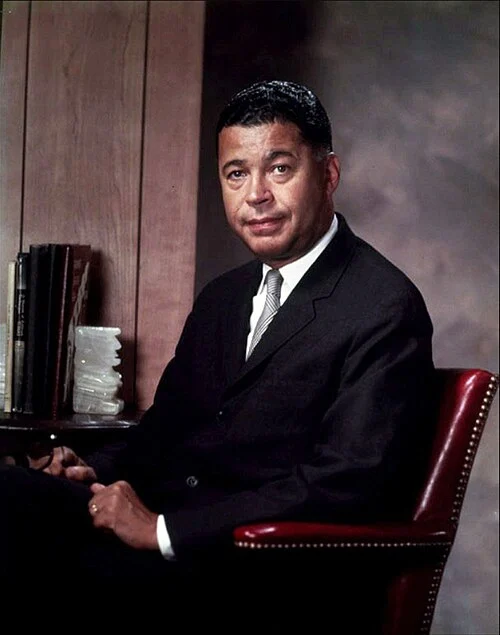
He was a member of that absolute democracy, the old-fashioned New England country town, where character and worth were the only titles to respect in the community, where the son of a President or the son of a Senator or of a Governor stood on an absolute and entire social equality with the son of the washerwoman.
George F. Hoar: “He was a member of that absolute democracy, the old-fashioned New England country town, where character and worth were…”
Editor's note · Context
This passage illustrates Hoar's belief in the egalitarian nature of New England towns, where social status was determined by character rather than lineage.
Share
More from George F. Hoar
We are here in the sweet silence of a summer morning, eighteen hundred years after such a scene, and able mentally to catch some glimpse of it; some echo of the storm that has left behind it so ineffaceable a mark.
We bring you the heart's love of Boston where you were born, and Worcester where you took the early vows you have kept so well; of Massachusetts who knows she has no worthier son, and of the great and free country to whom you have taught…
To go fully into the role of the number three in British traditions would require a profound study; but it may be useful briefly to note its influence on the Bardic poetry-- the Triads, where the subjects are all grouped in threes.
And the Greeks, in turn, owed their astronomy to the Egyptians, with whom the year was reckoned as of three hundred and sixty days; and this three hundred and sixty-day year gives us the clue to the forty-day period for holding the Forest…