I don`t think so. Look, we`re in the middle of a pandemic. The CDC has narrowed somewhat the eviction moratorium and focused it on places where the threat from COVID is the greatest. And I think that`s exactly what the CDC is supposed to…
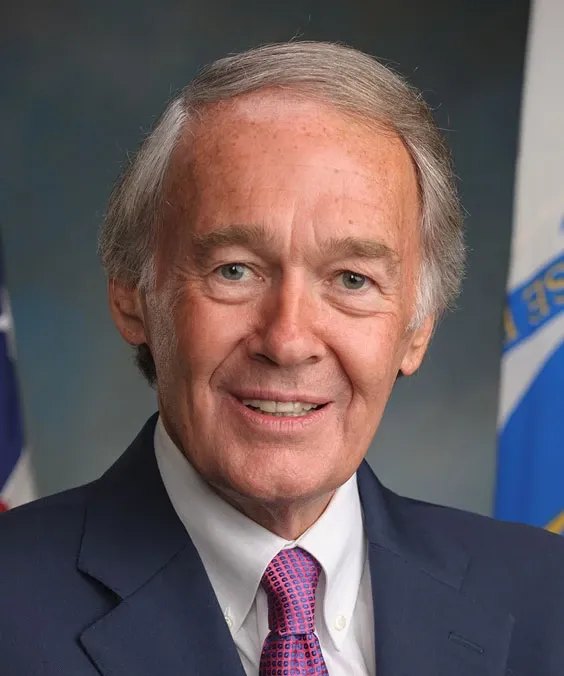
Elizabeth Warren
The Public Record
Elizabeth Ann Warren is an American attorney, academic, and politician serving as the senior United States senator from Massachusetts since 2013. A member of the Democratic Party, she has been a prominent advocate for consumer protection, economic equality, and corporate regulation. Warren gained national recognition for her work in establishing the Consumer Financial Protection Bureau and has focused on issues such as student debt relief and healthcare reform during her tenure in the Senate.
We cannot leave consumers to fend for themselves on a level playing field that is making it even easier for scammers and fraudsters to use these apps to do harm.
Not only does that leave consumers extremely vulnerable to scam artists and to fraudsters, it also leaves them vulnerable to being hounded by the apps themselves.
The data here show that regulators have no credibility on mergers, and sure, there are rules under which you review mergers, but in practice, for 15 years now, this has turned into a check-the-box exercise, where the outcome has been…
I agree with you on this, and that is why I am very glad to see that the CFPB has begun taking steps to strengthen and to clarify consumer protection rules for payment apps.
Our regulators have a job to do, and it is our job here in Congress to make sure that they do it.
Merger review has become the definition of a rubber stamp, and the banks know it.
So money in these accounts are more like cash in your wallet than like money in a bank account.
This is a very important Subcommittee, and I am glad to be part of it under your leadership.
That is why I was happy to see that President Biden's Competition Executive order called on the banking agencies to revamp their merger review guidelines to put an end to rubber stamping.
This results in more concentration and higher costs for consumers, and it increases systemic risks for our financial system.
I can tell you the banks, especially small banks, really desperately want to comply.
Are banking agencies like yours currently required to reject mergers when the resulting bank will be bigger or more complex than our banking rule are set up to handle?
What if the banks trying to merge do not receive the highest ratings in their community reinvestment act exams to measure how well they are serving their communities?
The legacy of Black codes and Jim Crow and redlining still holds back too many communities, and the OCC's rule did not serve CRA's core purpose, to ensure that banks are serving low-income communities and communities of color.
The best thing we can do to protect Americans' money is to adopt smart regulations that protect investors and consumers.
But even if crypto is not an improvement over our current system when it comes to being more democratic or less hackable, there is one other possible benefit, and it is a big one.
But as the cryptocurrency market grows, it is also our responsibility to carefully examine these claims and promises about crypto's potential.
I am not convinced that crypto is the solution. In fact, crypto could be even more dangerous for consumers.
Instead of leaving our financial system at the whims of giant banks, crypto puts the system at the whims of some shadowy, faceless group of super-coders and miners, which does not sound better to me.
So the cryptocurrency boosters argue that crypto is the Yellow Brick Road to a faster, cheaper, and safer financial system that works for everyone, not just for the biggest banks.
There is no doubt that we need a stronger, safer, and more inclusive financial system.
There is no question that our financial system needs change--big, structural change--and we should be willing to consider how these new technologies can help consumers and our economy.
We need more community banks that are actually in people's neighborhoods and that understand their lives.