May 22, 2011
More and more regulations are coming out being proposed by EPA relating to coal, for example, the utility MACT, which is going to cost an additional $10 billion a year to produce energy.
The Public Record
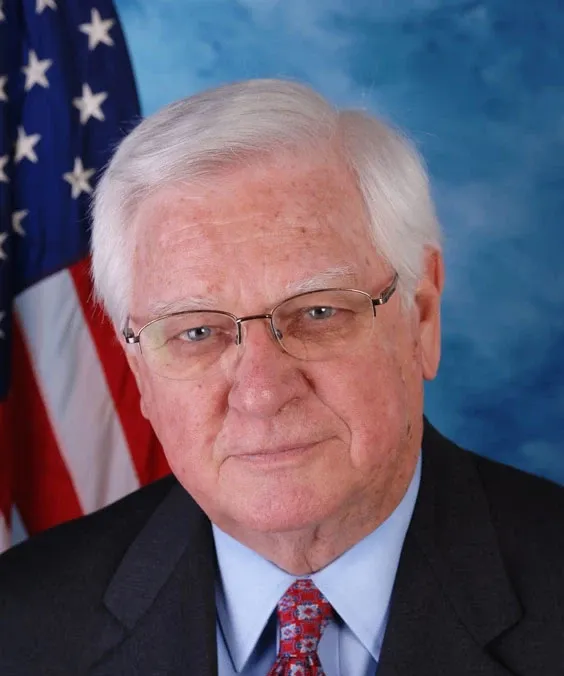
Ed Whitfield is a former Republican member of the United States House of Representatives, who served Kentucky's 1st congressional district from 1995 to 2017. During his tenure, he was known for his work on energy and commerce issues, particularly in relation to the energy sector and healthcare. Whitfield played a significant role in various legislative efforts, including those aimed at reforming the Affordable Care Act and addressing energy policy in the United States. He was also involved in initiatives related to veterans' affairs and agriculture, reflecting the interests of his constituents in rural Kentucky.
More and more regulations are coming out being proposed by EPA relating to coal, for example, the utility MACT, which is going to cost an additional $10 billion a year to produce energy.
The Obama administration, and particularly President Obama, has done a tremendous job when he is out there speaking about how he wants to support energy.
I would much rather keep that 2 to 3.9 billion dollars in the pockets of our constituents in the Midwest rather than giving it to our close friends, our deeply held friends in Canada.
Renewable fuels is good for farmers, certainly good for a lot of people in this country and it helps us become less dependent.
I take this time to make sure I put that into the record, give credit to Elliot Engel who has been leading this charge.
During the events in Japan, Chairman Jaczko enunciated a policy that people living within 50 miles of the damaged reactors in Japan should evacuate.
Thank you very much, and I also want to welcome the Commissioners to be here with us today. We look forward to your testimony, and all of us are very much concerned about what has happened in Japan as it relates to nuclear power.
It is important that some decision be made at the NRC in a way that all of us clearly understand because when we have spent billions of dollars on the Yucca Mountain Project...
But from Mr. Shimkus's reading your testimony earlier, it would indicate that they feel like they voted on this issue, and from your perspective, they did not vote on this issue.
I also would like to revisit the Yucca Mountain issue simply because of the money that has been involved in it and the ramifications that decision or nondecision has on our country.
I want to thank all of you for coming. I look forward to working with our friends on the--our Democratic friends to craft legislation that can accommodate some of the concerns we have heard today.
If you don't think those are real--so if we are going to have a real debate about these standards, Mr. Chairman, we need to start getting some real numbers from the EPA.
These regulations alone, under EPA's conservative estimates, will cost industry over $14 billion a year.
I yield myself the balance of my time. Well, I would say to you that EPA adopted this tailoring act because they bit off more than they could chew, initially. That's why a lawsuit has been filed against them, because they violated the…
On this tailoring rule that was adopted by EPA saying that they would regulate only those emitters of 100,000 tons or more per year, that is in direct violation of the language of the Clean Air Act, which says they have to regulate…
I am delighted that we have this opportunity today to debate this important legislation. Over the last 2 years, the Environmental Protection Agency has been the most aggressive agency representing environmental causes in many, many years…
I would like to yield such time as he may consume to the gentleman from Illinois (Mr. Shimkus), the chairman of the Environment and the Economy Subcommittee. The Acting CHAIR. The gentleman from Illinois is recognized for up to 5 minutes.
I'm actually surprised the gentleman has offered an amendment related to oil because our bill that we have on the floor today completely preserves in every way the car rule under which EPA sets greenhouse gas emission standards for…
And as a result of that, in my view, we end up exacerbating a lot of problems with authorizing legislation.
While the White House says we are on the road to economic recovery, working families in my District... are still struggling.
The national debt, which has skyrocketed over the past few years, reaching almost $14.2 trillion today.
I genuinely believe that one of the major problems facing Congress today is our budgetary and appropriations process.
Politicians like Ed Whitfield