May 14, 2008
And I would assume a way in which we would do that would be to bring in more supply?
The Public Record
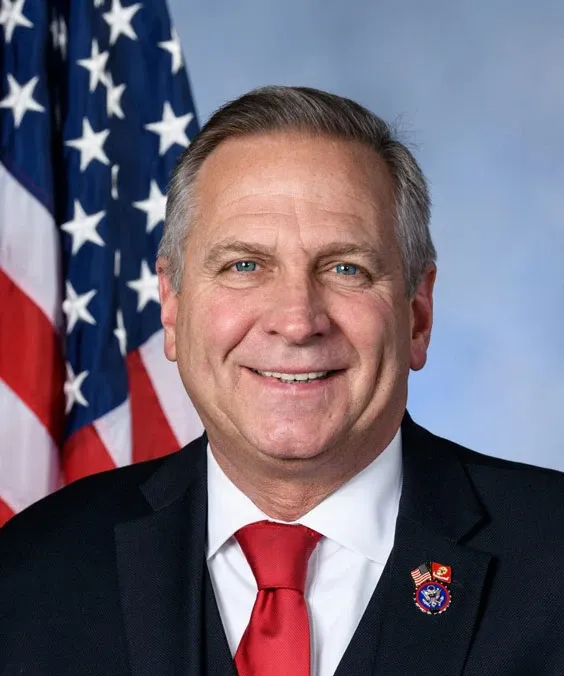
John Shimkus is a former U.S. Representative from Illinois, serving in the House from January 7, 1997, until January 3, 2021. A member of the Republican Party, he represented Illinois's 15th congressional district. During his tenure, Shimkus was known for his work on issues related to energy, environment, and agriculture, often advocating for policies that supported these sectors. He served on several committees, including the Energy and Commerce Committee, where he focused on energy policy and environmental regulations.
And I would assume a way in which we would do that would be to bring in more supply?
Because we want to highlight the Arctic National Wildlife Refuge, a coastal plain the size of South Carolina, a drilling platform the size of Dulles Airport. We want to address the Outer Continental Shelf, both on the east coast and the…
Battling charge, that's what I like. Finally we get to talk about supply. Mr. Speaker, for 18 months I have been coming to the floor to talk about the importance of bringing more supply to our economy so that prices would go down. Finally…
we just took an interesting vote on the floor a few minutes ago, and that was to stop filling the SPR and make sure there's 70,000 barrels on the market. The projections by my friends on the other side is that this will affect the cost…
These are input costs. You know the diesel price has doubled. I mean, my farmers, when they plant the corn, they're in a tractor. When they harvest the corn or the beans, they're in a tractor. It's run by diesel fuel. There's an attack on…
As many people who have observed the House floor over the past month, I have continuously come down to address the high cost of energy and the importance of bringing the supply issue to this debate. One of the things that we have been…
Now bring in climate change. On average, climate change is going to add 50 cents to a gallon of gas. That would raise the price to $4.16. Nobody wants to pay that. How can we solve this problem, Mr. Speaker? Let's go after our natural…
Well, Mr. Speaker, high energy costs really affect this debate because high energy costs are causing people to make tough decisions where they can't meet their bill payments. Just last year the cost for natural gas for an individual…
And that would be in conjunction and probably would meet with the Speaker's promise in 2006 that Democrats have a commonsense plan to help bring down skyrocketing gas prices. She made that quote. That would allow us to bring that plan to…
Thank you. And I have a few comments. Immediately after you mentioned Mac Thornberry's bill, I also signed onto the No More Excuses Energy Act. The school bus folks were in town today, and what I have really gotten an appreciation of over…
Again, the Democrats have decided to demand other countries explore, develop, create jobs in energy, and continue to keep our reserves locked up, never to be used. I think the more disturbing news is we have seen the Democratic party's…
I thank my colleague. Pro-production, pro-supply, and conservation I think are key items.
And it's silly that we're not going after our own resources and our own supply when Russia is attempting to grab vast chunks of the Arctic to claim its vast potential of oil and gas and mineral wealth to fuel their country's economy. And…
What to do about oil? First it went from $60 to $80 a barrel, then from $80 to $100 and now to $120. Perhaps we can persuade OPEC to raise production, as some Senators suggest; but this seems unlikely. The truth is that we are almost…
When he talks about supply, we have a 250 years worth supply of coal in this country, 250 years that we can have access to. And according to the Federal Government, there is enough oil in deep waters many miles off our coast and on Federal…
I appreciate that. And I have tried to segue a little bit of the climate change debate. We mentioned it here with Chairman Dingell. To be intellectually honest, a carbon tax would be a way to go. He says 50 cents a gallon. So if the…
I taught high school for a couple of years, and when you don't make a decision, you have made a decision. Even though you don't have a policy, you in fact have a policy. Our debate is that when the Democrats promised us, when Speaker…
I also want to commend the chairman, Mr. Oberstar, who is really interested in transportation issues, a good man of heart, and I applaud your leadership. Mr. Chairman, this authorization bill brings 1,500 new Coast Guardsmen. We're proud…
this is a small business bill. Let me tell you why this is relevant. The biggest challenge to small businesses in America today is the high cost of energy. Let me say that again. The biggest challenge to America's small businesses today is…
In a press release on April 24, 2006, then Leader Pelosi, now Speaker Pelosi said, Democrats have a commonsense plan to help bring down the skyrocketing cost of gasoline. In an op-ed penned by my friend from Illinois (Mr. Emanuel), he…
I know the liberal left and the environmentalists don't like coal. I know that. And they tout Kyoto. I know that. They tout our European friends. The New York Times today: ``Europe Turns to Coal Again.'' Europe turns to coal. When is this…
Funny. No talk about gasoline, no talk about the high energy prices. The number one issue affecting consumers today and the pocketbooks of mom and dad and driving kids to events is the high cost of gasoline. When this majority took over…
I'm glad we are talking about healthy beaches. As I said earlier, one of the most damaging aspects about healthy beaches is an oil spill, and one way to limit the risk of oil spills is to become more self-reliant, and I know my colleague…
it's great to be down here to talk about healthy beaches again. I spoke on the rule. The first colleague on the other side talked about oil wells and how they endanger healthy beaches, so it gave me an opportunity to continue to talk about…
When this Democrat majority took over the House, the price of a barrel of crude oil was $58 a barrel. Today, it hovers around $111 a barrel. In 2006, the Democrat leadership promised lower gas prices. What we've seen, in reality, is higher…
Politicians like John Shimkus