Jun 20, 2008
It doesn't have to be. This is not a difficult process. Now, since I signed the pledge, the question is how do we do this? Well, we know how we do it. These red areas on this map is called the Outer Continental Shelf, OCS. You hear it…
The Public Record
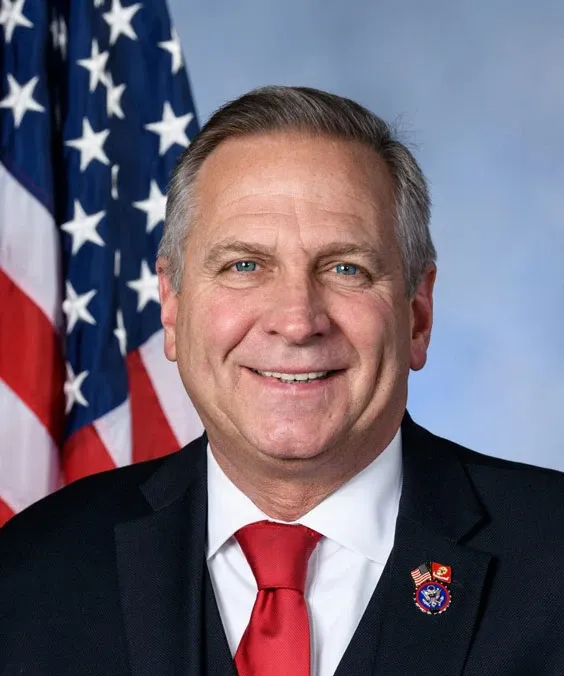
John Shimkus is a former U.S. Representative from Illinois, serving in the House from January 7, 1997, until January 3, 2021. A member of the Republican Party, he represented Illinois's 15th congressional district. During his tenure, Shimkus was known for his work on issues related to energy, environment, and agriculture, often advocating for policies that supported these sectors. He served on several committees, including the Energy and Commerce Committee, where he focused on energy policy and environmental regulations.
It doesn't have to be. This is not a difficult process. Now, since I signed the pledge, the question is how do we do this? Well, we know how we do it. These red areas on this map is called the Outer Continental Shelf, OCS. You hear it…
And people can follow this. You have a coal mine. Good, high-paying jobs. You build a coal-to-liquid refinery. It's not a crude oil refinery. It's its own coal-to-liquid refinery. It was done in World War II by the Germans. It's known…
And part of that alternative fuel debate is coal-to-liquid technologies. And this is not just keeping energy costs down. This is a job. This is a job issue.
And the lights in this building that we enjoy and the air conditioning in this building that we enjoy is produced from a coal-generating plant. Fifty percent of all electricity in this country is produced by coal. And it's not a dirty…
it is really simple: If you want to help rural small town poor individuals in this country, we have to get the price of gas down. Here is the problem: January 2001, the price of a barrel of crude oil was $23. When this majority came in, it…
it's a curious debate that we have in these 1-minutes. Democrats are bringing to the floor unemployment insurance and they will bring to the floor helping people with heating costs and cooling costs. The real job creation engine would be…
I feel sympathy for the folks paying these high gas prices. Here is a problem: On average, $3.98, take in climate change 50 cents and we'll be paying $4.48 a gallon. Here is the solution: Outer Continental Shelf, which is off-limits by…
We're going to come to this floor saying, Oh, we've got to do something because energy heating costs are high; oh, we need to do something because people are losing their jobs. I will tell you how we can get jobs back into the economy…
I appreciate Congresswoman Matsui managing the time. We've worked very hard on clean diesel issues and the like, so this is really appropriate to this debate though, because Amtrak uses big diesel engines. And what's happened in the Amtrak…
Yes, I will. So we're willing to talk about this, but golly, if we're not talking about energy and the price of gasoline at the pump, then what are we doing?
American jobs to build the pipeline. American jobs to operate our aviation industry. In fact, this plane here is a fighter plane, because the United States Air Force is the number one purchaser of aviation fuel in the world. For every…
Reclaiming my time, you all want to do no exploration, no gas, no coal, no nuclear, which brings costs up. We're saying let's bring on more supply. Let's mitigate the cost. Let's plan for the future. We are talking about now. We are not…
I come in support of this legislation, and have come to learn that this nanotechnology has great opportunities to help us in the whole energy debate. I think nanotechnology can help in the solar powered cells. I understand that…
If we had the resources from the royalties on oil and gas exploration in the outer continental shelf or if we had the resources from the royalties from ANWR, we would have the money to be able to segue into a national debate on solar, on…
Reclaiming my time, we want to talk about the future, but what our constituents are talking about is the present. There has been more than $1.68 increase in gasoline prices. How can we even send our kids to the university if energy costs…
This is the problem. $23 to $58 to $123. You only address that by bringing on more supply. We have oil and gas in the Outer Continental Shelf, and we need to be there. I've got margin oil wells. I've got oil all over the State of Illinois…
Let me reclaim my time, and just go over, since 1994 and talk about this debate. In ANWR, which Clinton vetoed in 1995, we would have that oil today. House Republicans support ANWR 91 percent of the time on votes. House Democrats 86…
But all those issues that you addressed, if we had American-made energy, if we weren't relying on imported crude oil, you know, why does the cheap dollar affect our price? Because we're buying crude oil overseas. If we were producing our…
No, it would not be a substantial size. It would be the size of Dulles Airport. It would be like putting on a football field a postage stamp. That's the perspective. That's what gets lost in this debate. We can do it. You know what? If you…
When your party will come to the floor and debate bringing more supply to the market, we can negotiate. But when you say, We're going to solve our 50-percent increase in demand on energy with solar and wind, it just doesn't pass the laugh…
I'm from Southern Illinois. It's the Saudi Arabia of coal, 250 years worth. Fifty percent of our electricity that we generate today is by coal. We could also use that coal as the South Africans have done for 40 years. The Germans did it in…
I will debate this issue. This issue is about supply. I don't care who's responsible. This issue is about bringing more supply into the market. When a barrel costs $128 versus $58, this is what you get: You get gas prices that were at…
And because I'm enjoying this type of debate, I will concede the dollar price. But let me tell you why, if we had our own resources, if we were drilling our own oil, isn't it criminal that we're relying on imported crude oil to fund our…
this short-term extension is important. It's just too bad that we couldn't extend the low cost of energy that we had 18 months ago. Eighteen months ago the price of a barrel of crude oil was $58.31. Today it's $128 a barrel, a $70…
And I would assume a way in which we would do that would be to bring in more supply?
Politicians like John Shimkus