Oct 28, 2009
I want to thank our Chair for including in the mark the 3 percent allowance to go to transportation strategies, to reduce our greenhouse gas emissions.
The Public Record
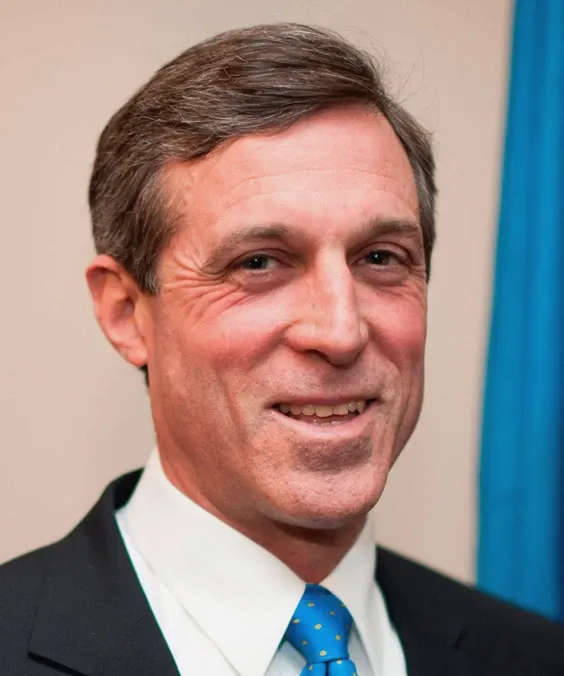
Tom Carper is an American politician currently serving as the senior United States senator from Delaware, a position he has held since January 3, 2001. A member of the Democratic Party, Carper has focused on various issues including healthcare, environmental protection, and fiscal responsibility throughout his career. He previously served as the Governor of Delaware from January 21, 1993, to January 2, 2001, and as a member of the U.S. House of Representatives from January 3, 1983, to January 21, 1993.
I want to thank our Chair for including in the mark the 3 percent allowance to go to transportation strategies, to reduce our greenhouse gas emissions.
Thanks for being a good role model over at the State Department and USAID for the rest of us.
The issue du jour is cyber warfare. It isn't science fiction. It is reality.
In a day and age when we have seen in the first 8 years of this decade, we literally doubled our Nation's debt, we ran it up by another $1.
Now, talk to us about other agencies being able to replicate the success that you enjoyed at the State Department.
In fact, in 2002, Congress passed what is known as the Federal Information Security Management Act (FISMA), to help prevent many of the problems that we are going to be discussing today.
Imagine the terrifying scenario of a hacker creating uncertainty as to the validity of the data residing on the Federal Aviation Administration's (FAA) air traffic control systems.
we simply need to do a better job in contracting to make sure that the systems that we are buying as a government... are better technology
Thanks so much for your previous service to our country, and not just for the folks in Virginia, but also in Delaware and the other 48 States.
I suspect you have been following the current debate about whether there ought to be a cyber coordinator.
Other than support at the top, what were the other key elements in your success?
What works at State may not work at Commerce. It may not work in intelligence.
Thank you for your leadership, and our commendation is to you and to your colleagues.
In fact, just last week, the Congressionally-established U.S.-China Economic and Security Review Commission reported that China is strategically developing offensive capabilities that could be used against us in a future military conflict.
I think OMB has the ability to ask agencies if they would follow a model similar to that of the Department of State.
I find it even more troubling that OMB, which is known for their budget prowess, has never asked for a detailed accounting of what an agency spends on cyber security.
I like your concepts that you have in this bill, government using its power. I think that will drive a congruity of products that is absolutely necessary in this case to get this solved.
Agencies are making the decision right now to spend another $1.3 billion to produce the paperwork we see here. Is there anything we can do about that?
I appreciate the kind words you have had to say about the legislation we have reintroduced this year.
I think we will wrap it up at this point. I have another hearing that started at 9:30 this morning that is still going on on climate change legislation.
I think contracting. All this really comes down to contracting, and when it is done ad hoc in stovepipes by different agencies, not sharing information, not building it together, you get a lot of systems that, at the end of the day, some…
I am concerned that the people who work in that office may not have the cyber security qualifications.
Politicians like Tom Carper