Oct 27, 2009
The 50 percent distributed based on generation, which we also know affectionately as output, would greatly help nuclear energy.
The Public Record
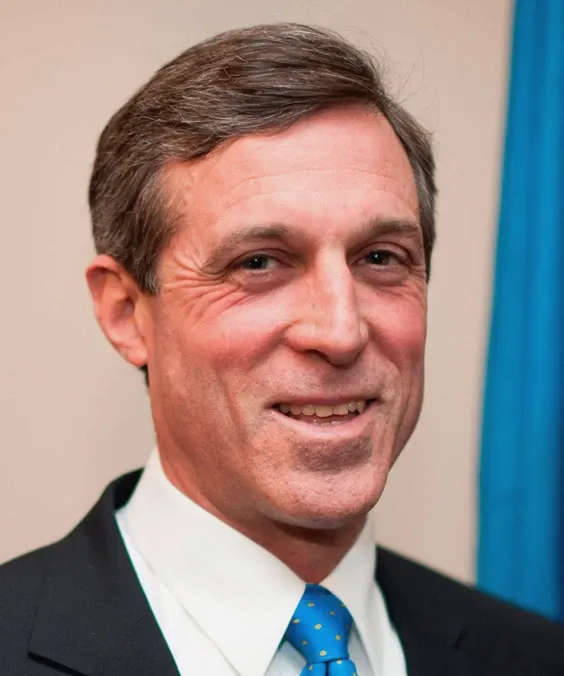
Tom Carper is an American politician currently serving as the senior United States senator from Delaware, a position he has held since January 3, 2001. A member of the Democratic Party, Carper has focused on various issues including healthcare, environmental protection, and fiscal responsibility throughout his career. He previously served as the Governor of Delaware from January 21, 1993, to January 2, 2001, and as a member of the U.S. House of Representatives from January 3, 1983, to January 21, 1993.
The 50 percent distributed based on generation, which we also know affectionately as output, would greatly help nuclear energy.
I have long supported a 4-P approach, I believe it just makes sense from a business perspective and a public health perspective as well.
I think the priority for us is, right now, making sure we get a climate bill.
we are going to be starting to build in a couple of years vehicles that will get 100 miles or so per gallon
We have been, and remain, supporters of your 3-P legislation. It is an essential part of regulatory clarity for us going forward in our industry.
we are going to be deploying the first windmill farm off the coast of Delaware, probably in about 3 years
I believe that one of the key tenets of the Federal merit systems is the ability of Federal employees to report waste, fraud, and abuse without fear of retaliation.
I am very happy to conduct this hearing today. For many years, I should tell you, Senator Voinovich and I have worked together to improve all aspects of the Federal workforce.
The Domestic Partnership Benefits and Obligations Act will balance the scales of justice.
I think it is probably in several million in number. But the undercount occurs among, if you will, the least of these and the people that are usually the lowest income and minorities, folks that are renters and in some cases, children.
I do not want to be sitting here 10 years from now and with Senator McCain, Senator Coburn, Senator Burris, and others and have to say why aren't we using technology that others have been using for not only 15, but 20 years; why aren't we…
we do the next decennial in 2020; we get the number as accurate as we can, but we do it in a cost effective way
One of the things that is so important if you want to address problems, the first step is acknowledging that you have one.
In May, our Subcommittee held a field hearing up in Philadelphia on how the Census Bureau plans to address the challenges of obtaining a complete and an accurate counting, particularly in urban communities in the 2010 decennial.
I think a little more than one out of five for address canvassing employees had, as we say, unclassified fingerprints and were only subject to name background check.
Senator Carper mentioned that we just finished walking every street of this country building the master address file.
I learned that in my very own home state of Delaware, nearly 12,000 residents were missed in the 2000 Census.
the technology that we are using for the 2010 is not the most cost effective way
Politicians like Tom Carper