Mar 5, 2013
Irresponsible cuts to the Agency are shortsighted and will put our recovery at risk.
The Public Record
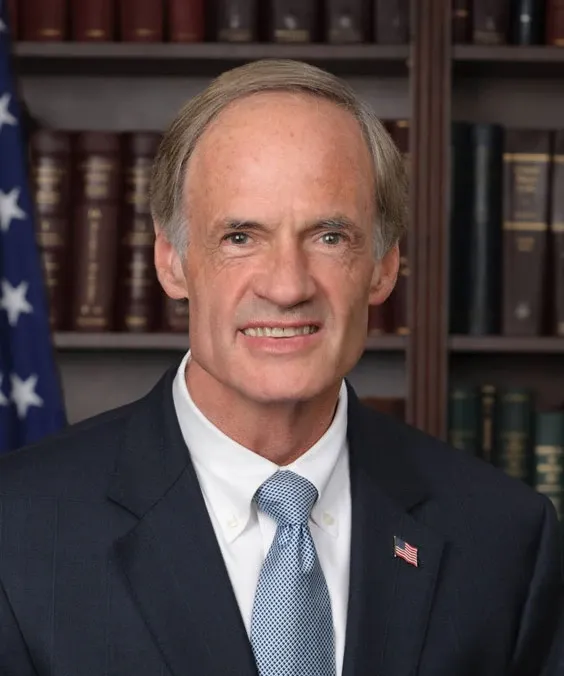
John Charles Carney is an American politician serving as the Governor of Delaware since January 17, 2017. A member of the Democratic Party, Carney previously held the position of U.S. Representative for Delaware's at-large congressional district from January 5, 2011, to January 13, 2017. During his tenure in Congress, he focused on issues such as economic development, healthcare, and education.
Irresponsible cuts to the Agency are shortsighted and will put our recovery at risk.
It is imperative for this Congress to place renewed focus on our infrastructure and that we enact a long-term, fully financed transportation authorization.
Let's focus our efforts on the fundamental problem that is going to drive our deficit in the long-term: rapidly rising health care costs.
We need systemic change, and the Affordable Care Act takes steps in this direction.
All the nonpartisan experts agree that more revenue needs to be part of the plan.
Our piecemeal efforts have yielded more than $3 in spending cuts for every $1 in revenue.
My time is running out. So were you familiar with H.R. 1859, which is the Campbell-Peters bill, in the last Congress? Could you comment on that approach, Dr. Wachter?
The idea that if we short-circuit the recovery now then that is going to have that negative impact on the long-term.
Do you believe as I do that health care costs are the primary driver of our outyear deficits?
You have consistently said that we need to be careful in the short term, do no harm in the short term, if I may, and address our long-term imbalances, fiscal imbalances in the outyears.
Thank you, Mr. Chairman, and thank you, Chairman Bernanke, for your testimony today, for your report, and really for your great leadership on monetary policy for our country over the last several years.
One of the specific ideas that have been floated is to increase the age for Medicare eligibility.
We recognize that there was an important role in the marketplace. We want to make it stronger; we want to protect the taxpayers.
I have found in the 2-plus years that I have been sitting on this committee that the most challenging thing is to seek some light with all the heat that has been going on.
We should address the drivers of the deficit, and Social Security currently is not a driver of the deficit.
I am saying based on information that we--our initial information that includes all information--we saw no evidence to back up claims by others that this was a preplanned or premeditated attack.
To have a credit bureau using inaccurate information to affect your credit rating, it is just, I think, completely unacceptable.
It is really a function of your insurance coverage, your employment status, and all of that than it is a function of your ability to pay.
Politicians like John Carney