Jan 8, 2014
It was not under the U.N. auspices. They did it as a neighbor and at the request of the Government of South Sudan.
The Public Record
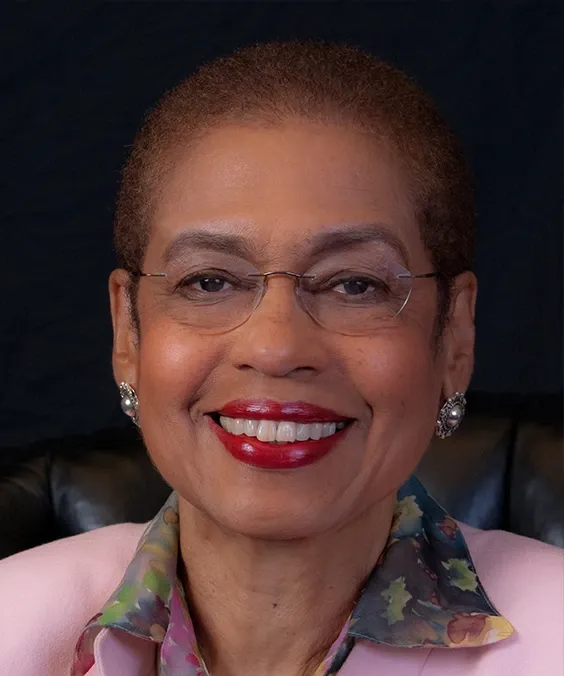
Linda Thomas-Greenfield is an American diplomat currently serving as the United States Ambassador to the United Nations, a position she has held since February 2021. A member of the Democratic Party, she has had a distinguished career in the Foreign Service, where she has worked in various capacities within the U.S. Department of State. Her extensive experience includes assignments in Africa and other regions, contributing to her expertise in international relations and diplomacy.
It was not under the U.N. auspices. They did it as a neighbor and at the request of the Government of South Sudan.
The people of South Sudan voted in overwhelming numbers for independence from the Republic of Sudan.
I think to the international community, for committing gross human rights violations, not contributing to the process that will lead to peace.
We are continuing to put pressure on him to honor the commitments made in the N'Djamena Accord, and he has been told in no uncertain terms both when he had his conversation with Ambassador Power, but also in his conversations with the…
I think we do question his commitment to honoring the agreement, and some of the actions that he has taken most recently really give us reason to pause.
I think the most important steps to take are the steps we are taking right now to address the security issues.
We are deeply concerned by the horrific violence across Central African Republic, particularly the increasingly sectarian nature of the attacks on civilians.
We are working closely with the United Nations Security Council, the French, other EU countries, and our African partners.
We have publicly condemned Seleka's seizure of power and its campaign of rape, pillage, and killings.
We believe that it is highly unlikely that Boko Haram has any ties to Shia extremist organizations in Nigeria.
The U.S. is the largest contributor for humanitarian assistance worldwide, not just in the case of Nigeria.
Our primary goal is that there will be a strong federal framework that will allow the various components and various groups outside the central government to participate in a process of governing the entire country of Somalia.
We were very supportive of the Jubaland agreement, and we are encouraging further agreements along those lines.
One of our primary goals is to build a professional army there that is able to provide security and is professional and has capacity to respond to al-Shabaab.
What I would hope for--and it was DDAS Dory who talked about the military-to-military relationship.
The shutdown has had an enormous impact on our ability to coordinate foreign policy within the interagency framework
We do a mix. We have always had contractors who have supported our efforts, but in some places we do have military.
We feel responsible for those taxpayer dollars, and in order to ensure that those dollars are going to where they need to go, we need to be able to get out in the field and monitor
The election of President Hassan Sheikh Mohamud was a welcome signal that room for political progress in Somalia was opening.
We do have private contractors assisting us in Somalia, but we are using a mixture of that, as well as direct support to our AMISOM and other strategic partners such as the Ethiopians.
Politicians like Linda Thomas-Greenfield