Jan 25, 2011
We faced an engineering issue. A blowout preventer failed, and it failed catastrophically. It caused enormous environmental and economic devastation.
The Public Record
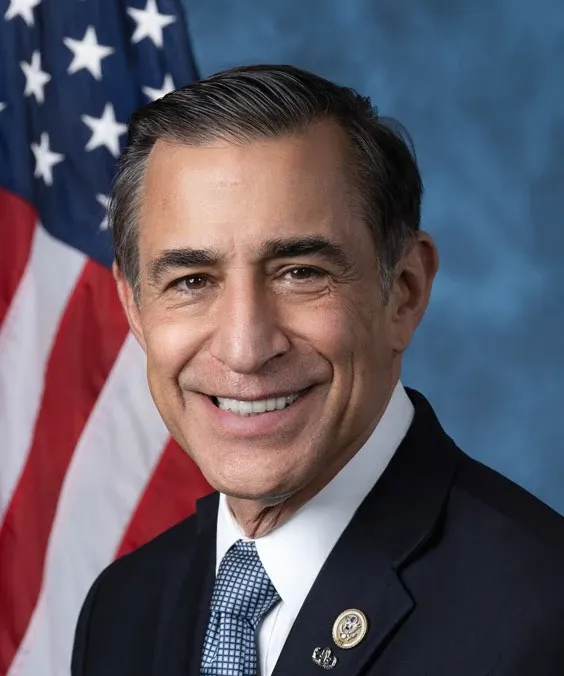
Thomas Miller McClintock is an American politician serving as the U.S. Representative for California's 5th congressional district since 2009. A member of the Republican Party, he has been an advocate for limited government and fiscal conservatism throughout his political career. McClintock has focused on issues such as tax reform, environmental policy, and government spending. He previously served in the California State Assembly and as a member of the California State Senate, where he gained recognition for his commitment to conservative principles.
We faced an engineering issue. A blowout preventer failed, and it failed catastrophically. It caused enormous environmental and economic devastation.
No one would argue for the need for additional water facilities, but I think you would have to agree that 200 billion gallons of water would have made all of the difference in the world in the Central Valley if it hadn't been diverted for…
More than 200 billion gallons of water have been cut off to the Central Valley of California.
Doesn't the law provide for the waiver of these regulations in an economic emergency, and why isn't the Department following through on that?
I think the Central Valley would define failure as 40 percent unemployment in Mendota and an agricultural industry that has literally been brought to its knees.
The United States owes a Federal trust obligation to these Pueblos to protect the water rights of the Acequias and their members.
Right. But given the fact that we are advancing funds, and we are assigning rights before the settlement is in place, and knowing that there is significant opposition, makes me a little hesitant.
The citizens of our county have no control or oversight over tribal representatives, development, and countless other issues.
But the decisions are going to be made in part by sovereign entities, over which the voters don't have any control.
If the Pueblo has surplus water, what does the Pueblo do with that? It is up to your discretion, right?
I have always believed that local water projects should be financed by local revenue bonds that are redeemed by local users of the water in proportion to their use.
Why is it that Poughkeepsie is being called upon to pay for Pojoaque's water project?
There will be demand in the future from non-Pueblo residents to connect to the system, and that it would be a very unfortunate outcome if those people were told no, you cannot connect, this is a Pueblo-only system.
You are taking money in for it, but the taxpayer, who has financed the project, isn't getting it.
I am strongly in favor of additional water development. I believe that the projects contemplated by this legislation will be a boon to the entire region.
Well, the Federal trust responsibility is to assign water rights to the reservation; it is not to pay for the project for the reservation.
Why should United States citizens outside of the Pojoaque Basin pay for 'a local water settlement' such as the proposed Aamodt settlement?
That comes to a mind-numbing figure of 2.1 million gallons per resident per year.
When something is scarce, it becomes expensive. When it is plentiful, it is cheap.
It seems to me that is a pretty basic question if you are evaluating cost-effectiveness and particularly if you are giving any kind of serious consideration to cost-effectiveness. Don't you agree?
Does that include the $116 million in economic development projects for Sunrise Ski Park, among other things?
The principal purpose of government is not to produce abundant water and power but rather to ration and manage shortages
Politicians like Tom McClintock