May 13, 2012
Eliminating Federal red tape and excessive litigation is, indeed, the only path to create healthy forests, jobs, and abundant water and power supplies.
The Public Record
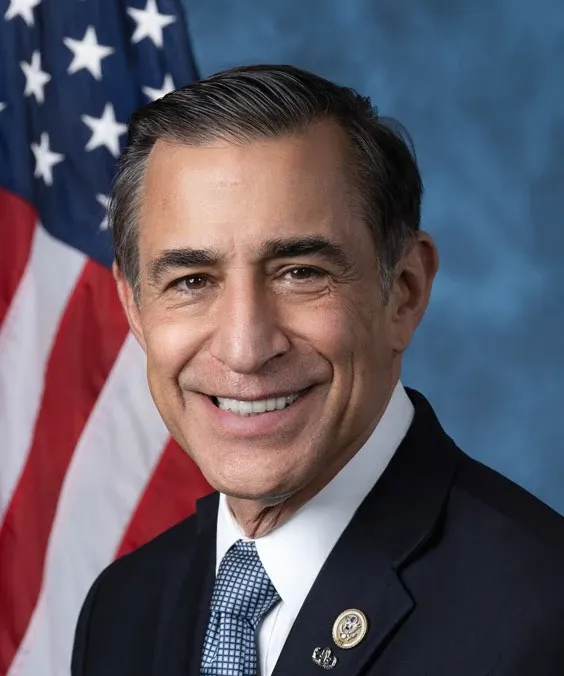
Thomas Miller McClintock is an American politician serving as the U.S. Representative for California's 5th congressional district since 2009. A member of the Republican Party, he has been an advocate for limited government and fiscal conservatism throughout his political career. McClintock has focused on issues such as tax reform, environmental policy, and government spending. He previously served in the California State Assembly and as a member of the California State Senate, where he gained recognition for his commitment to conservative principles.
Eliminating Federal red tape and excessive litigation is, indeed, the only path to create healthy forests, jobs, and abundant water and power supplies.
Fortunately, from what I have seen, the American public has awakened to the ramifications of these policies and has had a bellyful of them, and it is in the process of replacing the politicians responsible for them.
Representative McClintock spoke to that, and it was by 2001 that most of the big mills closed.
You can't blame the Senate or the President for that. All appropriations originate in the House.
But once we get through the bureaucratic process, then the litigation starts, and the litigation has no chance of success but it is able to delay the process enough so that we can't salvage any of that timber, which is simply insane.
No picture I have seen paints a more vivid case for returning to these sound and proven forest management practices than an aerial photo of the Fraser Experimental Forest in Colorado a few years ago that is often called the Red Hand of…
I am particularly interested today in suggestions of what needs to be done legislatively and administratively to unravel the paralyzing tangle of litigation, over-regulation, and endless deliberation that have misguided our federal…
It used to be that lumber companies would bid for timber on Federal lands. They would pay the Federal Treasury to purchase that Federal timber.
The concern I am trying to explore is that just the bureaucratic delay alone in preparing the sale consumes a great portion, if not the entire portion, of the salvage time that you have to go in and get that timber for high-value products.
But the point I want to emphasize is this is not some great step forward. It is not even an incremental step forward compared with the catastrophic decline in timber sales that has occurred over the past 20 years.
The excess timber is going to come out of the forest one way or the other. Either it is going to be carried out or it will be burned out, but it will come out.
When the mills in my district closed in 2009 the owner made it very clear that although the economic downturn was a catalyst, the underlying cause was the fact that 2/3 of the timber they depended upon was held up by environmental…
Politicians like Tom McClintock