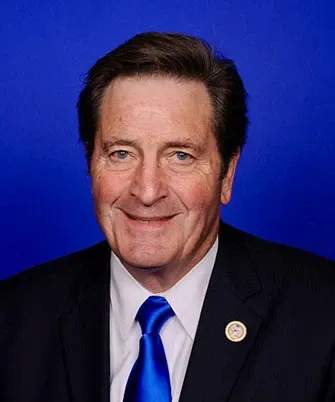
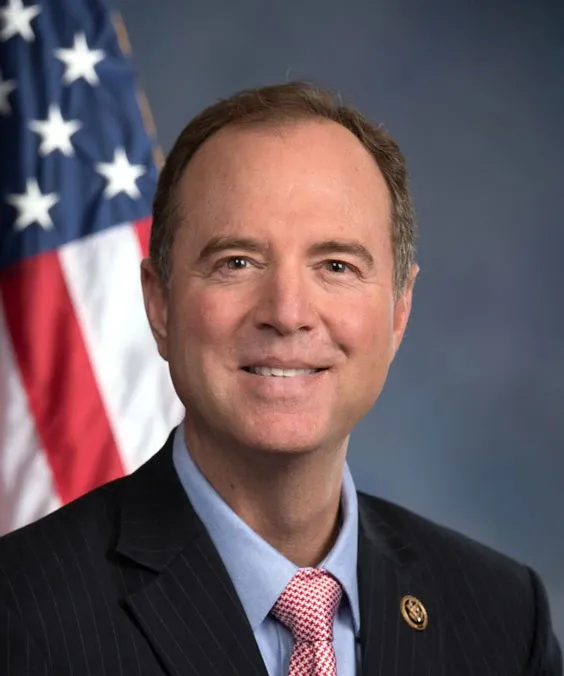
Scott Peters
The Public Record
Scott Peters is a member of the United States House of Representatives, representing California's 52nd congressional district since January 3, 2013. A member of the Democratic Party, Peters has focused on issues such as healthcare, environmental protection, and economic development during his time in Congress. He has been an advocate for policies aimed at addressing climate change and improving access to affordable healthcare for his constituents. Peters previously served on the San Diego City Council, where he gained experience in local governance and community issues.
Apr 19, 2021
We need to stop acting as if we have to choose between clean energy and fossil energy and instead focus on solutions for workers in the clean energy transition that is clearly already happening.
Apr 19, 2021
Change is coming whether we seek it or not. Coal production in the electricity sector has been falling for years for market reasons irrespective of any Federal policy, and we can support these communities and these workers by investing in…
Apr 14, 2021
I think that one of the most pernicious and really tragic contaminants that we see affecting disadvantaged communities is heavy metals.
Apr 13, 2021
It is past time to think a little bit about southern California for future investments.
Apr 13, 2021
I am hopeful that President Biden's recently proposed $80 billion plan for Amtrak will include a significant, transformative investment.
Apr 13, 2021
The second busiest intercity rail corridor in the Nation, the LOSSAN Corridor, begins in San Diego.
Apr 13, 2021
We need to make substantial investment in the Amtrak system to make it a viable and enticing public transportation option.
Apr 13, 2021
Thank you, Mr. Chairman and Ranking Member Graves, and thanks for hosting Members' Day for your colleagues like me to share our requests for the committee in the upcoming surface transportation reauthorization.
Mar 23, 2021
I like the way their market--I understand their markets allocate resources in an efficient way.
Mar 23, 2021
Electrifying everything is one key component to GHG emissions-reduction strategies.
Mar 23, 2021
That is why titles II and III of the CLEAN Future Act are so important and timely.
Mar 23, 2021
The Oversight and Investigations committee, as you mentioned, held a hearing this morning on the power crisis in Texas.
Mar 21, 2021
The 2021 National Academy of Sciences report concluded that building a national hydrogen pipeline network will play an essential role in meeting a zero-emissions target by 2050.
Mar 21, 2021
Modernizing the energy infrastructure is a vast undertaking that includes expanding and upgrading long-distance high-voltage transmission systems
Mar 17, 2021
I wanted to hear, if you are able--if you are familiar with the bill, what you thought the benefits of that approach might be.
Mar 17, 2021
I would like to talk about that and see whether you thought that was a good approach.
Mar 17, 2021
Let's remember that all of the climate benefits of natural gas are lost unless we deal with methane.
Mar 17, 2021
In order for Buy Clean to be as successful as possible, it should be complemented by investments in innovation and the commercialization of strategic new technologies in the industrial sector.
Mar 17, 2021
I believe there is a role for nuclear. I believe there is a role for looking at streamlining permitting, particularly for renewables.
Mar 17, 2021
Policymakers at all levels of government must find ways to make every dollar go further, and should consider enhanced public-private partnerships and risk-transfer opportunities.
Mar 16, 2021
Equity is a key tenet of the Biden administration's national COVID-19 strategy.
Mar 9, 2021
I don't think there's any credible international leadership that can be 'Do as I say, not do as I do.'
Mar 9, 2021
Fortunately, the Biden administration has instructed EPA to immediately review the methane rollbacks as well as many other climate-related rollbacks undertaken by the prior administration.
Politicians like Scott Peters