Apr 7, 2014
It is important to have a well thought out and meaningful bipartisan discussion.
The Public Record
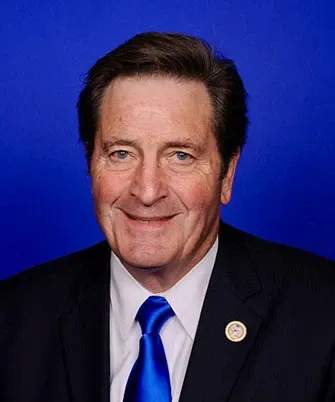
Jerry McNerney is an American politician and a member of the Democratic Party, serving as the U.S. Representative for California's 9th congressional district since 2007. He has focused on energy and environmental issues throughout his tenure, advocating for sustainable practices and policies to combat climate change. McNerney has also been involved in various initiatives aimed at improving healthcare and supporting education in his district.
It is important to have a well thought out and meaningful bipartisan discussion.
Droughts tend to make air quality worse by having increased dust levels, by wildfires and there is no water to wash that away.
I want to thank the Administrator for serving at the EPA in a time of difficulty and sometimes hostility.
We think the actions on export reform that have already been taken are very important and we appreciate the progress that has been made.
Public concern about chemical safety is a significant issue, and unless we address that, then we are not going to get anywhere by passing laws that don't achieve that goal.
Well, I want to wrap so others can question, but the voluntary measures you identified sounded pretty good--
So how serious is the problem of methane leaks from our natural gas infrastructure?
Well, one side of the aisle wants to move forward with production, produce, produce, produce, and the other side says, well, you know, what about safety, what about the environment? So it is important to have a balance between these two…
This is our second hearing on energy access, and I think it is an important topic.
The U.S. should lead by example. We can show other countries that we are more environmentally responsible to meet our energy needs.
As a result, when considering electricity access in the coming years, we must consider climate change.
This drought has disrupted hydroelectric dams and forced utility companies to purchase electricity from other sources that is up to three times more expensive than hydro.
Coal does have a future in this country but we need to implement carbon capture and sequestration technology.
We know, as has been confirmed by the world's leading scientists, that climate change is happening and that human activities, including burning fossil fuels, are driving this change.
In November, Ms. Macfarlane, the U.S. Court of Appeals for the District ruled that the Department of Energy can no longer collect the $750 million in annual waste disposal fees from nuclear operators.
Shouldn't an action in response directly to a crisis be the first item on your agenda? Shouldn't responding to a crisis be the first item--safety be the first item on your agenda?
We need to be able to discuss and address safe technologies for transfer and storage of nuclear materials as well.
When I hear horror stories about how long it takes, 5 years or 10 years, that is likely to be due to some error--problems in the application?
It takes some months to a few years. But it depends in large part on the quality of the application.
I think this is an area of discussion. The Blue Ribbon Commission on America's Nuclear Future looked at this issue. They said that consensus was an important piece of siting, that siting decisions weren't just technical decisions, but they…
I do appreciate my colleague and friend's efforts on this. But I do have some concerns.
Politicians like Jerry McNerney