Feb 1, 2022
Why can't we be looking at for generating electricity in our own country more over having to, we are having a situation with natural gas right now and with coal and things like that.
The Public Record
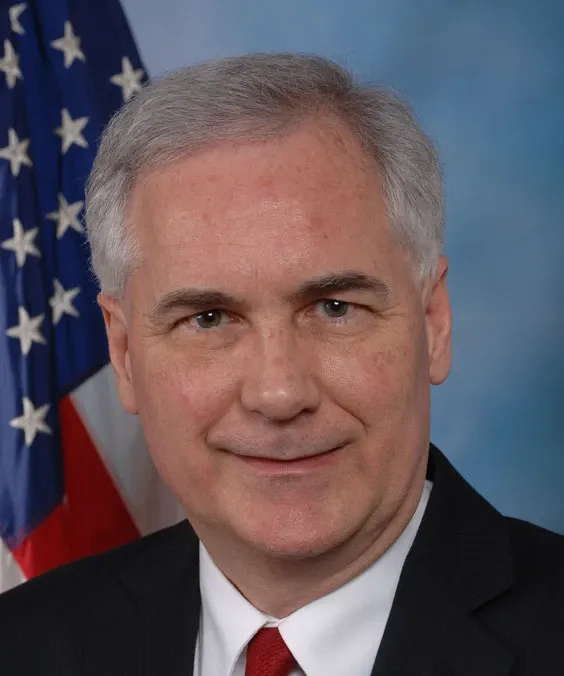
Douglas Lee LaMalfa is an American politician serving as the U.S. Representative for California's 1st congressional district since January 3, 2013. A member of the Republican Party, LaMalfa has focused on issues such as agriculture, natural resources, and rural development during his time in office. He has been an advocate for policies that support farmers and promote economic growth in his district, which encompasses a large portion of Northern California.
Why can't we be looking at for generating electricity in our own country more over having to, we are having a situation with natural gas right now and with coal and things like that.
Is it possible to put aside that part, because that is it. It is either they are in or they are out.
Yes, unbelievable. Well, hopefully with most of this COVID nonsense behind us, we will be sharpening these issues up a little.
One of the things we are driving for immediately is we feel our energy costs can be brought back into line somewhat if the United States is producing its own energy and not relying on Middle East or high-cost energy.
The crop insurance program is important to us in certain instances, but the safety net, the PLC Program is vital.
To both of our witnesses, I was wondering how something that Mr. O'Halleran had touched upon on the post-fire projects, and how are these watershed protections and such coming along as we had an incredible amount of rain and snowfall in…
The COVID closures, again, are really making it difficult to get timely assistance through the conservation programs in certain areas.
My time is out, but I would hope the panel, in other questions, would you emphasize what things we could be fixing right now to get results right now in other questions?
Not just governments, I am sorry, but with actually the logging industry out there.
I think the port of Oakland is underutilized out there on the West Coast, and I think there is an opportunity there for us to work in concert with that port to see if we can do something about those empty containers.
I personally have supported Amtrak, and I think it is important that we do the best we can to have that type of rail service around our country.
Wouldn't we be smart to cut the losses, and look at upgrading our conventional tracks that Amtrak runs on now, to have capabilities of running 120 miles per hour, and not spend all this money, and change these routes?
If you want to talk about supply chain, and you want to talk about ability for owner-operators and the mom-and-pop outfits to be able to do what they want to do in competing, so it is an important conversation to continue to have.
I would hope the panel, in other questions, would you emphasize what things we could be fixing right now to get results right now in other questions?
Thank you, Mr. Chairman, for having this key hearing at a key time here on our supply chain, and what that means for all American consumers.
This is a lot like surprise medical billing, you get a surprise bill on your demurrage.
I think the reality of this is--I know they have a union negotiation--the--labor negotiations coming up in the springtime.
I also find it fascinating in the conversation here, it was mentioned that we are using our kids as an experiment.
I think when we have this discussion here, ultimately--and I have seen it here in California--the move will be made to ban plastic products that are used for containers, so have at it.
Congressman Stauber's district had a mill announce a closure about 15 months ago directly related to the impacts of the drop and demand for paper products.
The logging community, which has never had a handout or a hand up, so to speak, by the federal government is only going to get about $200 million nationwide.
We are very, very thankful for the work of our Maine delegation, especially Jared Golden and Senator Susan Collins.
Politicians like Doug LaMalfa