Sep 22, 2016
More than 90 percent of the American people support this kind of legislation, yet we have been unable to even get a vote or even a debate in the United States Senate.
The Public Record
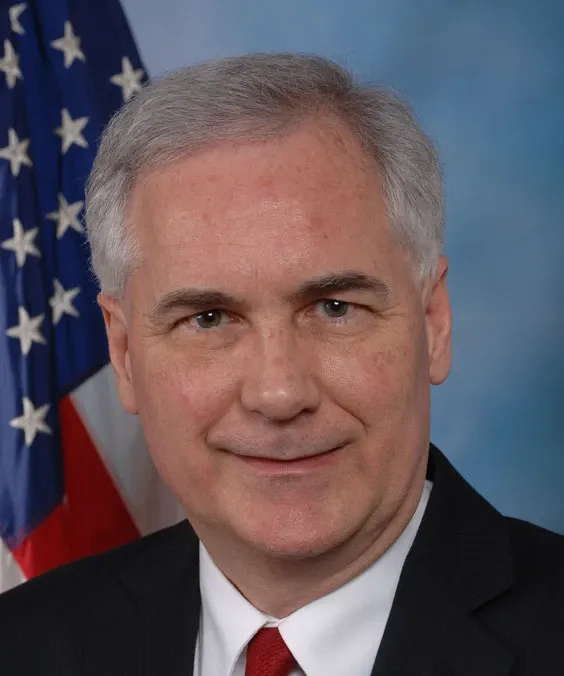
Darrell Edward Issa is an American politician and businessman currently serving as the U.S. Representative for California's 48th congressional district, a position he has held since January 3, 2021. He is a member of the Republican Party and previously served in Congress from 2001 to 2019, representing California's 49th congressional district. Throughout his political career, Issa has been known for his focus on free enterprise and has been involved in various legislative efforts related to business and economic issues.
More than 90 percent of the American people support this kind of legislation, yet we have been unable to even get a vote or even a debate in the United States Senate.
I will refrain from asking about large nonprofits that might have taken and been influenced by foreign government contributions.
And with 50 percent of all patents going through the Eastern District of Texas, although this case, oddly enough, is an Indiana versus Delaware case, this could decide very much the reallocation of suits to be more broadly throughout the…
Former Secretary of State in an unambiguous way said repeatedly both under oath and to the public, time and time again: 'I did not send or receive any information marked classified.'
there are few things that break faith with America and the American people and undermine their trust in their government more than witnessing the highest law enforcement officer in the land blatantly ignoring the crystal-clear meaning and…
What do I say to the tens of thousands of people that live and work in my district that work for the Federal Government, including more than 47,000 marines?
Should I find a way to make sure that those thousands of documents are made public so the American people can evaluate just how insignificant they are or how President Obama said, 'There is classified and then there's classified'?
Now, it will be a cold day in hell before I give more judges, at my authority to the extent that I have it, in any way shape or form, to an area that is abusing discretion and causing legislation--Chairman's legislation--vastly bipartisan.
Here is the last one--and this one I have voiced before the Judicial Conference once--we have a problem in Marshall and Tyler, Texas.
Would it be fair to say you serve the American people and, particularly, when you are dealing with criminal cases you really represent, if someone is guilty, the victims, and if someone is innocent, then justice for the innocent?
If we can figure out ways to consistently broadcast, capture, and retain this type of information...
I got to tell you, I talk to everybody, because it is frustrating that Congress should even be looking at one district for its misconduct.
This has been a long time coming, and there is a lot of thanks to go around. Certainly for Senator Cornyn and Senator Leahy, this is going to be a proud week with the passage of this bill in the House and, ultimately, it going to the…
We have a very strong, fundamentally sound democracy and economy. We have nothing to fear from strongly engaging the Chinese.
We have no choice but to engage the country that has approximately 18 to 20 percent of the world's population.
And let's hope that, over the coming decades, the Chinese will slowly begin to realize that and move closer to a democracy.
If we look at it and allow discovery, a poking around, a typical plaintiff's trial lawyer look-see, then in fact the rest of the world will likely respond.
I think Mr. Conyers would confirm that that's not--I don't believe that that's a question before us.
And I think it's critical to maintaining the republic that the government officials, who are paid by the taxpayers, answer truthfully and promptly to the taxpayers.
These forms of overreach are not the same ones we are talking about often, because they are not about rulemaking, they are about seizing authority, are they not?
The Special Appellate exists only because of the importance of not clogging the Supreme Court.
Just yesterday, the lawyer for the President was at it again, this time at the United States Supreme Court, arguing for the nonenforcement of the law, arguing for the wholesale failure to enforce the law.
Politicians like Darrell Issa