Apr 15, 2013
The Central Asians don't want to be subservient to anyone. They want to be independent.
The Public Record
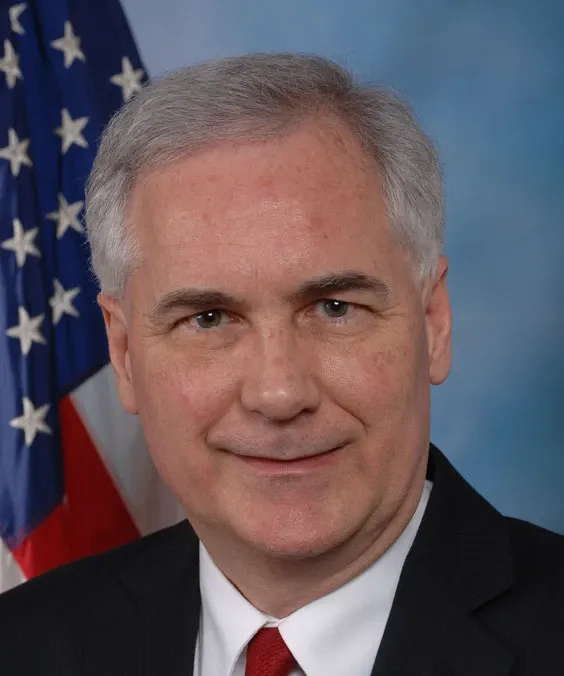
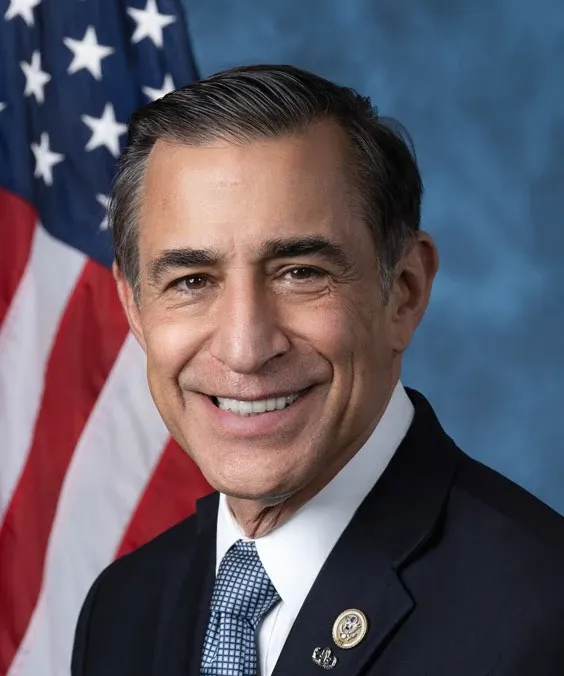
Dana Rohrabacher is a former U.S. Representative for California's 48th congressional district, serving from 1989 to 2019. A member of the Republican Party, he is known for his libertarian views and strong support for the tech industry. During his time in Congress, Rohrabacher was an advocate for various issues, including technology innovation and foreign policy matters, particularly regarding Taiwan and its democratic governance. He often emphasized the importance of individual liberties and limited government intervention.
The Central Asians don't want to be subservient to anyone. They want to be independent.
Let us just say the future is in our hands. There's nothing pre-ordained, but the trends seem to be going...
If the United States wants to compete with China, it needs to be able to compete economically by demonstrating a capacity and willingness to invest.
We subsidized the North Korean nut cases, and now we are on the verge of having them threaten us with nuclear weapons as well.
So how can we expect that the mullahs are going to look at that as a sign of friendship?
Well, unless we came in and decided, like Ronald Reagan did, to support people who are going to try to overthrow that regime.
Instead in Korea, our approach has been to subsidize this wacko, lunatic regime that now threatens the world with nuclear weapons.
We are now in a position where you have a North Korean regime that may be a nuclear armed regime soon.
I would like to make this statement for if the Chinese people are listening. I would like to say something directly to the Chinese people and the Chinese cyber intelligence personnel.
Things are a lot more complicated now than they used to be basically in terms of providing security for our country
What actual sanctions have we put on any country? For example, it is clear that China has been deeply involved in this.
It is not enough to know that we are willing to go out and find those people who are hacking the system.
It is not our burden of responsibility to prove exactly what the damages is, but it is our responsibility to stop this hostile and overt action by the Chinese military against the United States of America.
Perhaps we should insist that we do have exchange students coming in from every country including China, but they have to be social science majors, and they have to be aimed at understanding freedom of thought and intersocial interaction.
So the cost of 9/11 is $200 billion, but we also heard earlier that your report suggested that there was about $250 billion a year lost to cyber attacks of some kind or another.
I would suggest that this is, what we are talking about today is the equivalent of equipping a hostile power, let us say, 50, 60, 70 years ago, but helping to equip a hostile power with the ability to build a nuclear weapon.
I have been aware of this problem for awhile, and when I have spoken to presidents of major universities like Stanford University, for example, I just get the answer that well, that is for the government to worry about but not for us, not…
I believe that limiting visas for students in computer science to countries that do not engage in cyber attacks against the United States is a very realistic option we should consider.
I would suggest, and Mr. Autry, I would like your opinion because you are the one who first brought up this issue of actual educated individuals.
In this case the Chinese military is engaged in activity that has security implications but also economic implications, mainly for the leadership of China which is an oppressive dictatorship.
Let us note that this is different than just having the Chinese army engaged in some act of aggression against an enemy or against an adversary of China.
Mr. Keating, we have heard testimony indicating that the cyber attack has been traced directly back to a unit of the Chinese army.
Politicians like Dana Rohrabacher