Aug 22, 2017
Well, by the way, just so everybody knows, he was supported by every council and every region.
The Public Record
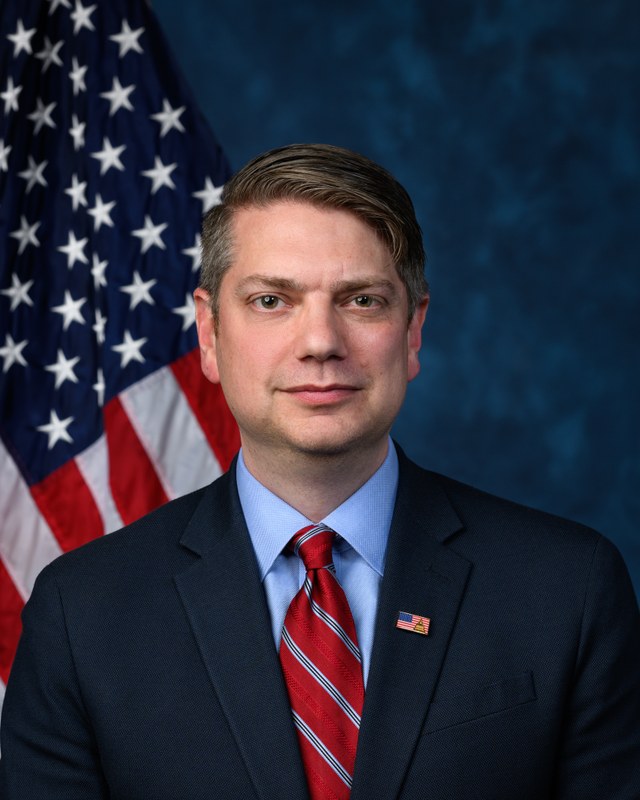
Daniel Scott Sullivan is an American politician and attorney currently serving as the junior United States senator from Alaska, a position he has held since January 2015. A member of the Republican Party, Sullivan has focused on issues such as national security, economic development, and energy policy during his tenure in the Senate. He has also been involved in various committees, including the Senate Armed Services Committee and the Senate Commerce, Science, and Transportation Committee.
Well, by the way, just so everybody knows, he was supported by every council and every region.
But are we not seeing a migration of fish stocks north, or is that just anecdotal?
But by having the CEQ member be the one that is typically recused that threatens Alaska's ability to have a strong voice on these issues.
Is it not a bit ironic? Because is it not part of the reason to have the Council put together that you want to choose members who actually are involved in the industry, and involved in fisheries issues, and know a lot about it, which…
I can assure you that, at least from my perspective, full funding for NOAA and NMFS... has been something that I have been advocating for since I got to the Senate.
So your focus is on more flexibility to the Council in terms of decisionmaking that relates to specific quota allocations?
The key is providing the greatest overall benefit to the U.S., the entire country, to recreational opportunity and seafood harvest without jeopardizing conservation.
We literally are the super power of seafood and probably considered the best managed fishery--certainly not without its challenges--but the best managed fishery in the United States and probably in the world.
Alaska's fisheries are, by far, the largest in the Nation accounting for well over 50 percent of all total domestic landings in the country.
It was a bill that I authored, but it had numerous Democrats and Republicans.
There are also a lot of things that are working from a bipartisan perspective.
The costs of onboard monitoring and NMFS's perceived lack of urgency in pursuing less costly alternatives... reinforce the need for Congress to clarify the limits of NMFS's power.
MSA can be improved to help managers fully utilize the knowledge we have today and account for the big picture.
I want to thank both the witnesses for your past experience and service to our country and this critical area.
There is no evidence that that rush takes place. There is no evidence at all; that is speculation.
This is an amendment that permits the importation of polar bear trophies that were taken from legal hunts in Canada by American citizens prior to the 2008 listing of the polar bear as threatened.
Professor Duhaime, thank you again for your testimony, and we very much appreciate the work you're doing.
Politicians like Dan Sullivan