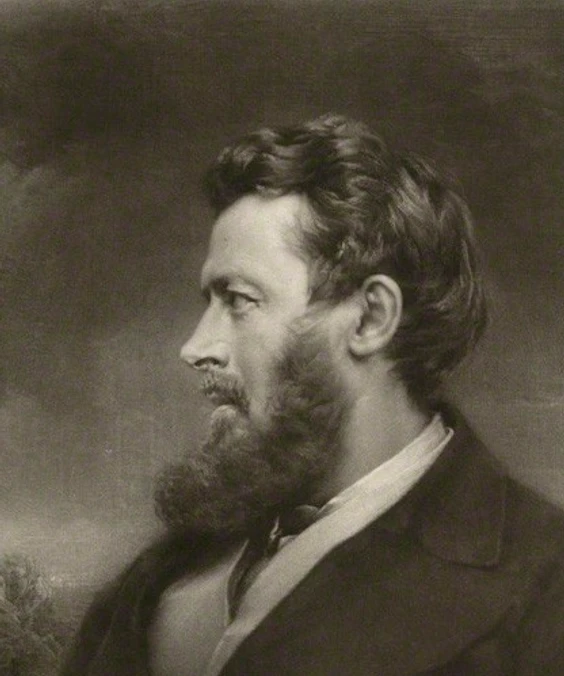
His death will make an echo through the world, which in its entireness he has served so well.
John Morley
The Public Record
John Morley, 1st Viscount Morley of Blackburn,, was a British Liberal statesman, writer and newspaper editor.
gutenberg.org
Certainly in him more than in any one I have known, was exhibited the character of our life as a dispensation of pain.
It is well to be permitted also to believe that he is now at rest for ever, and that the cloud is at length removed from his destiny.
If there be one duty more than another incumbent upon the public men of England, it is to establish and maintain harmony between the past of our glorious history and the future that is still in store for her.
You say truly that Oxford has failed to enlarge itself to the progress of the country.
I hope this will make you enlarge yourself to the facts of our age and state—and I believe it will.
I do not think I can admit the justice of the caution against extremes.
I profess myself a disciple of Butler: the greatest of all enemies to extremes.
Do not join with others in praising me, because I am not angry, only sorry, and that deeply.
For my revenge—which I do not desire, but would battle if I could—all lies in that little word “future” in my address, which I wrote with a consciousness that it is deeply charged with meaning, and that that which shall come will come.
Again, my dear Bishop, I thank you for bearing with my waywardness, and manifesting, in the day of need, your confidence and attachment.
But any government now to be formed cannot be wholly a continuation, it must be in some degree a new commencement.
On the other hand, I am bound by conviction even more than by credit to the principle of progressive reduction in our military and naval establishments and in the charges for them, under the favourable circumstances which we appear to…
I cannot forecast the changes which will follow; but it is easy to see what the first step should be.
This great event shakes me down to the foundation, by the reason of coming trouble.
You will have been amused to see that on Friday the Times actually put me up for prime minister, and yesterday knocked me down again!
It has long been felt that the House of Commons was too weak and the House of Lords too strong, in the share of the important offices, and now the premiership is to be carried over, unavoidably.
The main question is whether anything, and what, can be done to improve the structure of the government as between the two Houses.
And there is something odious in fighting shy of a man, so powerful in talent, of such undoubted integrity.
If mistrust of self be a qualification, God knows I have it.” All opened excellently.
In church and state alike he prized institutions and the great organs of corporate life; but what he thought of most and cared for and sought after most, was not their mechanism, though on that too he set its value, but the living spirit…
In both alike he strove to unite order, whether temporal order in the state or spiritual order in the church, with his sovereign principle of freedom.
Many are the difficulties in the way of applying Cavour’s formula of a free church in a free state, as most countries and their governors have by now found out.
Yet to have a vivid sense of the supreme importance of the line between temporal power and spiritual is the note of a statesman fit for modern times.
Now, in the first place, it is sometimes necessary in politics to make surrenders of what, if not surrendered, will be wrested from us.
Politicians like John Morley