Now it was a sensible part of the life of the working classes.
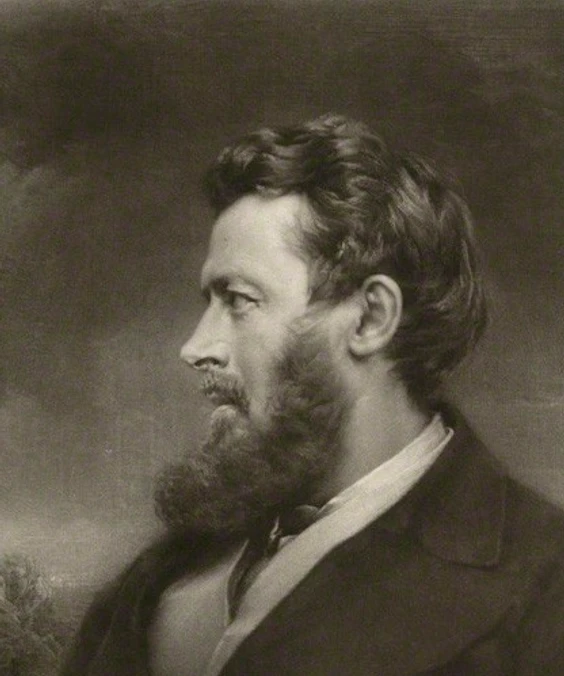
John Morley
The Public Record
John Morley, 1st Viscount Morley of Blackburn,, was a British Liberal statesman, writer and newspaper editor.
gutenberg.org
He told them how, after an experience now becoming long, the one standing pain to the political man in England is a sense of the inequality of his best exertions to the arduous duty of government and legislation.
We governed distant millions many times outnumbering ourselves.
Again, what other nation was charged with the same responsibility in the exercise of its moral influence abroad, in the example it is called upon to set, in the sympathy it must feel with the cause of right and justice and constitutional…
It was our duty to abstain as far as may be from interference with their affairs, to afford them the shelter and protection of the empire, and at the same time to impress upon them that there is no grosser mistake in politics than to…
On foreign policy he enforced the principles that, after all, had given to Europe forty years of peace, and to England forty years of diplomatic authority and pre-eminence.
It is impossible that to a country like England the affairs of foreign nations can ever be indifferent.
They could not look at Ireland,” he told them, “and say that the state of feeling there was for the honour and the advantage of the united kingdom.
Please to recollect that we have got to govern millions of hard hands; that it must be done by force, fraud, or good will; that the latter has been tried and is answering; that none have profited more by this change of system since the…
The kind of intercourse that you have kindly permitted with nonconformists, has helped more consciously to identify them with movements of national life, and to diminish the stern feeling of almost defiant witness-bearing that was strong a…
It is something gained if ecclesiastical and political differences can he debated within a common circle of social confidence and identity....
Their confidence in you has made them amenable to your lead in respect of methods and movements needing the guidance of political insight and experience.
Gladstone’s case the same impulses that made him tolerant of formal differences as to church government led slowly to a still wider liberality in respect of far deeper differences.
My conviction is that the old creeds have been, and are to be, the channel by which the Christian religion is made a reality even for many who do not hold it, and I think that when we leave them we shall leave them not for something…
I am, as you know, one altogether attached to dogma, which I believe to be the skeleton that carries the flesh, the blood, the life of the blessed thing we call the Christian religion.
But I do not believe that God’s tender mercies are restricted to a small portion of the human family.
Unbelief may in given conditions be a moral offence; and only as such, only like other disobedience, and on like principles, can it be punishable.
Tolerance is far more than the abandonment of civil usurpations over conscience.
It is a lesson often needed quite as much in the hearts of a minority as of a majority.
In public life a man of elevated mind does not make his own self tell upon others simply and entirely.
I am more afraid of running away than of holding my ground.
It is hard to imagine two propositions on the merits more indisputable, but a parliamentary resolution is not to be judged by its verbal contents only.
But I am not loyal to it as an establishment.
I feel in miniature the truth of what Bright well said yesterday—ever since I really came to know him, I have held him in high esteem and regard as well as admiration; but till he died I did not know how high it was.
I do not know that I have ever seen in public life a character more truly simple, noble, and unselfish.
Politicians like John Morley