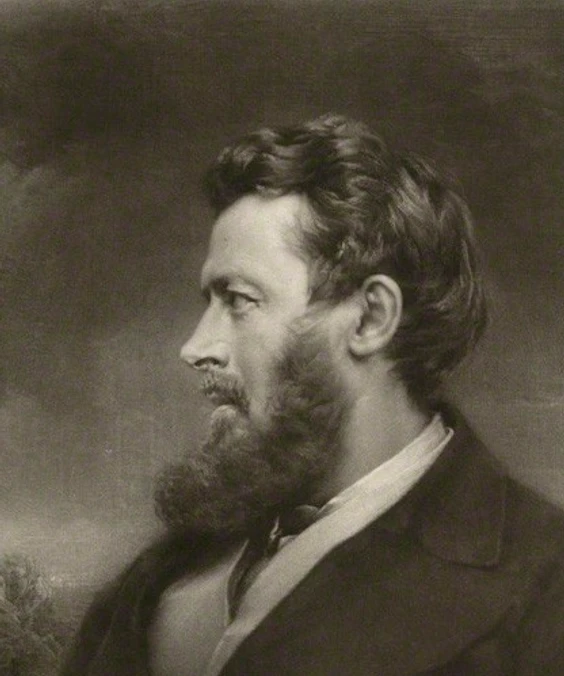
I have been a learner all my life, and I am a learner still; but I do wish to learn upon just principles.
John Morley
The Public Record
John Morley, 1st Viscount Morley of Blackburn,, was a British Liberal statesman, writer and newspaper editor.
gutenberg.org
I do not like changes for their own sake, I only like a change when it is needful to alter something bad into something good, or something which is good into something better.
I find, however, that the tories when it suits their purpose have much less reverence for antiquity than I have.
They make changes with great rapidity, provided they are suitable to the promotion of tory interests.
I am a lover of liberty; and that liberty which I value for myself, I value for every human being in proportion to his means and opportunities.
That is a basis on which I find it perfectly practicable to work in conjunction with a dislike to unreasoned change and a profound reverence for everything ancient, provided that reverence is deserved.
We might be tempted to call good letter-writing one of “the little handicraft of an idle man”; but then two of the most perfect masters of the art were Cicero and Voltaire, two of the most occupied personages that ever lived.
His devotion to his duties, his identification at every point of his own feelings with the public interests, will, I trust, not die with him, but will stimulate others, and especially the inheritors of his name, to follow his bright…
Nor is it with a thought of anything but thankfulness on his account, that I contemplate the close of his labours; but it will be long indeed before we cease to miss his great experience, his varied powers, his indefatigable energy, and…
Gladstone’s letters to her may serve to show him as he was, in the midst of his labours in the Palmerston government—how little his native kindliness of heart and power of sympathy had been chilled or parched either by hard and ceaseless…
But what a calamity for a man to think, or find himself forced to be double faced even when he is not double minded; and this is the best supposition.
There is one proposition which the experience of life burns into my soul; it is this, that man should beware of letting his religion spoil his morality.
In a thousand ways, some great some small, but all subtle, we are daily tempted to that great sin.
To speak of such a thing seems dishonouring to God; but it is not religion as it comes from Him, it is religion with the strange and evil mixtures which it gathers from abiding in us.
This frightful evil seems to rage in the Roman church more than anywhere else, probably from its highly wrought political spirit, the virtues and the vices of a close organisation being much associated with one another.
That same influence which keeps the mother from her child teaches Montalembert to glorify the corruption, cruelty, and baseness which in the government of the papal states put the gospel itself to shame.
A sacred sorrow seems to be profaned by bringing it within the touch of worldly cares.
The world believes that this is what I cannot endure; I shall be glad of an opportunity of putting its opinion to the test.
These are continual preachers, and so mild that they can bring no weariness.
They come straight from their Maker’s hand, and how faithfully they speak of Him in their strength, their majesty, and their calm.
I do not believe it is possible for any one to read that book earnestly from its beginning, and think of popish, or non-popish, or of anything but the man whom it presents and brings to us.
He was a man of high spirit and uncommon goodness, and for him I have not a thought that is not perfect confidence and peace.
I rejoice to think in community of faith among bodies externally separated, so far as it extends, and it extends very far; most of all with ancient churches of the greatest extent and the firmest organisation.
But the proselytising agency of the Roman church in this country I take to be one of the worst of the religious influences of the age.
Our children are gone and the vacant footfall echoes on the stair.
Politicians like John Morley