And how does the settlement of the crown in the Brunswick line, derived from James the First, come to legalize our monarchy rather than that of any of the neighboring countries?
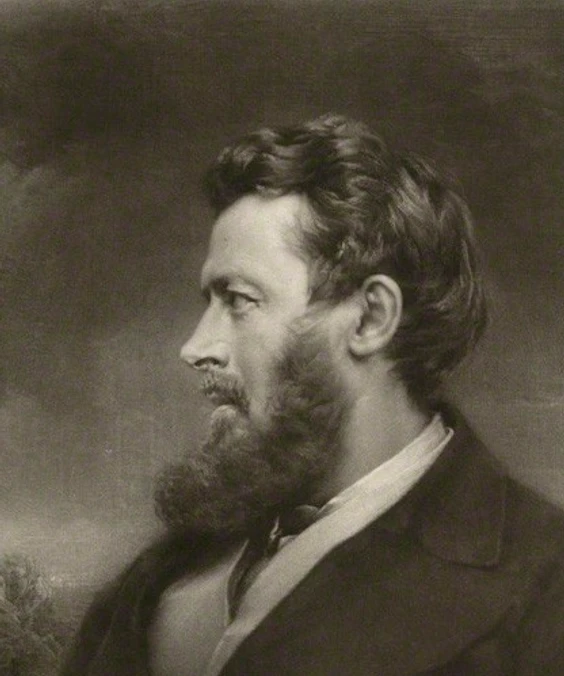
Edmund Burke
The Public Record
Edmund Burke was an Anglo-Irish writer, philosopher, and politician who is widely credited as the founder of the cultural and political philosophy of conservatism. Regarded as one of the most influential conservative thinkers and political writers of the 18th century, Burke spent the majority of his career in Great Britain and was elected as a member of Parliament (MP) from 1766 to 1794 in the House of Commons of Great Britain with the Whig Party. His writings played a significant role in influencing public views and opinions in both Great Britain and France following the French Revolution in 1789, and he remains a major figure in modern conservative circles.
gutenberg.org
For, if you admit this interpretation, how does their idea of election differ from our idea of inheritance?
Thus these politicians proceed, whilst little notice is taken of their doctrines; but when they come to be examined upon the plain meaning of their words and the direct tendency of their doctrines, then equivocations and slippery…
Such arrangements, however favorable to the cause of compulsory freedom, civil and religious, may not be equally conducive to the national tranquillity.
The new evangelists will, I dare say, disappoint the hopes that are conceived of them.
I should only stipulate that these new Mess-Johns in robes and coronets should keep some sort of bounds in the democratic and levelling principles which are expected from their titled pulpits.
It is not for the diffusion of truth, but for the spreading of contradiction.
It is not for the propagation of his own opinions, but of any opinions.
The beginnings of confusion with us in England are at present feeble enough; but with you we have seen an infancy still more feeble growing by moments into a strength to heap mountains upon mountains, and to wage war with Heaven itself.
We are now in a condition to discern with tolerable exactness the true nature of the object held up to our imitation.
All these (in their way) are good things, too; and without them, liberty is not a benefit whilst it lasts, and is not likely to continue long.
Can I now congratulate the same nation upon its freedom?
Abstractedly speaking, government, as well as liberty, is good; yet could I, in common sense, ten years ago, have felicitated France on her enjoyment of a government, (for she then had a government,) without inquiry what the nature of that…
It is a policy that has very much the complexion of a fraud.
Since you have selected the Revolution Society as the great object of your national thanks and praises, you will think me excusable in making its late conduct the subject of my observations.
He declared that he did not affect a democracy: that he always thought any of the simple, unbalanced governments bad: simple monarchy, simple aristocracy, simple democracy,--he held them all imperfect or vicious; all were bad by…
He was far from condemning such opposition; on the contrary, he most highly applauded it, where a just occasion existed for it, and gentlemen had vigor and capacity to pursue it.
The states of Europe lay happy under the shade of a great and free monarchy, which knew how to be great without endangering its own peace at home or the internal or external peace of any of its neighbors.
Everywhere she appeared as the protector, assertor, or avenger of liberty.
England never preserved a firmer countenance or a more vigorous arm to all her enemies and to all her rivals.
Everything was done; because we commenced with reparation, not with ruin.
The Church and the State were the same after the Revolution that they were before, but better secured in every part.
She was preserved in her full efficiency, and cleared only of a certain intolerance, which was her weakness and disgrace.
In the stable, fundamental parts of our Constitution we made no revolution,--no, nor any alteration at all.
We took solid securities; we settled doubtful questions; we corrected anomalies in our law.
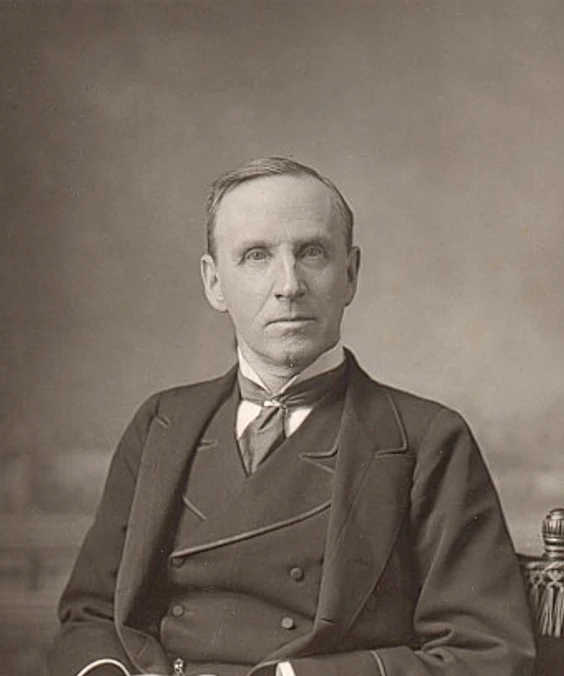
Politicians like Edmund Burke