For want of these, they have seen the medicine of the state corrupted into its poison.
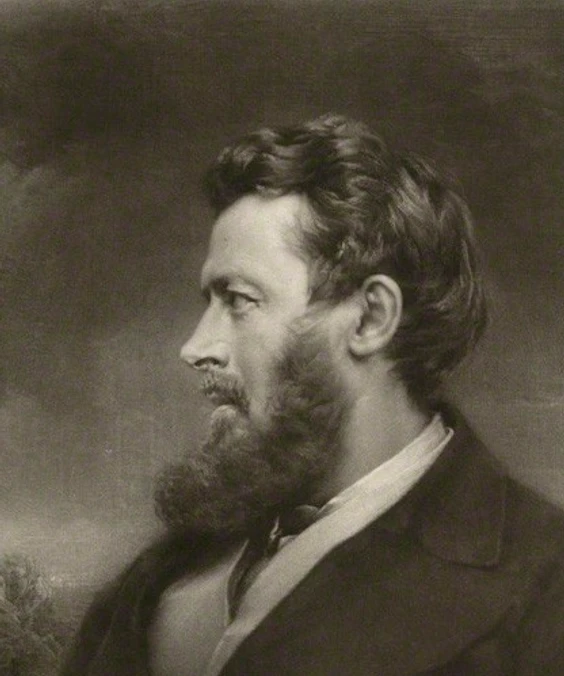
Edmund Burke
The Public Record
Edmund Burke was an Anglo-Irish writer, philosopher, and politician who is widely credited as the founder of the cultural and political philosophy of conservatism. Regarded as one of the most influential conservative thinkers and political writers of the 18th century, Burke spent the majority of his career in Great Britain and was elected as a member of Parliament (MP) from 1766 to 1794 in the House of Commons of Great Britain with the Whig Party. His writings played a significant role in influencing public views and opinions in both Great Britain and France following the French Revolution in 1789, and he remains a major figure in modern conservative circles.
gutenberg.org
This alone (if there were nothing else) is an irreparable calamity to you and to mankind.
You would not have chosen to consider the French as a people of yesterday, as a nation of low-born, servile wretches until the emancipating year of 1789.
Through that diversity of members and interests, general liberty had as many securities as there were separate views in the several orders; whilst by pressing down the whole by the weight of a real monarchy, the separate parts would have…
By this means our liberty becomes a noble freedom.
It leaves acquisition free; but it secures what it acquires.
By this means our Constitution preserves an unity in so great a diversity of its parts.
Such a claim is as ill-suited to our temper and wishes as it is unsupported by any appearance of authority.
Our Constitution knows nothing of a magistrate like the Justicia of Aragon,--nor of any court legally appointed, nor of any process legally settled, for submitting the king to the responsibility belonging to all servants.
After all, if the king were to bring himself to echo this new kind of address, to adopt it in terms, and even to take the appellation of Servant of the People as his royal style, how either he or we should be much mended by it I cannot…
They secured soon after the frequent meetings of Parliament, by which the whole government would be under the constant inspection and active control of the popular representative and of the magnates of the kingdom.
The grand policy of all their regulations was to render it almost impracticable for any future sovereign to compel the states of the kingdom to have again recourse to those violent remedies.
But an absurd opinion concerning the king's hereditary right to the crown does not prejudice one that is rational, and bottomed upon solid principles of law and policy.
No!--they had a due sense of the evils which might happen from such foreign rule, and more than a due sense of them.
It was still a line of hereditary descent; still an hereditary descent in the same blood, though an hereditary descent qualified with Protestantism.
At no time, perhaps, did the sovereign legislature manifest a more tender regard to that fundamental principle of British constitutional policy than at the time of the Revolution, when it deviated from the direct line of hereditary…
At both those periods the nation had lost the bond of union in their ancient edifice: they did not, however, dissolve the whole fabric.
The two principles of conservation and correction operated strongly at the two critical periods of the Restoration and Revolution, when England found itself without a king.
By as strong, or by a stronger reason, the House of Commons cannot renounce its share of authority.
The two Houses, in the act of King William, did not thank God that they had found a fair opportunity to assert a right to choose their own governors, much less to make an election the only lawful title to the crown.
Its not being done at that time is a proof that the nation was of opinion it ought not to be done at any time.
If ever there was a time favorable for establishing the principle that a king of popular choice was the only legal king, without all doubt it was at the Revolution.
We must recall their erring fancies to the acts of the Revolution which we revere, for the discovery of its true principles.
They are bound to do so by the laws of their country, made at the time of that very Revolution which is appealed to in favor of the fictitious rights claimed by the society which abuses its name.
The body of the people of England have no share in it.
Politicians like Edmund Burke