Harriet Hageman
The Public Record
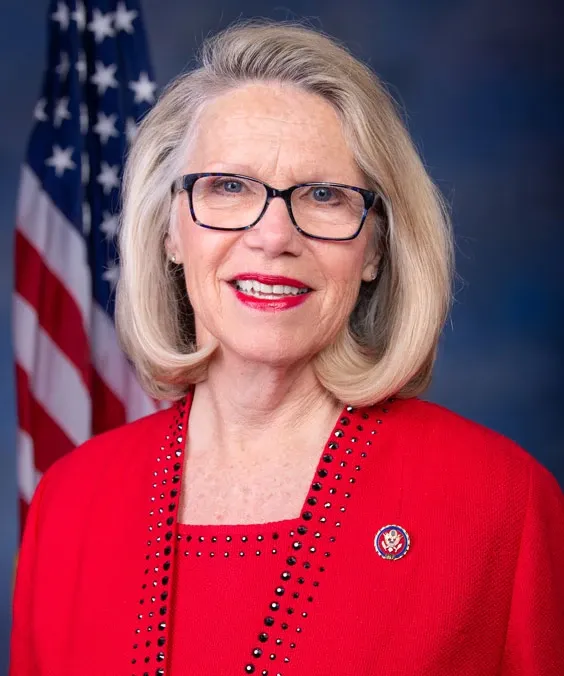
Harriet Maxine Hageman is an American attorney and politician currently serving as the U.S. Representative for Wyoming's at-large congressional district, a position she has held since January 3, 2021. A member of the Republican Party, Hageman has focused on issues such as energy policy, federal land management, and agricultural interests during her time in Congress. She has been an advocate for Wyoming's energy resources and has worked to promote the state's economic development. Hageman previously gained recognition for her legal work and involvement in various political campaigns in Wyoming.
Mar 22, 2023
My legislation, the Grizzly Bear State Management Act, H.R. 1245, would remove the Greater Yellowstone Ecosystem population of grizzly bears from the Federal list of endangered and threatened wildlife.
Mar 22, 2023
But when we are talking about the numbers under the Endangered Species Act, we are concerned about the number of live animals, right?
Mar 22, 2023
Managing Wyoming's grizzly population is more effective to do at a local level, as is all species management.
Mar 22, 2023
No one was surprised when grizzly bear conflicts thereafter increased, with dramatic and devastating impacts on our ranching communities in Wyoming and Montana shortly thereafter.
Mar 22, 2023
So, for example, in Wyoming with the Canadian gray wolf, if the population goes down below a certain level, there is an immediate stop to any further hunting.
Mar 22, 2023
And that is why today we are asking for additional management tools for both me and that sow grizzly bear, so we don't have to raise our babies together.
Mar 22, 2023
Did you know in Wyoming, with a recovery goal of 100 wolves, we have over 350 Canadian gray wolves in Wyoming?
Mar 22, 2023
Mr. Servheen, you were questioned about one of the factors under the Endangered Species Act, and that factor being whether a recovery plan has an adequate regulatory mechanism for a particular species.
Mar 22, 2023
The science does not support keeping grizzly bears listed as a threatened species.
Mar 22, 2023
This bill will act as a legislative backstop to prevent going through this unnecessary litigation again.
Mar 22, 2023
Delisting grizzlies would return management to the states--a concept supported in writing by the Governors of Wyoming, Montana, and Idaho.
Mar 22, 2023
Gun Owners of America and Second Amendment Hunters publicly supported grizzly delisting over one year ago, applaud Congresswoman Hageman for introducing the Grizzly Bear State Management Act of 2023.
Mar 21, 2023
This bill will act as a legislative backstop to prevent going through this unnecessary litigation again.
Mar 14, 2023
The Wyoming delegation sent you a letter on March 15, 2023, asking as to why we were excluded from the management commission and the 10-year strategy that you have put together.
Mar 7, 2023
Forty-eight percent of the surface estate in Wyoming is owned by the Federal Government, and 65 percent of our mineral estate is owned by the Federal Government.
Mar 7, 2023
It is through the creation of these types of projects that we have been able to create--and I will use the word again--the bounty that we have in the interior West.
Mar 7, 2023
The shift in focus of the Bureau of Reclamation from irrigation to environmental, what are the impacts of that?
Mar 7, 2023
The 1902 Reclamation Act was a visionary piece of legislation that recognized that the future of the United States required the development, management, and use of our natural resources, including our water and our real property.
Mar 7, 2023
We have also learned of the incredible benefits that these projects provide in relation to irrigation and what irrigation has done in terms of creating the bounty that we have in the interior Western United States.
Mar 7, 2023
So, when I come to a meeting like this or a hearing like this and we talk about water, I think one of the things that is incredibly important is that you have to understand that for the interior West especially, without irrigation…
Feb 28, 2023
Although tribes are sovereign governments, some suffer health, social, and economic disparities, as well as higher poverty rates in comparison to other non-Native communities.
Feb 28, 2023
For many Indian tribes and Alaskan Natives, real property holdings are the basis for social, cultural, and religious life and often their single most important economic resource.
Feb 28, 2023
Is the Federal Government involved in all of the decisions related to road building on your reservation?
Feb 28, 2023
Today, there are 574 federally recognized Indian tribes with a population of approximately 2.8 million American Indian and Alaskan Natives living in the United States.
Politicians like Harriet Hageman