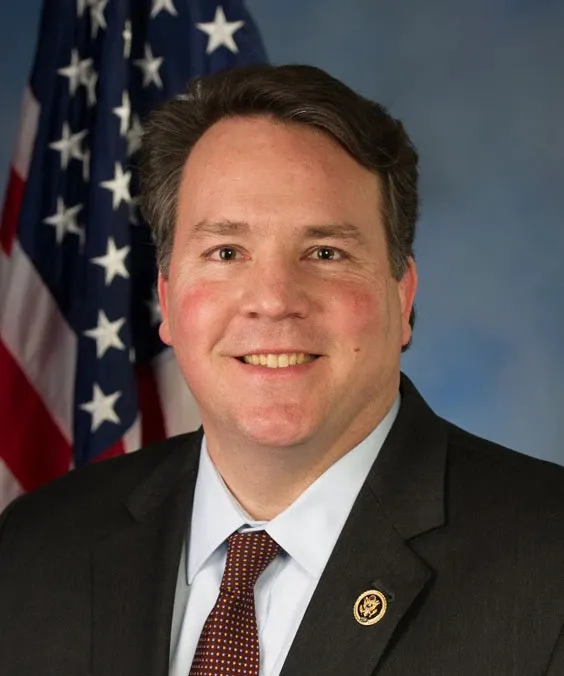
David McKinley
The Public Record
David Bennett McKinley is a former member of the U.S. House of Representatives, serving West Virginia's 1st congressional district from January 5, 2011, until January 3, 2023. A member of the Republican Party, McKinley focused on issues such as energy policy, infrastructure development, and healthcare during his time in office. He was known for advocating for the coal industry and promoting economic growth in West Virginia. McKinley also served on various committees, including the House Energy and Commerce Committee, where he played a role in shaping legislation related to energy and health care.
May 14, 2019
I think we have--let's--we need to slow this train down just a little bit, do a better analysis.
May 14, 2019
I think we better--you explain. Is there a way we can approach this from a global perspective?
May 14, 2019
We can take an action in America and deal with it, but until there is a global consciousness of this--and we are importing--we are still going to have this exposure to it.
May 14, 2019
I may be at odds with my party, but I am also, I am at odds with this whole issue trying to understand it as an engineer.
May 14, 2019
We need to contain the existing damage and fix the demonstrated problem before us.
May 14, 2019
I am not convinced the existing body of environmental law may be the best approach to the PFAS contamination conundrum and we should not be limited by that universe.
May 14, 2019
The test for me in addressing PFAS contamination is not the number of bills we pass or the creative ways we try to shoehorn solutions into existing statutes; rather, it is whether the response we provide can be reasonable, reliable, and…
May 8, 2019
A prolific number of small refinery exemptions issued has undermined the renewable fuels standards, caused significant demand destruction across the biofuel industries, and has hurt our farmers.
May 8, 2019
There is a significant concern in the biofuels community, which includes our corn and soybean farmers.
May 8, 2019
I thank you, Chairman Rush, Ranking Member Upton, for holding this important hearing today.
May 8, 2019
The citizens of New York need to be engaged in this conversation as well about the cost of their energy.
May 8, 2019
I think it does beg the question, is it in America's national security for a State to block a pipeline that is going to have an impact from a national security standpoint?
May 8, 2019
I don't know that we can suggest, or should be offering, that New England is energy-independent.
May 8, 2019
I think that is a critical component needed to expand our use of renewables and strengthening our grid.
May 8, 2019
What you say your goals are and what your budget says are diametrically opposite, and it is puzzling to see where the commitment is.
May 7, 2019
Well, only thing in a reasonable risk, if we don't allow American manufacturers to do it, why would we let a foreign manufacturer do it?
May 7, 2019
I know my friend and our full committee chairman, Frank Pallone, has on more than one occasion proclaimed he does not have faith in the professionals at EPA to carry out a high-quality review and act the way he would prefer on asbestos.
May 7, 2019
I have the privilege to represent Madison County, Illinois here in Congress--so I know a thing or two about asbestos and the disease it causes.
Apr 30, 2019
The title of this hearing says it is the 'State of Pipeline Safety and Security in America.'
Politicians like David McKinley