Sep 21, 2011
Billions of dollars in taxpayer dollars are at risk of a failure and a bailout.
The Public Record
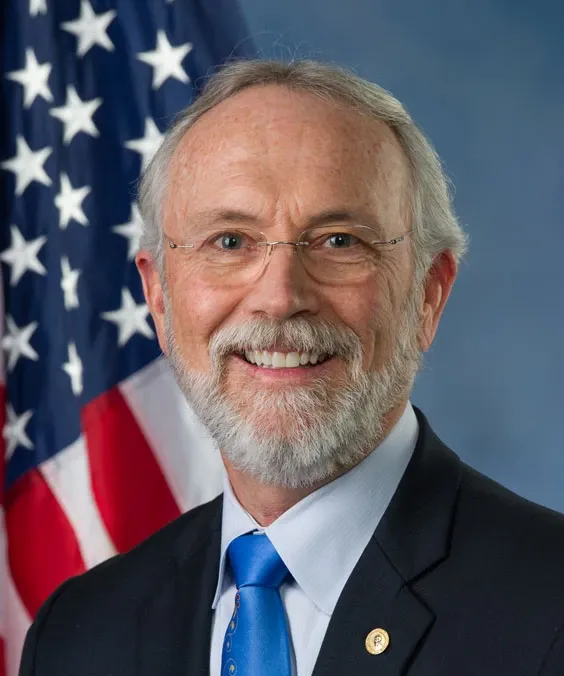
Doc Hastings is a former Republican member of the United States House of Representatives, representing Washington's 4th congressional district from 1995 to 2015. During his tenure, he served on several key committees, including the House Committee on Natural Resources, where he focused on issues related to energy and natural resource management. Hastings was known for his advocacy of agricultural interests and water resource management, reflecting the priorities of his largely rural district. He played a significant role in various legislative efforts, including those aimed at promoting economic development in Eastern Washington.
Billions of dollars in taxpayer dollars are at risk of a failure and a bailout.
Reducing our debt will require creative thinking and new approaches that include both spending cuts and raising new revenue.
It is time to move forward and create thousands of jobs and generate billions of dollars in new Federal revenue by harnessing the energy potential of ANWR.
Producing this much oil would generate substantial revenue for the Federal Government through leasing and royalties.
I believe that the Joint Select Committee working to find $1.5 trillion in budget savings should embrace opening ANWR.
Responsibly harnessing America's onshore and offshore energy resources will create millions of new jobs and generate billions of dollars in new revenue.
These reforms will help expand American energy production in order to protect and create American jobs.
Reforms must increase accountability, improve efficiency, promote safety and ensure the highest ethical standards of employees.
If the gentleman remembers, because he was in a committee hearing, under direct questioning, I think it was Director Abbey said that there is no authority to make any designation under law of wild lands because that was a made-up term…
As a matter of fact, the gray wolves are showing up in the Cascades now, the eastern side of the Cascades. So you'll get them.
Thank you, Mr. Chairman. I just want to point out that the staff clearly researched the language here and applicable laws that relate to these waters. That's what we do when we put this language in here. With that, I yield to the gentleman…
I appreciate my friend from Washington reading the section, but he left out the last sentence of that section. I think this is a pertinent part and this is the point that the gentleman from Alaska is making, and it regards safety…
I just want to respond to my friend from Virginia. The bill passed, if my memory serves me correctly, with bipartisan support. But, yes, of course there are political risks in doing whatever we're doing in this body; and we all face that…
I've been chairman now for a little over 6 months. I have every intention to do that, and I want to work with the gentleman on this.
He did, as did Senator Crapo from Idaho. Here is the problem: The problem is that through all of the efforts of Chairman Pombo of trying to get this enacted and he couldn't get it through the Senate, then you know what the Appropriations…
I thank the gentleman for yielding. I appreciate the gentleman's remarks. I would remind him, from the time that we did get control of Congress in 1995 until your side gained control after the 2006 election, that was the issue that the…
I totally agree with you, and I said that in the opening remarks. The gentleman from Washington suggested that, and I totally agree with him.
The argument is not about the Endangered Species Act. The argument is about the serious business of sitting down and reauthorizing an act that has not been reauthorized since the 1980s.
If the gentleman will continue to yield, I can't argue with the gentleman. I'm simply saying we need to look at this. It has been 23 years. The Acting CHAIR. The time of the gentleman from California has again expired. (On request of Mr…
We share that concern about the salmon. I would point out to the gentleman that the salmon runs in the Snake River and the tributaries are coming back in greater number, which would suggest that the species is being recovered. And yet we…
I appreciate the gentleman's closing remarks when he said this is not the proper venue to address the Endangered Species Act. That has been my argument, too. I think it should be done in the authorizing committee. But the fact of the…
As I mentioned in my remarks when I spoke, that certainly is the intent of the committee that I chair that has jurisdiction. The Acting CHAIR. The time of the gentleman has again expired. {time} 2100
Politicians like Doc Hastings