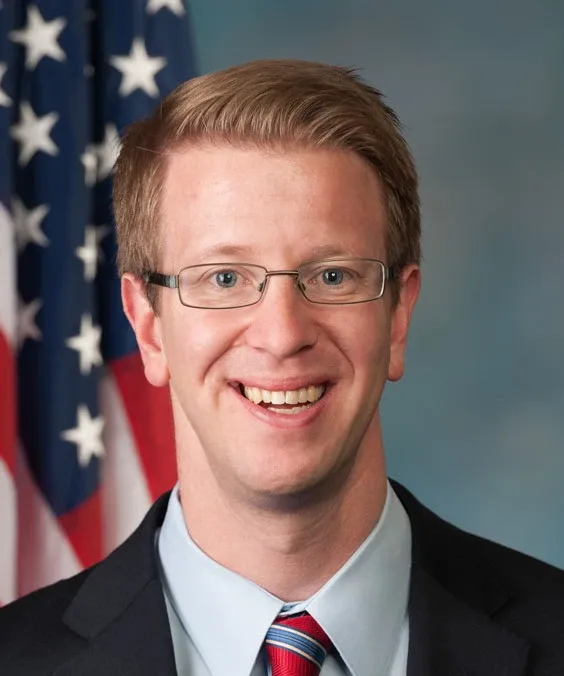
Adam Smith
The Public Record
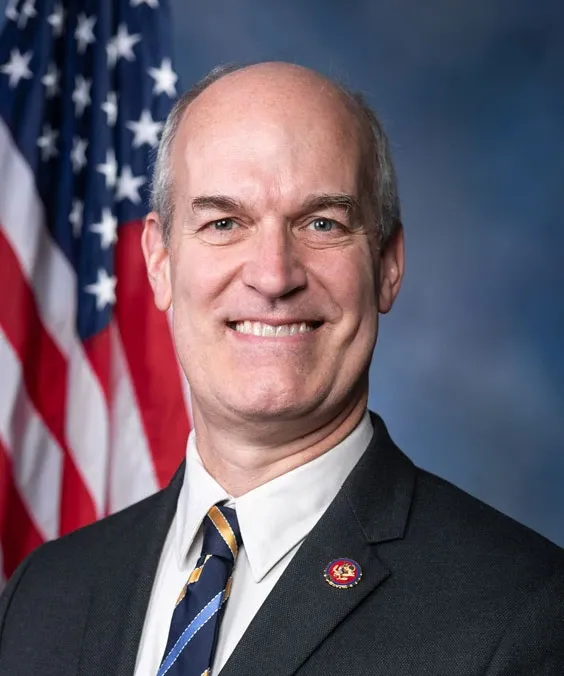
Adam Smith is a U.S. Representative for Washington's 9th congressional district, serving since 1997. A member of the Democratic Party, he has focused on various legislative efforts, particularly in defense and foreign policy. Throughout his tenure, Smith has been involved in key discussions and initiatives related to national security and military funding, reflecting his commitment to these issues. He has also been an advocate for progressive policies within his district and has worked on legislation addressing economic and social challenges faced by his constituents.
Sep 16, 2014
I continue to reserve the balance of my time. Mr. McKEON. Mr. Speaker, let me just say again that most of the arguments I have heard are, ``Don't do this.'' I haven't heard an alternative. I think what we need to remember--and we hear it a…
Sep 16, 2014
I continue to reserve the balance of my time. Mr. McKEON. Mr. Speaker, I yield 2 minutes to the gentleman from Texas (Mr. Williams), my friend and colleague.
Sep 16, 2014
I, again, reserve the balance of my time. Mr. McKEON. Mr. Speaker, I yield 2 minutes to the distinguished gentleman from North Carolina (Mr. Pittenger), my friend and colleague.
Sep 16, 2014
What I really want to focus on is what should be done, regardless of who it is, who's in charge of it.
Sep 9, 2014
Thank you. Mr. Speaker, I yield 3 minutes to the gentlewoman from Texas (Ms. Jackson Lee).
Sep 9, 2014
I continue to reserve the balance of my time. Mr. McKEON. Mr. Speaker, I yield 2 minutes to the gentleman from Illinois (Mr. Schock).
Sep 9, 2014
May I inquire as to how much time is remaining? The SPEAKER pro tempore (Mr. Yoder). The gentleman from Washington has 7 minutes remaining. The gentleman from California has 10 minutes remaining.
Jul 29, 2014
We need to find some way to contain that and hopefully get us to the point where we can have a peaceful and reasonably stable regime in Afghanistan and in Pakistan.
Jul 29, 2014
That said, we have got to hand off responsibility at some point and I think it is important we have done this in a stairstep manner.
Jul 29, 2014
The stability of the Afghan Government still is plagued with corruption and plagued with a number of difficulties.
Jul 29, 2014
Those gains are fragile and reversible because the problems with the Afghan Government remain.
Jul 29, 2014
I fear that the totality of the President's interest on Afghanistan is simply to do what is necessary to finish the job and withdraw.
Jul 29, 2014
It has been challenged. I mean, witness the drone strikes and some other things.
Jul 28, 2014
I want to emphasize though that although we agree that some degree of conditional military assistance is an appropriate way forward, the scale of leverage we can develop through assistance of the kind that any of us are interested in…
Jul 28, 2014
We don't have the ability to walk in and say we are going to fix this because there just isn't U.S. credibility in those parts of the world.
Jul 28, 2014
I think this hearing is incredibly important as well. We are struggling with a very, very difficult national security and policy challenge.
Jul 28, 2014
At the end of the day, it is simple to say that what we need to do is we need to win the ideological war.
Jul 15, 2014
This is more for the White House: Sell it. Because if you don't, there ain't no way we are going to pass it.
Jul 15, 2014
If the White House is going to push a policy like this, they have got to fricking push the policy, all right?
Politicians like Adam Smith