May 30, 2014
The President's decision to move forward with the transfer of these detainees was a tough call. I supported it. I stand by it.
The Public Record
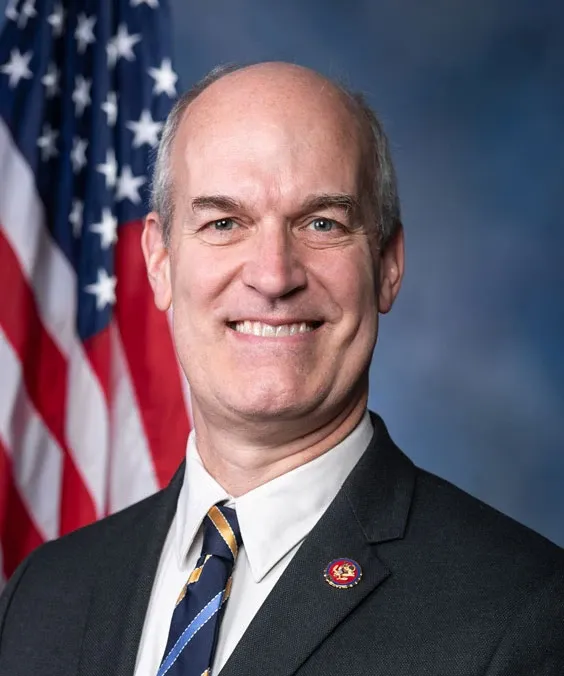
Adam Smith is a U.S. Representative for Washington's 9th congressional district, serving since 1997. A member of the Democratic Party, he has focused on various legislative efforts, particularly in defense and foreign policy. Throughout his tenure, Smith has been involved in key discussions and initiatives related to national security and military funding, reflecting his commitment to these issues. He has also been an advocate for progressive policies within his district and has worked on legislation addressing economic and social challenges faced by his constituents.
The President's decision to move forward with the transfer of these detainees was a tough call. I supported it. I stand by it.
Ultimately, I will tell you, I think it was [in the best interests of the United States].
I concur. We should adopt the en bloc amendments. I yield back the balance of my time. Mr. McKEON. Madam Chair, I encourage our colleagues to support the en bloc amendments. I yield back the balance of my time.
I concur with the chairman that we should pass the en bloc amendment. I have no speakers, so I yield back the balance of my time. Mr. McKEON. Madam Chair, I yield 2 minutes to the gentleman from Illinois (Mr. Shimkus), my friend and…
I demand a recorded vote. The Acting CHAIR. Pursuant to clause 6 of rule XVIII, further proceedings on the amendment offered by the gentleman from Colorado will be postponed. Amendment No. 21 Offered by Mr. Schiff The Acting CHAIR. It is…
I just want to quickly agree with Congressman Heck. I used to represent Joint Base Lewis-McChord. It is the worst traffic in the State of Washington. The base more than doubled over the course of 7 to 8 years. It is a significant quality…
I demand a recorded vote. The Acting CHAIR. Pursuant to clause 6 of rule XVIII, further proceedings on the amendment offered by the gentleman from Washington will be postponed. Amendment No. 13 Offered by Mr. Heck of Washington The Acting…
I demand a recorded vote. The Acting CHAIR. Pursuant to clause 6 of rule XVIII, further proceedings on the amendment offered by the gentleman from Washington will be postponed. Amendment No. 11 Offered by Mr. Smith of Washington The Acting…
May I inquire as to how much time is remaining on each side? The Acting CHAIR. The gentleman from Washington has 1\1/2\ minutes remaining. The gentleman from Ohio has 3\1/2\ minutes remaining.
I have no further speakers, and I yield back the balance of my time. Mr. McKEON. Mr. Chairman, I encourage our colleagues to support the amendments en bloc. I yield back the balance of my time. The Acting CHAIR. The question is on the…
I now yield 1 minute to the gentlelady from Texas (Ms. Jackson Lee) to talk about her very important amendment dealing with Boko Haram, as we all know, a significant problem that needs to be addressed.
There are a lot of competing interests for public lands. Certainly, national security is one of them, but it is not the only one. There is domestic aviation, and there are all kinds of considerations. This is not terribly binding, as it is…
All right. Well, if the purpose is to withdraw the amendment, I will withdraw my reservation of objection. The Acting CHAIR. Without objection, the amendment is withdrawn. There was no objection. Amendment No. 3 Offered by Ms. Loretta…
Point of parliamentary inquiry, a colloquy does not put an issue in a position to be in conference, does it? It has to be in either the House or the Senate bill? The Acting CHAIR. That is a matter for debate.
I now yield 2 minutes to the gentlewoman from Massachusetts (Ms. Tsongas), the ranking member of the Oversight and Investigation Subcommittee.
I know how bad the situation is there, having previously represented that area.
I look forward to the comments from the Members from outside of the committee.
I very much agree with President Obama, who said these actions by Putin are more a sign of weakness than they are a sign of strength.
Hawaii is a critical piece of our national security strategy and Department of Defense activities in Asia and beyond.
We have to try to alter this behavior, certainly condemn it, but try to find ways to hopefully make sure it does not happen in the future.
Mr. Putin is playing a long game, and the West must also play a strategic long game.
What Russia has done in the Ukraine is a blatant violation of international law, a blatant violation of all manner of different treaties which Russia has signed.
Politicians like Adam Smith