Apr 8, 2014
You're going to be able to go to medical school regardless of your income, but we need a commitment from you of X number of years to serve in underserved areas.
The Public Record
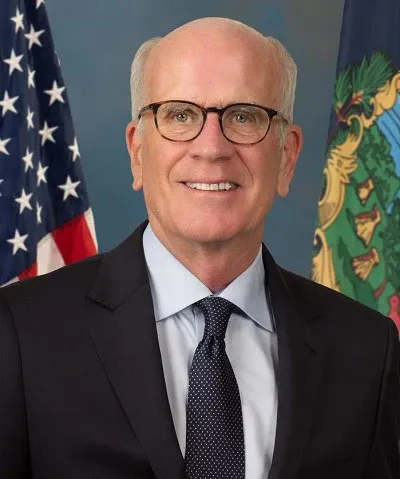
Bernie Sanders is an American politician and activist who has served as the junior United States senator from Vermont since 2007. A member of the Independent party, Sanders is known for his progressive policies and advocacy for social justice, healthcare reform, and income equality. He previously served in the U.S. House of Representatives from 1991 to 2007, where he was the first independent elected to the House in 40 years. Throughout his career, Sanders has been a vocal critic of economic inequality and corporate influence in politics.
You're going to be able to go to medical school regardless of your income, but we need a commitment from you of X number of years to serve in underserved areas.
We spend almost twice as much as do the people of any other country, and yet we heard from Mr. Brock that all over America, you have people who are desperate.
Reauthorization of the THCGME program is funded at $800 million in S. 2229, though use of the funds is not expanded to include NPs or PAs; unfortunately, the bill as drafted supports only training of physician residents.
Yes, absolutely. Starting with some very profound research that was done by the late Barbara Starfield...
Community health centers serve 15 percent of Medicaid recipients at 1 percent of the cost. We save the system $24 billion.
We are extremely grateful to Chairman Sanders for introducing Senate bill 1759, which supports this reauthorization.
But we are not just talking--so everybody understands, this is about physicians.
If you had your druthers, and you were sitting up here, and you understood the scope of the problem, how much more would we be providing for the National Health Service Corps?
We have doubled funding for federally qualified health centers, and we're going to hear about what they are doing all over America.
We are much, much weaker in terms of primary healthcare, and we put much less resources into primary healthcare, comparatively speaking, than do most other nations.
My apologies again. But here in the Senate, there's usually about six things happening simultaneously, and that's the way it is.
So what you are saying is that you think if we increased funding, you would be able to attract more young people to get into primary healthcare or dental care. Am I hearing that?
I think you have heard from Senator Burr and myself and, I think, from a whole lot of folks that we have a crisis in primary healthcare.
If you want to go to medical school, fine. If you're smart enough, you can go to medical school. But guess what? On average, you're going to graduate $160,000 in debt, and a third of you are going to graduate with more than $200,000 in…
The United States of America ends up spending almost twice as much per person on healthcare and yet our end results, our healthcare outcomes are not particularly good compared to many other countries around the world.
The issue that we're dealing with today is of profound importance and, I think, addresses some of the significant problems facing our dysfunctional healthcare system.
I think you are right, but my point would be that even if you had more economic growth, if you had this kind of incredible inequality in terms of income, if 95 percent of all new income went to the top one percent, you can have six percent…
From a moral perspective, do you have a problem that the top one percent owns 38 percent of the financial wealth of America while the bottom 60 percent owns all of 2.3 percent?
Should Congress begin to address income and wealth inequality from a moral perspective?
If 95 percent of all new income generated in recent years went to the top one percent, is that, in fact, true, that economic growth is going to impact poverty?
Politicians like Bernie Sanders