Apr 2, 2014
One of my concerns is that if we are talking about a misalignment and trying to bring it back to what we project as the threats may be, just as you pointed out, that is a very dynamic environment.
The Public Record
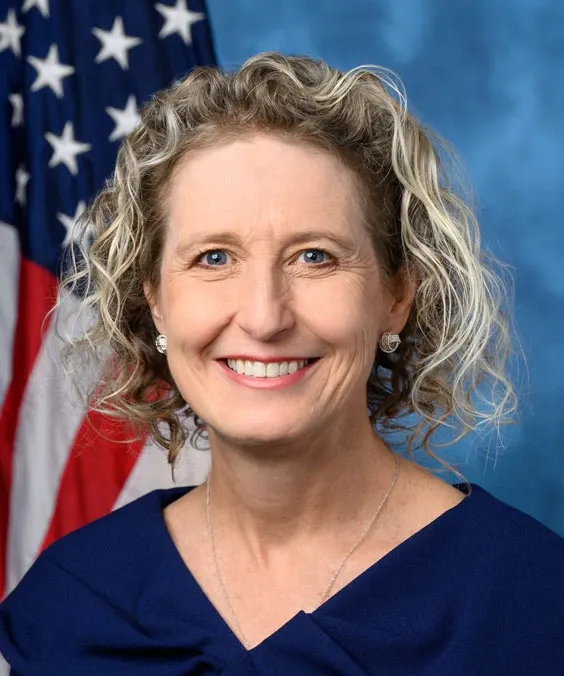
Rob Wittman is a U.S. Representative for Virginia's 1st congressional district, having served since January 9, 2007. A member of the Republican Party, Wittman has focused on issues such as military readiness, veterans' affairs, and environmental protection. He has been an advocate for the Chesapeake Bay and has worked on legislation aimed at improving the health of the bay and its surrounding ecosystems.
One of my concerns is that if we are talking about a misalignment and trying to bring it back to what we project as the threats may be, just as you pointed out, that is a very dynamic environment.
Without the support of OCO, at what point in time would the force return, in large measure, to full-spectrum readiness?
How does your service's FY15 base budget request reflect efforts to return to a non-OCO budgetary world? What specific functions have you moved from OCO to base?
How dependent are you on OCO for day-to-day operations? How will the dependence change after the majority of, or possibly all, combat troops are out of Afghanistan?
And there is a lot that has been said about whether we will or will not have a bilateral security agreement [BSA] in Afghanistan.
Please describe your service's efforts to migrate enduring requirements into the base budget? How challenging has sequestration made that task? What is most at-risk?
If we have learned nothing in the last 12 years of war it is that we do need to turn inside the enemy.
I call to order the Subcommittee on Readiness of the House Armed Services Committee.
The statements that have been made by the President of Afghanistan have been outrageous and inappropriate.
This Congress has an obligation to make sure that our men and women in uniform have the tools, the equipment, and the training and the leadership that they deserve.
It is just not right that we are trying to balance our budgets, our Nation's budgets on the backs of our men and women in uniform and their families.
This is a critical piece of the modernization of our fighter fleet, and the problem is we have everything put here...
And one thing that comes up consistently is the Chinese threat and specifically A2/AD [anti-access/area denial].
I traveled to the Pacific Command a number of times, and I have gone there and I met with our allies, I have talked to our combatant commanders and their staffs and talked about the challenges in the region.
Thank you, Mr. Chairman. Secretary James, General Welsh, thank you so much for joining us today, and thanks for your service to our Nation.
Secretary Hagel, let me begin with this: You have spoken very eloquently about the increased risk around the world that we face, the threats that are out there.
How are you going to be situated with accomplishing your mission in the face of a declining naval presence with fewer ships at your avail?
In fact, I would argue, in some areas, it actually took away readiness from the military.
I will tell you I have been personally interested in since I represented the Bureau of Reclamation in the late 1970s.
I think that the bill that I am most interested in right now, which is Mr. Hastings' H.R. 3981, has a provision...
I believe we have made major improvements that could achieve sustainability for our marine resources in the Southeast.
I question whether the referendum is really an efficient way, or an effective way, for the decisionmaking process in fisheries management.
Taken together, these amendments to the MSA would waste years of sacrifice by fishers and hard work that have put our fisheries on a course to sustainability.
This legislation would re-instate the failed policies of the past, eliminate the science from science-based management.
Politicians like Rob Wittman