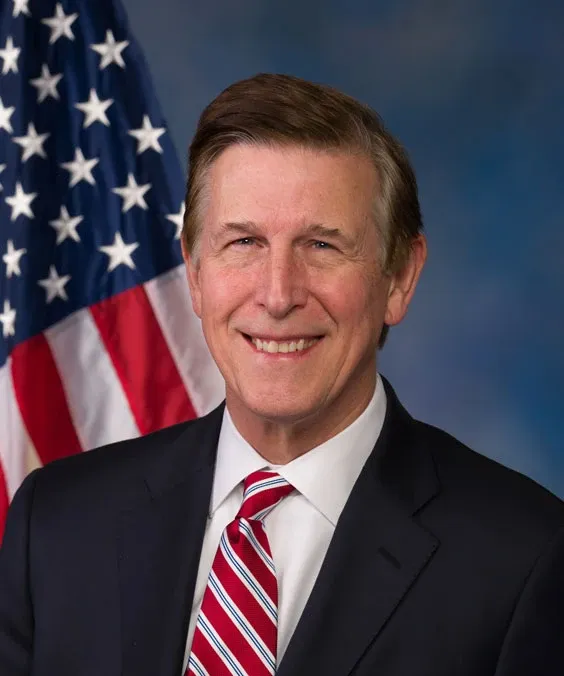
Mark Warner
The Public Record
Mark Robert Warner is a United States Senator from Virginia, serving since January 3, 2009. A member of the Democratic Party, Warner previously held the office of Governor of Virginia from January 12, 2002, to January 14, 2006. During his tenure in the Senate, he has focused on various issues including technology, healthcare, and economic development. Warner is known for his bipartisan approach and has worked on legislation aimed at improving the economy and supporting small businesses.
Sep 23, 2013
This is the first time I'll be chairing, because of the passing of our friend and colleague Senator Lautenberg.
Sep 23, 2013
We're going to get at least a brief respite from the otherwise dysfunction that seems to be floating in the ether around Capitol Hill.
Sep 23, 2013
Any such entity or authority that I'd want to see us look at or examine would have to be independent.
Sep 17, 2013
The notion that the greatest Nation in the world with the dislocation in Europe, with China slowing down, with India's economy almost grinding to about 4 percent growth, with countries like Turkey and Brazil that we saw as growing, with…
Sep 17, 2013
It is stunning to me that anybody that would claim economic expertise would say that messing with the full faith and credit of the United States of America is a responsible action.
Sep 17, 2013
Clearly we needed to bring down the deficits. We needed to get the deficits down at least to stabilize the debt-to-GDP ratio.
Sep 17, 2013
The idea that you would be this far into your term and not having your whole legislative team filled out, or your management team, is something that needs to be addressed
Sep 17, 2013
I come here unreservedly endorsing Suzanne Spaulding to this Committee for her, I think, very appropriate nomination
Sep 17, 2013
Our prayers are with the victims and their families and all the first responders at the scene.
Sep 11, 2013
We, in effect, have while potentially artificially low mortgage rates at this point, we clearly have all taxpayer exposure.
Sep 11, 2013
I actually think there is a lot more transparency and a lot better ability to audit than we had in the past.
Sep 11, 2013
I would argue that the way S. 1217 has tried to separate out those goals... actually make sense.
Jul 29, 2013
I think there is enormous, enormous opportunity to use this new tool for equity crowdfunding that can really marry together in a remarkable way.
Jul 23, 2013
It is very important that we get this bank moving, we get it funded with just a little bit of funding to catalyze the efforts of the infrastructure bank.
Jul 23, 2013
I would simply say that one of the things a number of us, and I really appreciate the Chair holding this hearing, is not only how we find that permanent source of funding, but how we also use tools--and this is something Governor Rendell…
Jul 22, 2013
This bipartisan legislation is a first positive step in what is certain to be a long, long process in creating a sustainable, rational, and limited role for the Federal Government in supporting and regulating a healthy mortgage market.
Jul 22, 2013
Five years is a really long time for a conservatorship, and longer than that is quite unimaginable.
Politicians like Mark Warner