Jul 26, 2009
I suppose nobody sees any winners in such an economic calamity as we have seen with these two American icon companies going through Chapter 11.
The Public Record
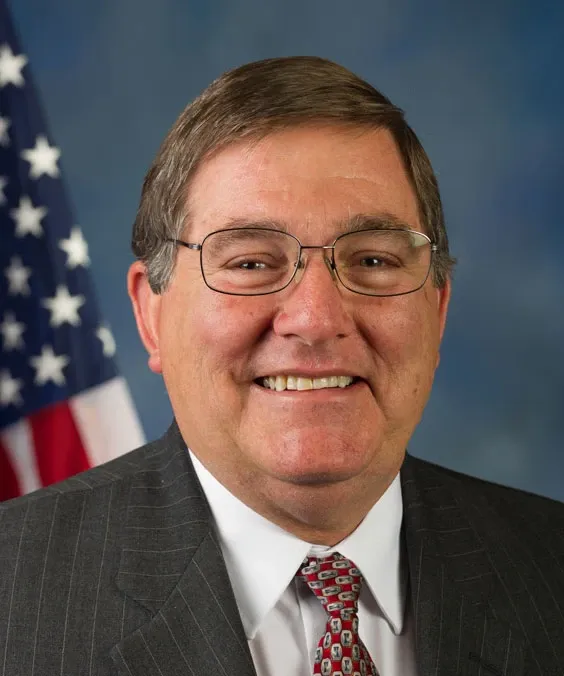
Jeb Hensarling is a former Republican member of the United States House of Representatives, representing Texas's 5th congressional district from 2003 to 2019. During his tenure, he served as the chairman of the House Financial Services Committee, where he played a significant role in shaping financial regulation and policy. Hensarling was known for his advocacy of free-market principles and his opposition to the Dodd-Frank Act, which was enacted in response to the 2008 financial crisis.
I suppose nobody sees any winners in such an economic calamity as we have seen with these two American icon companies going through Chapter 11.
I would like to continue to flesh out this line of questioning from Professor Warren.
I would also say to Mr. Borst and Ms. Bertsch, again, you may be right, but we recently, as a Member of Congress, heard from CIT that if they did not receive taxpayer funds that they would have to go into liquidation.
Mr. Lauria's allegation is that Mr. Rattner said it. And Mr. Lauria is wrong.
Mr. Rattner is not here today. You are. Have you spoken to Mr. Rattner about this matter?
In an interview with the Detroit radio host, Frank Beckmann, Mr. Lauria said that Perella Weinberg was directly threatened by the White House.
How is it wise economic policy to have a subsidized GM and a subsidized Chrysler compete with a non-subsidized Ford?
I am not convinced that somebody using their own money would have made this same deal as opposed to using the taxpayer money.
When you are talking about new GM and new Chrysler, the management made this decision.
As part of the restructuring of Chrysler--I believe I have my facts right--I believe that Fiat has the opportunity to increase their equity stake.
Given that the taxpayer has become an involuntary investor in Chrysler and GM, is it the intent of the Government and your Auto Task Force to ensure that they receive the same disclosure of any public company, that they as shareholders…
I had originally advocated that we hold this hearing in the Nation's capital, but having been here just a little bit of time, I can certainly say that the hospitality of Wayne State far exceeds that of my colleagues and other Members of…
Even as a fiscal conservative, I was willing to put the full faith and credit of the United States on the line in what I perceived to be one of the first truly emergency situations I had seen since coming to Congress.
I'm not completely convinced we're not kicking the economic calamity can down the road for future generations to deal with.
Clearly, I think all Americans agree that the status quo is unsustainable over the long term.
I guess, Mr. Chairman, then the question is, yes, I would hope that if one committed $1.1 trillion, when you add in debt service, some good would come from it.
Clearly, what you didn't mention, as far as positive impacts, was employment.
Over the course of these last couple of hearings and listening to some of the opening statements, it is clear that we are witnessing a clash of principles, and there is much at stake.
It is not always more regulation that counts; it is perhaps smarter regulators and smarter regulation.
By designating certain firms as systemically risky, we almost guarantee that there will be more Fannie Maes and Freddie Macs.
Politicians like Jeb Hensarling