Jul 20, 2009
Clearly, what you didn't mention, as far as positive impacts, was employment.
The Public Record
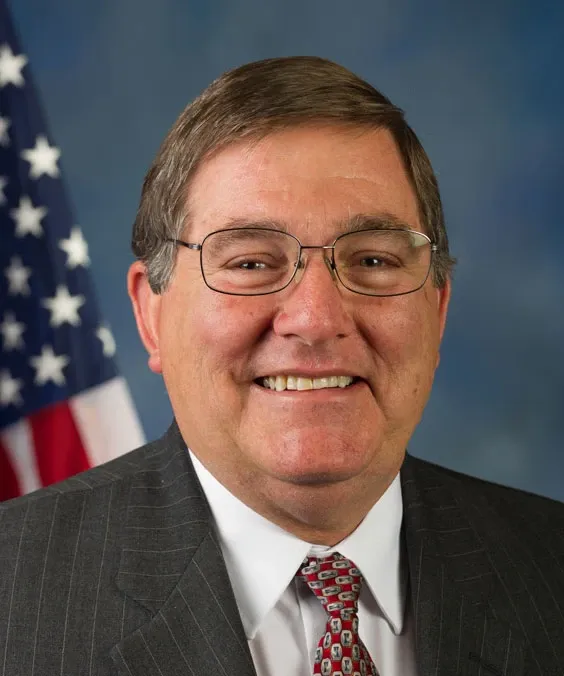
Jeb Hensarling is a former Republican member of the United States House of Representatives, representing Texas's 5th congressional district from 2003 to 2019. During his tenure, he served as the chairman of the House Financial Services Committee, where he played a significant role in shaping financial regulation and policy. Hensarling was known for his advocacy of free-market principles and his opposition to the Dodd-Frank Act, which was enacted in response to the 2008 financial crisis.
Clearly, what you didn't mention, as far as positive impacts, was employment.
Over the course of these last couple of hearings and listening to some of the opening statements, it is clear that we are witnessing a clash of principles, and there is much at stake.
It is not always more regulation that counts; it is perhaps smarter regulators and smarter regulation.
By designating certain firms as systemically risky, we almost guarantee that there will be more Fannie Maes and Freddie Macs.
The underlying assumption is that our economic turmoil has somehow been caused by lack of regulation.
This Office of Consumer Financial Products, we would call it financial product polit bureau that ultimately will decide whether Americans can have credit cards.
If you do not know the Rodriguez family of Mesquite, Texas, do not presume to choose their bank account for them.
The goal should not be enhancing regulation; the goal ought to be enhancing consumer protection.
I would say either, one, your testimony is not needed, or it has succeeded beyond its wildest expectations.
There is no doubt each of us knows what a critical role the insurance industry plays in our economy today.
We don't necessarily need more regulation; we need smarter regulation, which will help the consumer.
Finally, I hope, I hope that in America the term 'systemic risk' is not now being used the way the term 'internal securities' was once used in the farmer Soviet Bloc.
If someone aspires to be the next Bill Gates, Oprah Winfrey, Warren Buffett, or Charles Schwab, we should tell them, the sky is the limit.
Executive compensation limits to address systemic risk are the wrong remedy for what is probably a nonexistent problem.
None loom larger than the monopoly powers that were granted to Fannie and Freddie, coupled with the so-called housing mission, that essentially mandated they loan money to people to buy homes that ultimately they could not afford to stay…
From my perspective as a member of this committee, and as a member of the Congressional Oversight Panel for the TARP program, I believe there are a number of 'but for' causes of our economic recession.
I fear that aspects of this legislation can cause people to engage in riskier behavior, believing that the government will perform their due diligence for them on the front end and then bail them out on the tail end.
We know there are a number of causes of our Nation's economic turmoil. Most have their genesis in flawed public policy.
I think potentially it has the ability to make our markets more competitive. I think it could provide consumers with more choices at reduced cost.
We were told there would never be any taxpayer liability there. Well, we kind of know how that story turned out.
Politicians like Jeb Hensarling