Jul 24, 2018
The promise of the 21st Century Cures Act is to advance the discovery and development of new treatments and cures through increased research and an improved drug approval process.
The Public Record
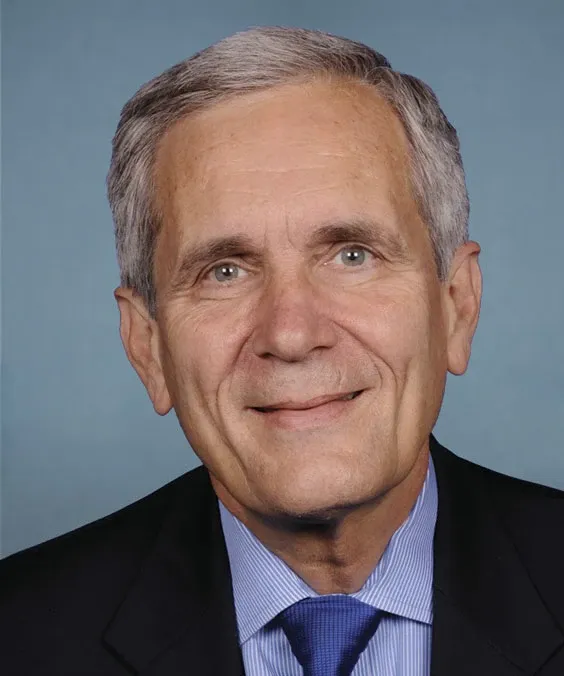
Gene Green is a former Democratic member of the United States House of Representatives, representing Texas's 29th congressional district from 1993 to 2019. During his tenure, he focused on issues such as healthcare, education, and environmental protection. Green was known for his advocacy for the direct popular vote in presidential elections and for consumer privacy rights in the digital age. He played a significant role in various legislative efforts aimed at improving the lives of his constituents and addressing national concerns.
The promise of the 21st Century Cures Act is to advance the discovery and development of new treatments and cures through increased research and an improved drug approval process.
The promise of the 21st Century Cures is to advance the discovery and development of new treatments, cures, through increased research and improved drug approval process.
Patients and families deserve to have their elected officials respond to their needs. The 21st Century Cures was written to do just that.
The enactment of the 21st Century Cures in December of 2016 was a great achievement, particularly in a time of sharp partisanship and gridlock.
But the work started long before 2016 led by colleagues Fred Upton and Congresswoman Diane DeGette.
I am interested in how the National Child Traumatic Stress Network is responding to the recent events related to the family separations at the border as a result of the Trump administration's zero tolerance.
The 21st Century Cures Act was a landmark law and included important provisions to strengthen mental and substance use disorder care for women, children and adolescents.
If children that are impacted by traumatic stress receive early interventions and the trauma informed care they need, can the long-term health affects of trauma be mitigated in any way?
While were a still great success in the last decade, the sun doesn't always shine and the wind doesn't always blow.
Advances in energy storage have the potential to lead to a grid with a expanded renewable portfolio.
I think we ought to share how important the 340B program is needed to stretch scarce Federal resources as far as possible to reach more eligible patients and provide more comprehensive services.
Harris Health uses the savings from the program on patient care services which include the cost of treatment, administration, management of services and facilities, and improves access to quality health care for our community.
If the administration cares about accountability for 340B, perhaps they should start with implementing the delayed regulatory guidance program.
I hope we all agree on the importance of 340B and the need to stretch scarce federal resources as far as possible to reach more eligible patients and provide more comprehensive services.
The 340B Drug Pricing Program was created by Congress in 1992. It helps safety net providers care for their most vulnerable patients and afford drugs that would otherwise be out of reach.
GAO studies have confirmed that large and covered entities use these savings to provide more care to more patients, including medications that otherwise would be unaffordable to those who serve.
Eight years ago, Congress passed the Affordable Care Act to address the HHS Office of Inspector General reports of drug manufacturers overcharging 340B drugs.
I like domestic production, but I also see that a lot of folks making money out of the energy sector, it is not putting one drop of gas in our vehicles.
As a founding member of the Congressional Public Health Caucus and longtime advocate for public health, I hope our committee will look at the very real threat that antimicrobial resistance poses.
Events in recent years including natural disasters, cyber terrorism, influenza epidemic has posed a threat to our public health systems and our national security.
In addition to addressing antimicrobial resistance, we also need to further consider the proposal to move the Strategic National Stockpile--SNS--from CDC to the office of Assistant Secretary for Preparedness and Response.
I believe the creation of a market entry reward program that incentivize the manufacturers to develop novel antibiotics would provide the best bang for our buck in this space.
Each year in our country at least 2 million people become infected with bacteria that are resistant to antibiotics and at least 23,000 people die annually as a result of these infections.
I want to thank our two panelists, Dr. Gordon Schutze, the Executive Vice Chair of Pediatrics at Texas Children's Hospital in Houston, and Dr. Sarah Guralnick, Associate Dean for Graduate Medical Education at the University of…
Will the $30 million increase in annual funding set in H.R. 5385, the Children's Hospital GME Support Reauthorization Act, help address this challenge?
Politicians like Gene Green