Sep 10, 2015
Throughout its 50-year history, Medicaid has been an adaptable, efficient program that meets the healthcare needs of millions.
The Public Record
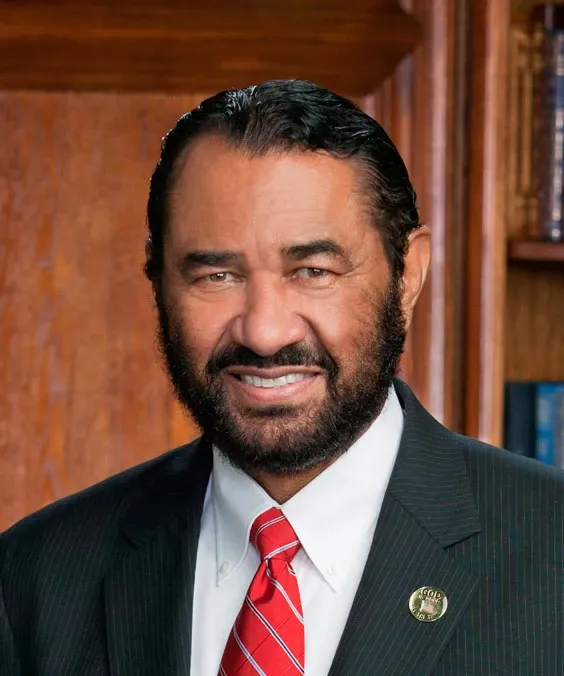
Gene Green is a former Democratic member of the United States House of Representatives, representing Texas's 29th congressional district from 1993 to 2019. During his tenure, he focused on issues such as healthcare, education, and environmental protection. Green was known for his advocacy for the direct popular vote in presidential elections and for consumer privacy rights in the digital age. He played a significant role in various legislative efforts aimed at improving the lives of his constituents and addressing national concerns.
Throughout its 50-year history, Medicaid has been an adaptable, efficient program that meets the healthcare needs of millions.
The Affordable Care Act included the most significant changes to the program since its creation.
Since the ACA was enacted, over 16.4 million Americans gained Affordable Healthcare Act.
Historically, after passing any large piece of legislation, Congress has worked together to enact technical fixes and improvements because no law is perfect.
In short, access to affordable insurance is up, the uninsured rate is down, and the quality of care continues to improve.
The time to move part partisanship is long overdue, and I look forward to turning the page and working together to improve the law.
The ACA is not an abstract law; it is a set of fair rules and tougher protections that have made health care in America more affordable and more attainable for millions of hardworking Americans.
It is true the ACA continues to achieve positive outcomes, but it is also true there is no such thing as a perfect law.
The Affordable Care Act has been an exception to this tradition and serving as a political football for the last 5 years.
Five years ago, Congress acted upon the principle that in America, health care is not a privilege for a few, but a right for all.
This year marks the 50th anniversary of Medicaid. It is a vital program that is served as a lifeline for millions of Americans that--when they need it the most.
The Medicaid program has served as a critical safety net for the American public since its creation in 1965.
Even though we are a red State, we sure have a lot of poor people, and Medicaid is for that, whether you are red or blue.
I worked with my colleague Joe Barton for several Congresses on this legislation--on this issue, and I thank him for his leadership, on behalf of low-income Americans.
These bills are all very bipartisan, and I appreciate the Chair and the majority setting them for today.
H.R. 1344 reauthorizes and makes further improvements to the Early Hearing Detection and Intervention program.
H.R. 2820 will reauthorize Federal programs that support cord blood donation, a national bone marrow registry, and related research.
Medicaid provides health care coverage for more than 70 million Americans. It is our Nation's most vital health care safety net program.
I think it is almost medical malpractice not to expand Medicaid in--for the States based purely on politics.
It is a simple truth: our Federal and State Governments save money by investing in health care, and Medicaid coverage is a key component of such investment.
Thank you, Mr. Chairman. Good morning and thank our witnesses for being here today.
A comprehensive study by the National Academy of Sciences found that GMO's have significantly increased crop yields while decreasing pesticide use and soil erosion.
Genetically Modified Organisms, or GMO's, first hit the market around 20 years ago and in the years since, have only expanded in prevalence.
Politicians like Gene Green