Nov 30, 2016
The public back home really doesn’t care about these places. They really do care about our troops.
The Public Record
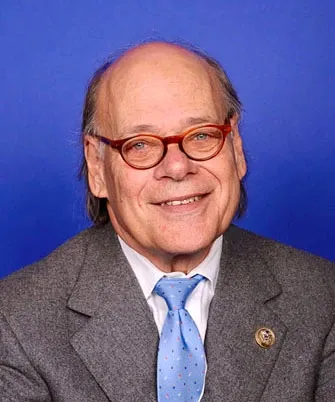
Jim Cooper is a Democratic politician from Tennessee who has served as a member of the U.S. House of Representatives. He represented Tennessee's 5th congressional district from 2003 until 2021, having previously served in the same role from 1983 to 1995. Throughout his career, Cooper has focused on issues such as fiscal responsibility, healthcare reform, and government transparency. He is known for his moderate stance and willingness to work across party lines. Cooper has been an advocate for reducing the national debt and improving the efficiency of government programs.
The public back home really doesn’t care about these places. They really do care about our troops.
It is relatively easy to beat up on troop caps, or FMLs, as a flawed device.
I share the concern that when we fund contractors to do the same job we are paying twice essentially for the same work, and also undermining our readiness and Active Duty forces.
I also share your concern about fudging on the cap, manipulating things so that you don't bring your Army aviation maintenance crews with you or keep your medevac folks outside of the region.
Now, there are band-aids here or there but really there is no alternative so it is not a question of if we had only done the Republican plan.
We are purely an investigative committee. And oftentimes that translates into pure political theater.
How does NNSA evaluate the cost-benefit of public-private partnerships over the lifetime of the facility? What lifetime is assumed?
What is the cost and safety risk of deferring problems and maintenance, and what are you doing to incentivize addressing and funding routine maintenance before small problems become big problems?
To put this in a more understandable context for average citizens, we had a Treasury Secretary once who said that nobody in the history of the world has ever washed a rental car.
I think the public would be very interested in knowing what causes a $300 million delta like that.
I am almost wondering if it is budgeting malpractice in Congress if for any new project we do not set aside funding for future maintenance.
I think the key issue here is whether, in fact, there's a double standard, where some Americans are being treated differently than others.
I hate to see one of America's most distinguished public servants pilloried before this committee.
When a Congressman like Mr. Brooks asks you how we could get savings from the DOD budget, you might want to remind the members of the committee that we have banned the Pentagon from even thinking about any possible BRAC [Base Realignment…
There were almost 1,000 incidents in the last several decades of problems with securing nuclear weapons by the U.S. Air Force.
I hope if there is any wrinkle or blip here, that you promptly notify the subcommittee, because we are very interested in this commonality issue.
I can think of no better words to use than the ones you did, and I am proud to be part of this rare, perhaps unique, oasis of bipartisanship in the United States Congress.
Nuclear deterrence is the Nation's number one priority defense mission, and we must recapitalize our nuclear forces.
I have always been a fan of the Personal Reliability Program, and relaxing a standard doesn't sound like the best way to make sure our nuclear weapons are safe, secure, and reliable.
I hope that this Congress will not only fund that amount, but actually find the real dollars to support it and not borrow that money
Politicians like Jim Cooper