Oct 6, 2015
But, Congress being Congress, there is a lot of inertia, and there are some folks who may prefer what is now the worst and more expensive and slower option.
The Public Record
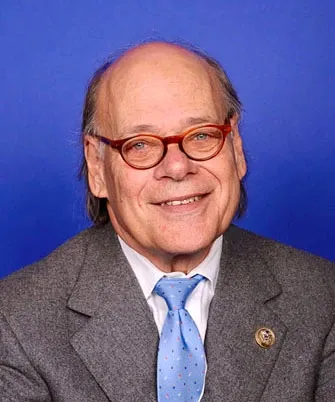
Jim Cooper is a Democratic politician from Tennessee who has served as a member of the U.S. House of Representatives. He represented Tennessee's 5th congressional district from 2003 until 2021, having previously served in the same role from 1983 to 1995. Throughout his career, Cooper has focused on issues such as fiscal responsibility, healthcare reform, and government transparency. He is known for his moderate stance and willingness to work across party lines. Cooper has been an advocate for reducing the national debt and improving the efficiency of government programs.
But, Congress being Congress, there is a lot of inertia, and there are some folks who may prefer what is now the worst and more expensive and slower option.
I think the real news of this hearing is that most all the experts agree that there is a new and better and cheaper way to dispose of this plutonium.
So why can't we just maintain current funding levels, maintain current employment levels, maintain current job levels, but get the technology right as we dispose of this plutonium?
But $300 million or $400 million a year is enough, on top of the $12 billion that various government agencies--DOE, DOD [Department of Defense]--are already spending in direct support to South Carolina.
There have been various people for a long time trying to do the right thing for the American taxpayer.
I am worried that, as we enter the month of October and head toward Halloween, that really the subject of this hearing is a horror story for the American taxpayer.
I would particularly urge my chairman and my colleagues to keep this open session as short as possible.
Let me emphasize the word 'hear.' This is called a hearing. It is not a press conference.
It is easily possible to show that SpaceX has received about $3.5 billion or so, possibly more, in open source funding.
Essential question of fact here. SpaceX testifies that they can handle 60 percent of national security loads--60 percent.
So it is not as scary as FAR 15, the big monster, but this is a little monster.
I think you went a little bit too far if you used the ULA ratio last year as the appropriate mix.
I am a budget hawk, and I hate to bring up the issue of sequestration, but that probably is, as Ms. McFarland pointed out, the most important issue we face.
So we have to get real about this, and this committee has failed in that regard.
I don't want to put words in your mouth, Dr. Griffin, but there are some advantages sometimes to big government.
But this Congress, this committee, can say 2019. That doesn't mean it is going to happen.
So I hope the members of this committee and of this Congress will solve the sequestration problem, something that repeated Congresses have failed to do.
Nobody likes monopoly, but I think in the best case situation we would have a duopoly or maybe an oligopoly.
On the intellectual property issue, it is the greatest source of wealth on the planet, but we have increasing difficulty understanding ownership and relationships like that.
While we are dependent on the RD-180, it may not be the smartest thing strategically to bad-mouth the source.
I think Mr. Bruno just said there is no such thing as a replacement for the RD-180 engine, there is no drop-in equivalent.
Politicians like Jim Cooper