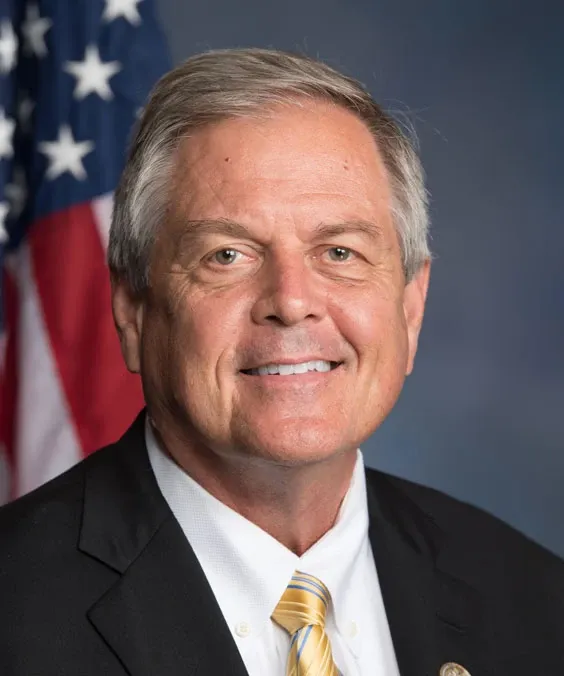
Tim Scott
The Public Record
Tim Eugene Scott is an American politician and businessman currently serving as the junior United States senator from South Carolina, a position he has held since January 2, 2013. He is a member of the Republican Party and was previously a United States Representative from May 5, 2011, to January 2, 2013. Scott is known for his focus on issues such as economic opportunity, education reform, and community development. He has been a vocal advocate for updating infrastructure and addressing the needs of senior citizens in his state.
Feb 10, 2015
The condensed timeframe between the filing of a petition and an election to as few as 10 days... would absolutely feel like an ambush.
Feb 10, 2015
The rule drastically tilts the playing field in favor of unions and chills both the rights of employers and employees.
Feb 10, 2015
This rule is radical, it is ridiculous, and it is oppressive, and it applies to all employers no matter how many employees you have.
Feb 9, 2015
The good news is that Senator Hatch... has taken a fairly inventive and creative approach to making sure that we find some common ground.
Feb 9, 2015
Tax loopholes are ways for politicians to spend money without having to go through the appropriations process.
Feb 9, 2015
Thank you both for being here today with us and providing us insight from 1986 in how you brought together what at times seemed to be impossible.
Feb 4, 2015
I believe that collective bargaining works, but it works best when we have successful, efficient, effective business.
Feb 4, 2015
I think that raises constitutional concerns; and now with the joint employer issue, it seems to me this is a triple-headed attack.
Feb 4, 2015
How can we expect businesses to grow and innovation to flourish if the Board is simultaneously shortening the timeframe for union elections down to as few as 10 days?
Feb 4, 2015
The conversation that we're having seems to be inconsistent with the experience that I had.
Feb 4, 2015
A 28-percent rate would be a positive rate, and it would put us in a position to be globally competitive.
Feb 4, 2015
The proposal from the President actually impedes the ability for small and minority business owners to transfer wealth.
Feb 4, 2015
You have done something that I am very surprised at, and it almost bewilders me.
Feb 4, 2015
I believe that any new tax on banks ultimately finds its way to the consumer.
Feb 4, 2015
I will tell you that perhaps there is a part of the narrative that is factual.
Feb 4, 2015
I will tell you that the seven basis points that you increase it by may mitigate risk, but at the same time, it really passes on a greater burden to the consumer.
Feb 3, 2015
I will say that every dollar that we spend that we do not have is taking money from a youngster, a young person who cannot afford a lobbyist.
Feb 3, 2015
When I think about Obamacare, I think about the fact that it started off in 2009 at a cost of around $900 billion in the estimate.
Jan 26, 2015
Considering the importance of the Multi-Component Integrated Circuits or MCO agreement to the U.S. and to the ITA, what is the USTR's plan to bring the ITA to completion?
Jan 26, 2015
It is perhaps one of the States that would benefit the most from such an agreement.
Jan 21, 2015
We need to change this. We need to get the rates on entrepreneurial activities down.
Jan 21, 2015
We need permanency in the code. We need predictability, and I think the code needs to be competitive.
Politicians like Tim Scott