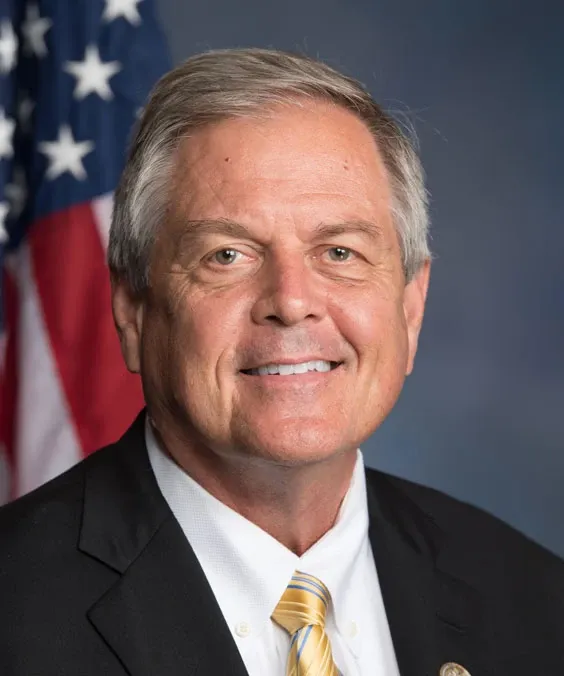
Tim Scott
The Public Record
Tim Eugene Scott is an American politician and businessman currently serving as the junior United States senator from South Carolina, a position he has held since January 2, 2013. He is a member of the Republican Party and was previously a United States Representative from May 5, 2011, to January 2, 2013. Scott is known for his focus on issues such as economic opportunity, education reform, and community development. He has been a vocal advocate for updating infrastructure and addressing the needs of senior citizens in his state.
Oct 28, 2015
With the number of PTSD cases coming back from the military, have you found that the level of awareness and interest in mental health issues has risen substantially in the last few years?
Oct 28, 2015
Have you seen any other innovations coming our way that might give us reasons to be hopeful for challenging some of the rural areas in States like South Carolina?
Oct 28, 2015
South Carolina is a rural State, and according to your reports, I believe we have 70 or so areas that are underserved.
Oct 28, 2015
By default, we are finding folks incarcerated not because they necessarily committed a crime but because of their mental illness as a primary reason for their incarceration.
Oct 28, 2015
Certainly, without question coming from South Carolina, I have an appreciation of the impact of mental illness and violence, mass violence in South Carolina, in Washington, and around the country as well.
Oct 27, 2015
Too often too many regulations are crafted from an urban, high-density paradigm.
Oct 27, 2015
S.1711, introduced by Senators Tim Scott and Joe Donnelly, would provide a critical safe harbor from enforcement actions.
Oct 27, 2015
So by default, you are having a harder workload and, frankly, as the president and CEO of a small institution, realizing the number of jobs that you mentioned earlier, it is like you are a one-armed paper hanger.
Oct 27, 2015
Dodd-Frank, which is only 70 percent implemented--only 70 percent implemented--is increasing the compliance costs for institutions all around the country.
Oct 5, 2015
I strongly agree the new joint employer standard will have a negative impact on employees and job creation.
Oct 5, 2015
I strongly believe the new joint employer test will lead to centralization of the housing industry, which will negatively affect small businesses and housing prices.
Oct 5, 2015
As any business owner can tell you, one of the worst things in the world for your business is uncertainty.
Oct 5, 2015
This decision greatly effects both me as a small franchisor and also each individual franchisee because it essentially makes each franchisee a middle manager between myself and their employees and creates extensive liability for me as a…
Oct 5, 2015
If I decide, because of the liability that this issue affords me, that I will no longer franchise MODE, job opportunities will be lost in both the State of South Carolina and other States across the country.
Oct 5, 2015
The Protecting Local Business Opportunity Act that I have introduced would roll back the NLRB ruling and reaffirm that an employer must exercise actual, direct, and immediate control over essential terms and conditions of employment.
Sep 30, 2015
The fact of the matter is, when we are talking about improper payments at $1 trillion in 12 years, it is amazing to me that we are having a conversation about creating more complexity in a system that needs less complexity.
Sep 30, 2015
One trillion dollars could provide a lot of resources, a lot of equipment to make sure that our men and women who go to defend this country come home safely.
Sep 28, 2015
I would just make the point that the change of the traditional law was made by the board, which I think were described as out-of-touch unelected bureaucrats.
Sep 16, 2015
I think to some extent Senator Murphy started having the conversation about the appropriate education necessary for the clinicians.
Sep 16, 2015
My last comment would be that I know that you've been dedicated to this cause for it sounds like nearly 20 years.
Sep 16, 2015
Frankly, if we're looking for a way, as Senator Murphy has inferred to controlling and/or reducing the cost, whether it's 30 percent or 20 percent.
Sep 16, 2015
To not take the original intent on the first biosimilar immediately as it's coming out seems to me to be a costly delay.
Sep 1, 2015
As I think about the conversation that we are having and the importance of early detection, early diagnosis...
Politicians like Tim Scott