May 16, 2017
Wireless alerts provide detailed and timely messages to the devices that we carry and keep close to us every moment of the day.
The Public Record
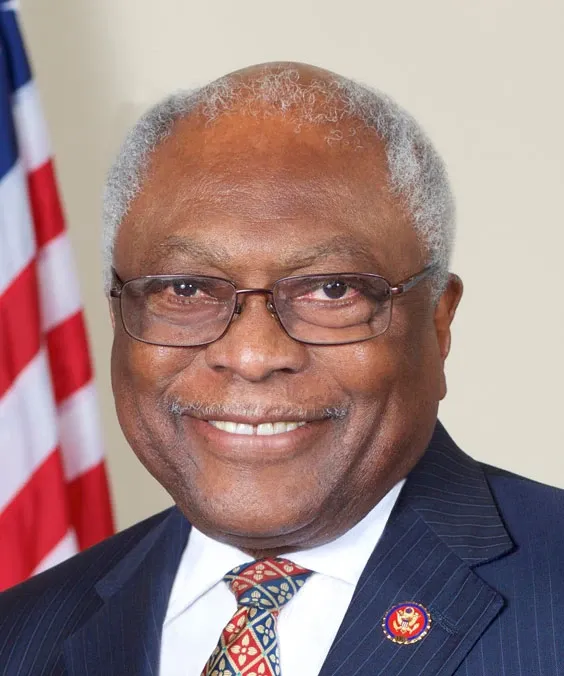
Mike Doyle is a former member of the U.S. House of Representatives, serving South Carolina's 1st congressional district from 1995 to 2021. A member of the Democratic Party, Doyle was known for his focus on issues such as healthcare, education, and infrastructure during his time in office. He played a significant role in various legislative efforts and was involved in initiatives aimed at improving the lives of his constituents. Throughout his tenure, he was recognized for his commitment to public service and community engagement.
Wireless alerts provide detailed and timely messages to the devices that we carry and keep close to us every moment of the day.
Advances in emergency alerts have enabled greater flexibility, targeting, and effectiveness, and I am proud of the legislation that was passed out of this committee.
We ran through legislation under the Congressional Review Act--a blunt, draconian instrument--to smash these rules.
Last week Congress rolled back critical regulatory protections that prohibited ISPs from selling individuals' browsing histories without their consent.
To somehow say these rules were heavy-handed or they were going to stifle innovation--is just not a true statement.
I couldn't find a single person who supported this bill or eroding our privacy rights. Not one.
Recent public polling has shown that 74 percent of all Americans oppose this legislation.
I believe it is incumbent upon Congress to support unlicensed spectrum and continue to create space for innovation.
The expectation is by you, me, and us that that 911 fee or tax is going to go to funding and improving the 911 systems.
America's 911 systems need another kickstart, the kickstart that can start right here in the Congress of the United States.
I am disappointed that we are sitting here today without a clear idea of how much upgrading our nation's 911 infrastructure will cost.
We need to ensure that they have a strong partner in the federal government that is able to direct funding, expertise, and scale at this challenge.
We need national solutions because citizens will not adopt these new technologies if they are not uniformly deployed and uniformly functional on a national basis.
Technology plays a role in nearly every sector of our economy. Yet, across our country too many families face a digital divide.
The draft bills offered by the majority today are fine bills that address a number of challenges to deploying broadband, but they don't get at the real problem, which is that there isn't a business case for investing in these regions.
The challenge we face as a nation is that servicing rural America will require greater sustained investment if we hope to prevent communities from being left behind.
Access to affordable broadband remains one of the great challenges faced by people in this country, and far too many people in this country either have no access, limited access, or overpriced access.
In order to ensure our families are equipped with tools they need to participate in today's digital economy, we need to make real, sustained federal investments in broadband deployment.
I believe that this committee and this Congress has a responsibility to work together to ensure that every corner of America benefits from the infrastructure of tomorrow.
We must act to prevent the development of a new digital divide by helping communities of all sizes adopt smart infrastructure solutions.
Politicians like Mike Doyle