Mar 25, 2015
Science and technology programs are part of the modernization investments that keep the Department prepared and ready to deal with those threats.
The Public Record
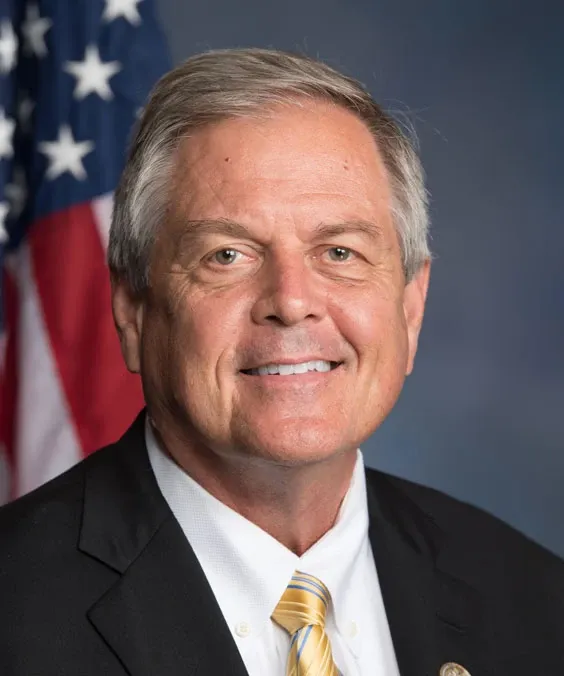
Joe Graves Wilson is an American politician serving as the U.S. Representative for South Carolina's 2nd congressional district since 2001. A member of the Republican Party, he has been involved in various legislative efforts during his tenure in Congress. Wilson is known for his focus on issues such as military and veterans' affairs, education, and energy policy. He has also been active in promoting economic development in South Carolina.
Science and technology programs are part of the modernization investments that keep the Department prepared and ready to deal with those threats.
I support this legislation because I know it takes an important first step in stopping the spread of homegrown terrorism.
How do we prioritize which capability gaps we address, and in what order? Do we have adequate resources to fill those gaps?
In a time of budget constraint, I believe DOD's limited resources are appropriately allocated according to the relative risks of chemical, biological, and nuclear threats.
What lessons has DOD learned from the Libya chemical weapons destruction mission?
How would you describe the level of information sharing and cooperation with the Intelligence Community to deal with the proliferation threat?
How concerned are we with the proliferation of dual-use technologies that could potentially be used for WMD development activities?
What is currently being done in the way of consequence management planning and preparedness against Chemical, Biological, Radiological and Nuclear (CBRNE) attacks both abroad and within the U.S.?
There has been a lot of discussion about the fact that biotechnology is widely proliferated now, which could make biothreats much more readily available to terrorist groups or even lone actors, domestically as well as abroad.
Can you discuss how current events in the Middle East and Northern Africa are impacting DTRA's operations and planning?
What did you learn about the benefits of programmatic flexibility and anticipating of emerging threats from the Syria chemical weapon destruction mission?
There appears to be significant overlap in the manufacturing capabilities of medical countermeasures between the DOD and the Department of Health and Human Services (DHHS).
How effective are we at providing our troops with the most modern protective equipment for Chemical, Biological, Radiological and Nuclear (CBRN) threats?
What are some of your unfunded requirements? Where are your largest gaps in funding?
Given the emphasis placed on non-traditional agents by the Chem Bio Defense Program, how prepared are we to deal with new threats?
Once the DOD's medical countermeasures advanced manufacturing facility is completed, will the Department be able to place orders for doses of countermeasures directly from the facility?
The unfortunate recent and continued use of chemical weapons in Syria shows us that state sponsors of weapons of mass destruction not only seek these capabilities, but use these capabilities.
What specific rebalancing does our Joint Force need to effectively deal with WMD, and what are our current shortfalls?
Is it really necessary that the DOD have independent manufacturing capabilities?
Congress built the sanction structure that brought Iran to the table, and if the President moves to dismantle it, we will have a say.
Any meaningful agreement must keep restrictions in place for decades, as over 360 Members of Congress, including every member of this committee, are demanding in a letter to the President this week.
Special Operations Forces and the Intelligence Community have experienced an unprecedented integration of both operational and analytical activities.
The fiscal year 2016 budget request continues growth for SOCOM to more that 69,900 personnel.
Many of our potential adversaries have become very adept at manipulating the information environment to radicalize, recruit and gain support their cause.
Politicians like Joe Wilson