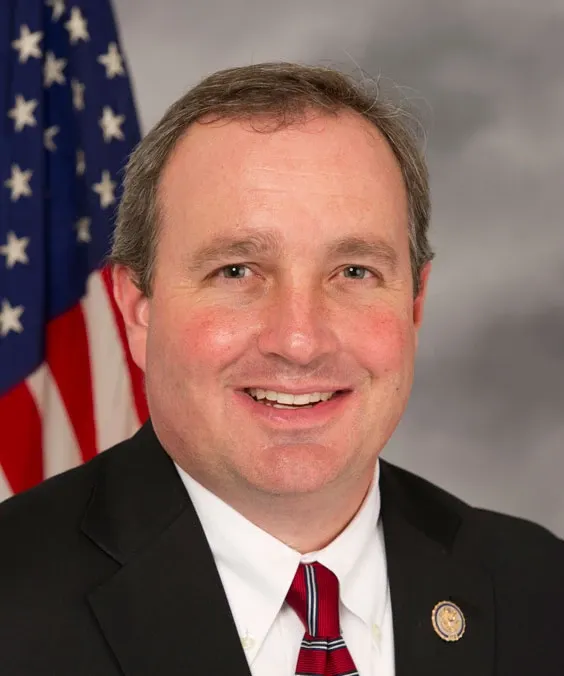
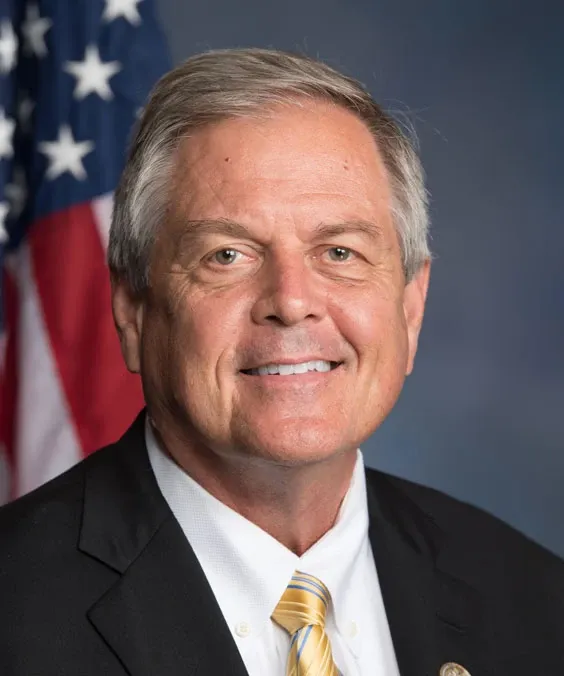
Joe Wilson
The Public Record
Joe Graves Wilson is an American politician serving as the U.S. Representative for South Carolina's 2nd congressional district since 2001. A member of the Republican Party, he has been involved in various legislative efforts during his tenure in Congress. Wilson is known for his focus on issues such as military and veterans' affairs, education, and energy policy. He has also been active in promoting economic development in South Carolina.
Apr 13, 2015
I just can't imagine that we would be placing faith in regard to their now denial of developing a nuclear capability while they are building a missile system.
Apr 13, 2015
I am just so hopeful for your success because I believe, sadly, that as safe havens are created throughout that region and into Central Asia and North Africa, that the American people are at risk.
Apr 13, 2015
I know it must be very distressing to you to see the current condition, but your service means a lot to the American people.
Apr 13, 2015
I appreciate your concern there. And what impact do you believe that depletion of Yemen's oil reserves as early as 2017 will have on the Houthi relationship with other nations in the region?
Apr 13, 2015
That is their plan. And as they are moving ahead with nuclear capability, also building missiles to include an ICBM which could only be interpreted as a threat to the American people and American families.
Apr 13, 2015
I am obviously very concerned about the Yemeni evacuation, what this means for the security of the United States and our allies.
Apr 13, 2015
Well, and I know personally, in fact my family, I understand the opportunities provided by the oil industry...
Apr 13, 2015
I know personally that almost 1,000 jobs, permanent jobs, would be created in a community that I represent.
Apr 13, 2015
The United States of America has always been, I think, the global leader in advocating for open markets, efficient and free trade.
Apr 13, 2015
Well, I always like to point out that Beaufort has the right meteorological conditions, and that is very good weather, temperate, and very warm people.
Apr 13, 2015
And, Dr. Gilmore, tomorrow we are having a full committee hearing on the risk of losing military technology superiority and its implication for U.S. policy, strategy, and posture in the Asia-Pacific.
Apr 13, 2015
I have seen personally the gruesome consequence of Obamacare, where I have had bag boys at the grocery store tell me they have lost hours.
Mar 25, 2015
Could you give us an update on the status of the 'Trusted Foundry' program for providing a secure source of microchips for sensitive defense systems?
Mar 25, 2015
How important are programs like the Small Business Innovative Research program (SBIR), Small Business Technology Transfer program (STTR), or the Rapid Innovation Program (RIP) to your technology transition efforts?
Mar 25, 2015
What tools do you have to transition successful technologies developed by S&T, whether in the labs or from contractors, into programs of record?
Mar 25, 2015
Do you have enough visibility into industry-directed independent research and development (IR&D)?
Mar 25, 2015
The American people need to know the survival rates that have been achieved, which are unprecedented in conflict.
Mar 25, 2015
If we have to remain at sequestration levels, I fear the adverse impact it will have on our science and technology programs.
Mar 25, 2015
We cannot ignore today's concerns, including readiness, equipment recapitalization, and the health and welfare of our service members.
Mar 25, 2015
Defense sequestration jeopardizes that technological superiority and our ability to outmatch and outclass potential adversaries.
Politicians like Joe Wilson