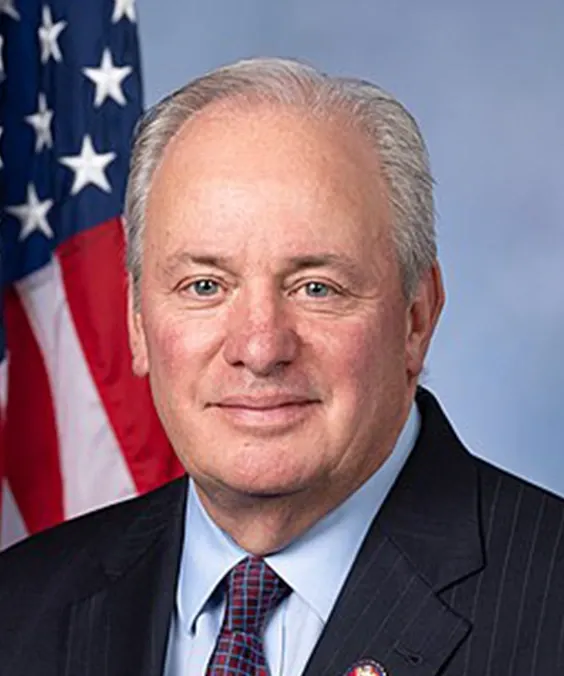
Jim Clyburn
The Public Record
James Enos Clyburn, commonly known as Jim Clyburn, is an American politician serving as the U.S. Representative for South Carolina's 6th congressional district since 1993. A member of the Democratic Party, he has held significant leadership roles, including serving as the House Majority Whip since 2019. Clyburn is known for his advocacy on issues such as healthcare, education, and civil rights, reflecting the needs of his constituents in a predominantly African American district.
Apr 1, 2011
To begin this debate, I yield 4 minutes to the distinguished Democratic whip, the gentleman from Maryland (Mr. Hoyer).
Mar 31, 2011
I would like to take just a moment to associate myself with the remarks we just heard from Congressman Joe Wilson and to welcome my longtime friend, Reverend Charles Jackson, who when we meet in the barber shop I usually call him a little…
Mar 29, 2011
It is important to protect health equity and the access to affordable healthcare.
Mar 29, 2011
The Congressional Black Caucus worked diligently for the passage of the Affordable Care Act. However, this is not enough.
Mar 29, 2011
It is necessary to fully fund Community Development Block Grants. It provides the greatest return on investment for creating jobs.
Mar 29, 2011
Investing in our crumbling infrastructure will create jobs and help our economy get back on track.
Mar 29, 2011
I have introduced H.R. 1124, the Fairness in Taxation Act, which would create new tax brackets for millionaires and billionaires.
Mar 29, 2011
Over the last 30 years, there has been a dramatic and deliberate transfer of wealth from the middle class to the very, very rich.
Mar 29, 2011
The budget resolution must include a substantial job creation initiative to get our economy moving.
Mar 29, 2011
However, we believe the reforms could go farther by including a public option that would provide competition to private insurers and reduce the cost of health care for working families and the Federal Government.
Mar 29, 2011
We can gain robust and immediate savings also from paring down the Pentagon's budget.
Mar 29, 2011
The CPC alternative budget does this by providing for the responsible and orderly redeployment of our troops and military contractors from Iraq and Afghanistan, saving more than $1.5 trillion above current law spending levels over 10 years.
Mar 29, 2011
Nothing has been a larger strain on this country's finances than the two wars in Iraq and Afghanistan, which have now cost us more than $1.1 trillion.
Mar 29, 2011
I'd like to use that call for a Domestic Marshall Plan as a jumping off point for my remarks this morning.
Mar 29, 2011
I would ask the committee to look into this and to see whether or not it makes sense for us to begin targeting resources where the needs really are.
Mar 29, 2011
It is about people who are locked and why the gap is continuing to get wider.
Mar 29, 2011
This is not about skin color. It is about what I would call 'stressed' communities.
Mar 29, 2011
I am here to ask today that we tackle the issue of the widening gap between the haves and the have-nots in our society.
Politicians like Jim Clyburn