Jul 30, 2014
The administration didn't have the expertise, couldn't meet deadlines, and didn't have the leadership or organizational skills to manage this massive undertaking.
The Public Record
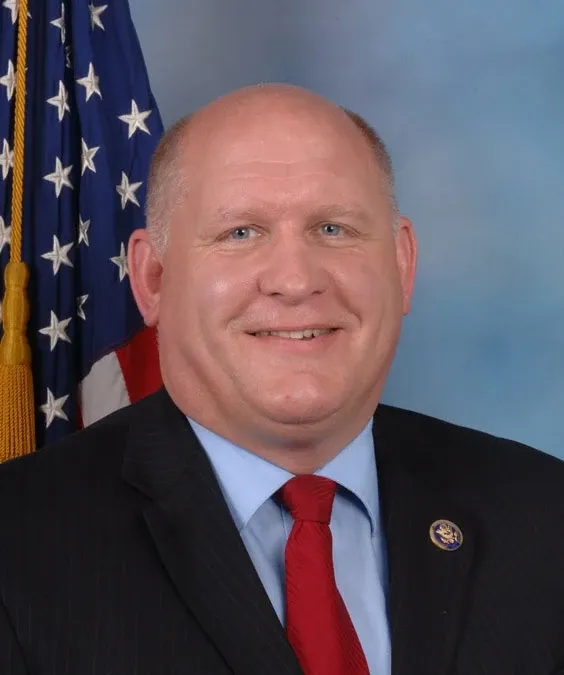
Tim Murphy is a former Republican member of the U.S. House of Representatives, representing Pennsylvania's 18th congressional district from 2003 until 2017. During his time in Congress, Murphy focused on issues such as healthcare, mental health reform, and energy policy. He was known for his work on the Helping Families in Mental Health Crisis Act, which aimed to improve mental health services and support for families affected by mental illness. Murphy also served on various committees, including the Energy and Commerce Committee, where he contributed to legislation on health care and energy issues.
The administration didn't have the expertise, couldn't meet deadlines, and didn't have the leadership or organizational skills to manage this massive undertaking.
Until that regulatory responsibility is moved out of those two agencies and out of any agency that performs select agent research and funds select research, I believe you can predict with high confidence the same types of problems, the…
The CDC Director has called the potential anthrax exposure a 'wake up' call.
The subcommittee on Oversight and Investigations today examines the Center for Disease Control and Prevention's anthrax incident last month that potentially exposed dozens of CDC researchers to live anthrax because established safety…
I want to ask particularly about a couple of the issues related to psychiatric drugs.
The amount of money that has been done in improper payments is greater than the entire budget of the State of Pennsylvania.
If we are truly serious about combatting Medicare fraud, we can't have these delays.
We hope that these new technologies can yield even greater returns in the future.
I have an amendment at the desk. The Acting CHAIR. The Clerk will report the amendment. The Clerk read as follows: Page 15, line 8, after the dollar amount, insert ``(reduced by $37,000,000)''. Page 33, line 11, after the dollar amount…
I would hope that that would be something GM would make abundantly clear because I may not know a lot about--but I know as a psychologist what motivates people.
As I said before, I thought this report could be subtitled, don't assume malfeasance when incompetence will do.
If employees do not have the moral fiber to do the right thing, and do not have the awareness to recognize when mistakes are being made, then the answer must be to change the people or change the culture.
Even when a good law like the TREAD Act of 2000 is in place it requires people to use common sense, value a moral code, and have a motivation driven by compassion for it to be effective.
Politicians like Tim Murphy