Apr 23, 2013
One dollar of federal money significantly raises the cost of a highway project.
The Public Record
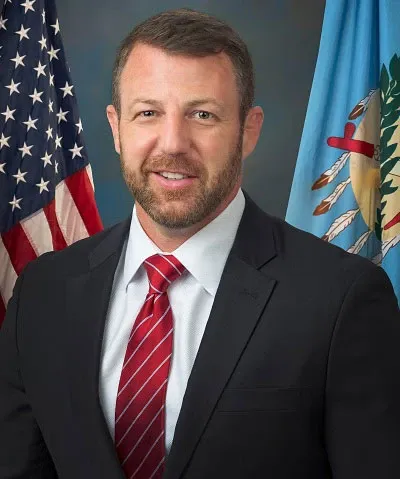
James Paul Lankford is an American politician serving as the junior United States senator from Oklahoma since January 2015. A member of the Republican Party, Lankford has focused on issues such as healthcare, government spending, and religious freedom during his time in office. He previously served as a member of the U.S. House of Representatives from 2011 to 2015, representing Oklahoma's 5th congressional district.
One dollar of federal money significantly raises the cost of a highway project.
We do not have infinite number of dollars. We do have to spend what we do have wisely in the direction of this.
The children of today need to be able to see and experience what is happening at the Smithsonian, at the National Archives and in our national parks.
The reality of that is the middle class will pay more for energy in the days ahead, and that will be a middle-class tax.
The reality of that is the middle class will pay more for energy in the days ahead, and that will be a middle-class tax.
I would have no problem encouraging efficiency in all different kinds of ways, but if we are going to be neutral, it is just interesting to me.
I think you know where my questions are. You are answering a question I am not asking.
We have also seen higher costs for transportation to get equipment out of Afghanistan.
I don't want a war fighter hurt based on us not taking some of these recommendations in place.
The best gift we can put into our economy is certainty, to know the rules and to fulfill those rules.
Do you have an expectation when you make a decision, will they be made one at a time or based on a set of merits where you will say this is the criteria.
I do have to have some concern on the large volume because there 186,000 individuals.
There is no way they are going to build that much. There is not that much capital to build that.
The assumption was the decision has been made we are going to exports on non-FTA.
The DOE studies concluded that for every one of the market scenarios examined, net economic benefits increased as the level of LNG exports increased and that exports of natural gas will improve the U.S. balance of trade and result in a…
At some point, there has to be something in your forecasting to think we are going to decide by this point.
There is a limited amount of time that we have to be able to compete in the global market.
Our solemn responsibility is to hold the government accountable to taxpayers.
Americans deserve an efficient and effective government that works for them.
Americans have the right to know that the money Washington takes from them is well spent.
Politicians like James Lankford